
New Zealand Midwifery Practice Exam
$69.00
- Buy to unlock unlimited access to all Quiz questions and Answers in this Quiz.
- After purchase you can print a PDF of the whole quiz at any point. The PDF will contain the questions and the correct answers.
About this Exam
The New Zealand Midwifery Legislation Examination is a foundational regulatory requirement established to maintain the exceptional standards of maternal healthcare across Aotearoa New Zealand.
This specialized certification assessment ensures that practicing midwives possess a comprehensive operating knowledge of the legal frameworks, ethical mandates, and cultural competencies required under domestic law.
The examination is specifically designed for internationally qualified midwives (IQMs) seeking professional registration with the Midwifery Council of New Zealand, as well as local practitioners returning to the workforce or looking to validate their understanding of evolving statutory mandates.
By confirming a candidate's mastery over local healthcare statutes, this exam safeguards public safety and upholds the high-trust, autonomous partnership model that characterizes New Zealand’s globally recognized midwifery system.
Ready to test your knowledge?
Buy Now to Access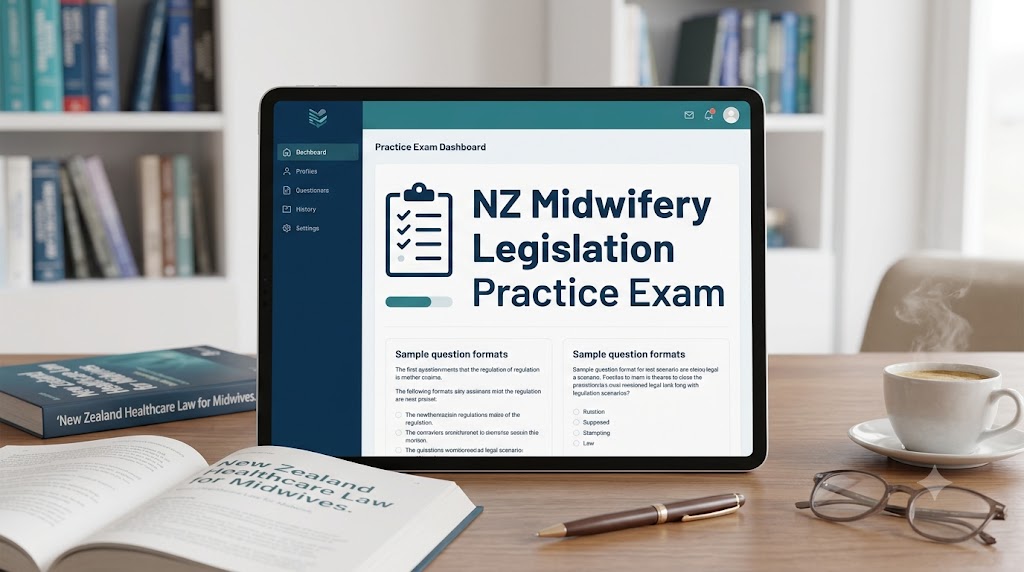
Additional Information
What the Course Entails and Exam Details
Preparing for this professional qualification requires a deep dive into the legislative governance that dictates day-to-day clinical decision-making.
The syllabus focuses heavily on foundational legal instruments and professional guidance frameworks unique to the domestic healthcare landscape.
Core syllabus components and legislative acts covered include:
Health Practitioners Competence Assurance Act (HPCA Act): Understanding the foundational statutory mechanisms governing professional registration, scopes of practice, and disciplinary procedures designed to protect public health.
The Midwifery Scope of Practice and Competencies: Mastery of the specific legal boundaries, mandatory operational guidelines, and clinical standards set forth by the Midwifery Council.
Te Tiriti o Waitangi (The Treaty of Waitangi): Integrating core cultural safety requirements and understanding the legal obligations to improve maternal health outcomes for Māori through partnership, protection, and participation.
Medicines Act and Prescribing Regulations: Analyzing the strict statutory parameters granting prescriptive authority to midwives, including authorized pharmaceutical classifications and dispensing limitations.
Code of Health and Disability Services Consumers' Rights: Evaluating the legal rights of individuals and families, emphasizing informed consent, privacy safeguards, and ethical advocacy during perinatal care.
What to Expect in the Final Exam
The formal assessment is structured to test both theoretical legislative retention and practical situational analysis through clear, objective questioning styles.
Candidates will sit a standardized computer-based examination consisting primarily of multiple-choice questions (MCQs), scenario-based case studies, and true/false validation prompts.
Key operational parameters for the final examination include:
Exam Duration: 120 Minutes (2 Hours)
Total Format Volume: 60 to 80 Multiple-Choice and Scenario-Based Questions
Passing Score Requirement: 75% Correct Responses
Exam Delivery Type: Closed-book, securely monitored testing environment
Strict administrative regulations are enforced throughout the assessment window.
No reference textbooks, legal printouts, or digital statutory summaries are permitted inside the examination environment, meaning prospective practitioners must rely entirely on pre-acquired legal literacy and analytical memory.
How to Study and Exam Centers
Succeeding on your first attempt demands structured, deliberate study strategies that emphasize legislative comprehension over simple memorization.
Begin your preparation by utilizing targeted online practice exams that mirror the final testing environment's style, timing constraints, and question weighting.
Break down foundational statutes into digestible summaries, focusing specifically on the real-world operational intersections where clinical practice meets legal obligation.
Group study sessions and review courses endorsed by regional midwifery networks can offer invaluable contextual clarity on complex legislative nuances.
The examination is administered digitally through secure, authorized channels designated by the regulatory authorities.
Candidates can schedule their testing sessions online via official proctored portals, enabling overseas applicants to complete requirements before arriving in the country.
Physical testing options are hosted at certified Pearson VUE testing facilities globally, alongside accredited local tertiary education institutes and university testing centers authorized across major New Zealand metropolitan centers.
Job Opportunities from the Course
Successfully passing the examination and securing formal regulatory registration unlocks diverse, highly rewarding career pathways across the comprehensive domestic maternity sector.
Key career opportunities enabled by this professional milestone include:
Lead Maternity Carer (LMC): Practicing as an independent, self-employed community midwife providing primary, continuity-of-care services throughout pregnancy, childbirth, and the postpartum period.
Core Facility Midwife: Providing specialized clinical expertise within public hospital maternity wards, secondary units, and regional birthing centers managed by Health New Zealand (Te Whatu Ora).
Clinical Midwife Specialist: Advancing into specialized, high-acuity hospital roles focusing on complex obstetric cases, diabetes management, or advanced neonatal coordination teams.
Maternity Services Advisor or Policy Analyst: Contributing expert clinical and legal perspectives to government departments, regional health boards, and non-profit advisory councils.
Midwifery Clinical Educator / Academic: Steering the development of future generations of healthcare professionals by delivering curricula at accredited tertiary institutions and clinical training units
Frequently Asked Questions
Reviews
5.0
Based on 0 reviews
Leave a Review
No reviews yet. Be the first to review!