
NJ Radon Measurement Tech Practice Exam
$69.00
- Buy to unlock unlimited access to all Quiz questions and Answers in this Quiz.
- After purchase you can print a PDF of the whole quiz at any point. The PDF will contain the questions and the correct answers.
About this Exam
The New Jersey Radon Measurement Technician certification is a vital qualification for professionals aiming to provide essential public health services. This exam is designed for individuals who wish to become officially certified by the state to perform radon testing in residential and commercial properties throughout New Jersey. It is a critical step for anyone starting a career in environmental testing or for home inspectors seeking to expand their services. Earning this certification demonstrates your competency in accurately assessing indoor radon levels, which is crucial for identifying potential health risks and ensuring safe living and working environments.
Ready to test your knowledge?
Buy Now to Access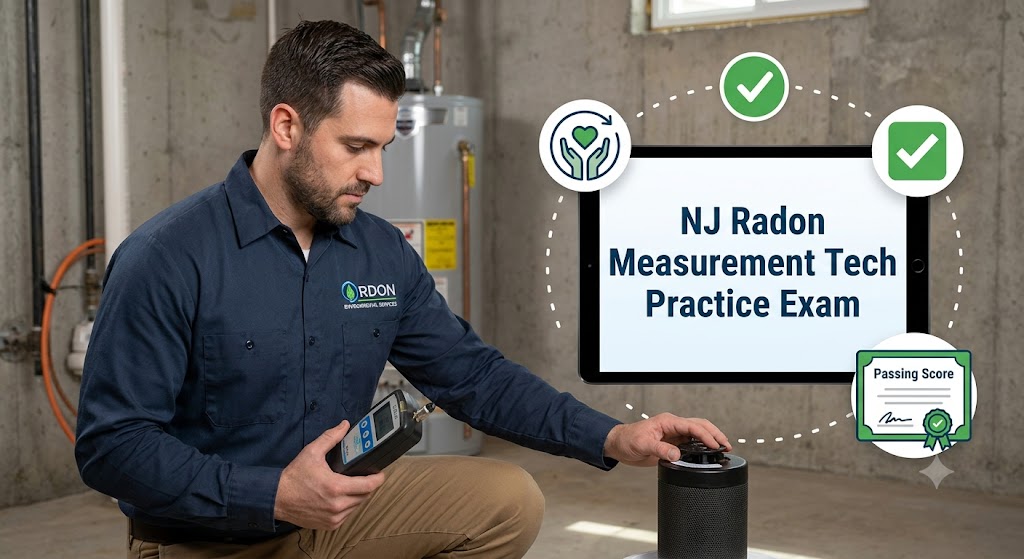
Additional Information
What the Course Entails and Exam Details
This course provides comprehensive training on the principles and practices necessary for effective radon measurement. The curriculum covers a wide range of essential topics, ensuring you are well-prepared for both the exam and real-world scenarios. Key areas of study typically include:
Understanding Radon: Learning about the physics of radon gas, its origins, how it behaves, and how it enters buildings.
Health Effects: A deep dive into the health risks associated with radon exposure and the scientific rationale for testing and mitigation.
Measurement Protocols: Mastering the various techniques and devices used for radon measurement, such as charcoal canisters, alpha track detectors, and continuous radon monitors. This includes learning proper deployment and retrieval procedures.
Quality Assurance/Quality Control (QA/QC): Understanding the critical importance of QA/QC programs to ensure the accuracy and reliability of all measurement data.
New Jersey Regulations: Focusing intensely on the specific state laws, rules, and reporting requirements mandated by the New Jersey Department of Environmental Protection (NJDEP) for radon professionals.
What to Expect in the Final Exam
The final New Jersey Radon Measurement Technician exam is structured as a closed-book, multiple-choice test designed to rigorously evaluate your knowledge across all course domains. You can expect questions that assess your understanding of radon science, testing procedures, quality control measures, and, crucially, your familiarity with New Jersey's regulatory landscape. While the number of questions may vary, the exam typically requires a passing score of 70% or higher, as determined by the NJDEP. You will be allotted a specific time limit, often around two to three hours, to complete the examination.
How to Study and Exam Centers
Effective preparation is key to your success on the exam. Here are some actionable strategies:
Review Course Materials Thoroughly: Study all materials provided during your required training course, paying close attention to technical details and NJDEP requirements.
Utilize Practice Exams: Practice with sample questions that mirror the format and content of the actual exam. This helps you identify knowledge gaps and get comfortable with the questioning style.
Focus on Regulations: Dedicate significant study time to the specific New Jersey regulations, as these form a substantial and critical part of the exam.
Create Flashcards: Use flashcards for key terms, measurement principles, and regulatory facts to aid memorization.
Form Study Groups: Collaborating with peers can provide different perspectives and help reinforce challenging concepts.
Exam Centers and Scheduling: The NJ Radon Measurement Technician exam is administered after you have successfully completed the state-mandated training course from an NJDEP-authorized provider. Once the training is finished, your course provider will typically coordinate the exam session, which might be proctored in-person or, increasingly, via an approved online testing portal, depending on current regulations and provider options. It is essential to check with your specific training provider and the official NJDEP website for the most current information regarding approved trainers, testing schedules, and procedures.
Job Opportunities from the Course
Obtaining your New Jersey Radon Measurement Technician certification opens doors to several rewarding career paths focused on environmental safety and public health. This credential unlocks numerous opportunities, including positions such as:
Radon Measurement Technician: Performing professional radon testing services for residential and commercial clients.
Environmental Testing Specialist: Expanding your role to include other indoor air quality and environmental assessments.
Certified Home Inspector (with Radon Add-On): Increasing your marketability and service offerings by adding radon measurement to your inspection portfolio.
Industrial Hygienist: Utilizing your expertise in environmental health within industrial and occupational settings.
Air Quality Technician: Monitoring and assessing indoor and outdoor air quality for various organizations and government agencies.
Frequently Asked Questions
Reviews
5.0
Based on 0 reviews
Leave a Review
No reviews yet. Be the first to review!