
Noninvasive Ventilation Practice Exam
$69.00
- Buy to unlock unlimited access to all Quiz questions and Answers in this Quiz.
- After purchase you can print a PDF of the whole quiz at any point. The PDF will contain the questions and the correct answers.
About this Exam
The Noninvasive Mechanical Ventilation Practice Test is designed for respiratory therapists, critical care nurses, physicians, and other healthcare professionals who manage patients requiring respiratory support. Achieving certification in this area demonstrates a high level of proficiency and commitment to patient safety and quality care. This test assesses your comprehensive understanding of noninvasive positive pressure ventilation (NPPV), including the application of bilevel positive airway pressure (BiPAP) and continuous positive airway pressure (CPAP). Success on this practice test prepares you for the final certification exam, ensuring you possess the critical thinking skills needed for patient selection, device setup, monitoring, titration, and troubleshooting, ultimately leading to improved patient outcomes and comfort.
Ready to test your knowledge?
Buy Now to Access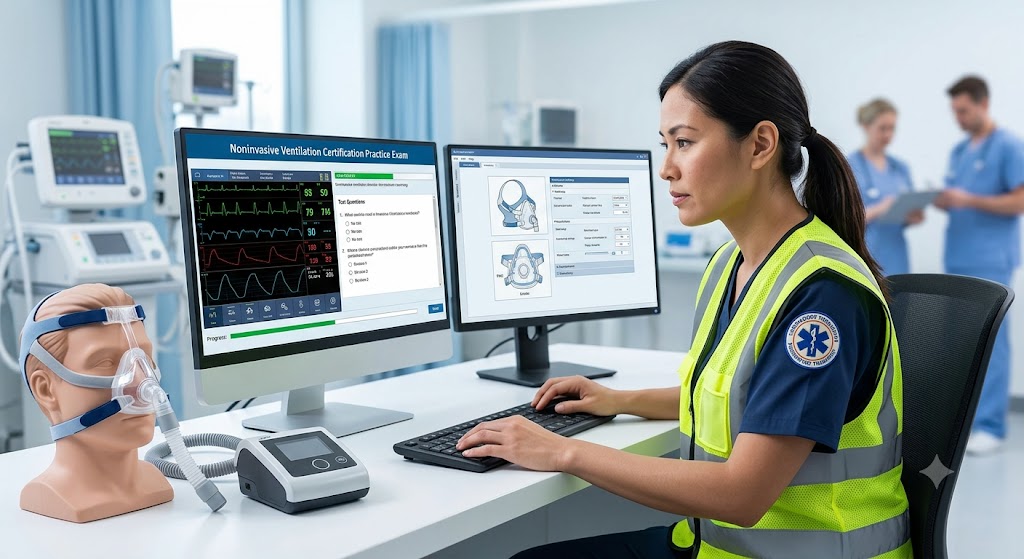
Additional Information
What the Course Entails and Exam Details
Earning your certification involves mastering a robust curriculum. The course material and subsequent examination typically cover several key domains:
Physiology of Respiration and Patient Selection: Understanding the indications, contraindications, and appropriate patient populations for NIV, such as acute exacerbations of COPD, cardiogenic pulmonary edema, and hypoxemic respiratory failure.
Types of Noninvasive Ventilation: Distinguishing between different modes of support, including CPAP, BiPAP/BPAP, and sophisticated adaptive algorithms.
Interfaces and Equipment: Knowing how to select and properly fit various interfaces (nasal, full-face masks, helmets) and operate ventilation devices.
Initiation and Management: Learning how to set initial parameters, titrate settings based on patient response and blood gas values, and optimize patient comfort and synchronization with the ventilator.
Monitoring and Assessment: Skills in continuous patient monitoring, interpretation of waveforms, recognizing signs of success or failure, and understanding key physiological changes.
Troubleshooting and Complications: Identifying common issues such as mask leaks, patient discomfort, and device alarms, and applying corrective actions while managing potential complications.
Evidence-Based Practice and Guidelines: Familiarity with current clinical practice guidelines and best practices.
The depth of knowledge required can be substantial, making focused study crucial for success.
What to Expect in the Final Exam
When you move from this practice test to the final certification exam, you can generally expect a rigorous evaluation of your knowledge and clinical decision-making abilities. Here are common features:
Exam Format: The vast majority of certification exams for healthcare professionals utilize a multiple-choice question format. Questions are designed to test both factual knowledge and the application of concepts to clinical scenarios (case studies). Be prepared to think critically.
Number of Questions: While variable, expect between 75 and 150 questions.
Time Limit: You will be given a specific time frame, typically 90 minutes to two hours, to complete the exam. Efficient time management is key.
Passing Score: The passing threshold varies by the certifying body, but a typical range is a score between 70% and 80%. Ensure you understand the specific requirements for your program.
Rules: The final exam is proctored, meaning it will be supervised. Online exams might require specialized proctoring software with video and audio monitoring. For physical test centers, expect standard rules regarding ID, prohibited items, and testing etiquette. Unauthorized materials or assistance are strictly forbidden.
How to Study and Exam Centers
Preparation is the cornerstone of success. Implement these actionable study strategies:
Review Core Course Materials: Thoroughly study the textbooks, online modules, and lectures provided by your certification program.
Utilize Practice Tests Repeatedly: Make the most of this practice test. Practice under timed conditions, review your answers, and understand the rationale for correct choices. Identify your areas of weakness and focus your studies there.
Create Flashcards: Develop flashcards for key terms, definitions, indications, contraindications, interface types, initial settings, and troubleshooting steps.
Focus on Case Scenarios: Spend time working through patient cases. Practice analyzing patient data (vital signs, ABGs, symptoms) to select optimal NIV strategies.
Form Study Groups: If possible, collaborate with colleagues also preparing for the exam. Explaining concepts to others reinforces your understanding.
Get Practical Experience: While not required for the written test, hands-on practice with NIV equipment and interfaces in a clinical or simulation setting dramatically deepens your comprehension. Focus on setup, patient assessment, and adjustments.
Exam Centers: Certification exams for Noninvasive Ventilation are offered through various organizations and often utilize a flexible approach to testing. Common options include:
Online Proctoring Services: Many certifying bodies now offer the convenience of taking the exam online through platforms like Pearson VUE, Kryterion, or similar services, proctored in real-time from a location of your choice that meets specific security requirements.
Authorized Testing Centers: Global networks of authorized testing centers (like Pearson VUE or specific organizations) provide a secure, standardized in-person testing environment.
Institution-Based Testing: For some specialized programs, the exam may be administered at specific educational institutions, hospitals, or training facilities.
Once you are ready, registration and scheduling are typically done through the official website of your chosen certifying organization, where you can select your preferred method and available dates.
Job Opportunities from the Course
Earning a specialized certification in Noninvasive Mechanical Ventilation enhances your credentials and validates your expertise, potentially opening doors to advanced clinical roles. Successful professionals with this certification can pursue various fulfilling career paths and job opportunities, including:
Specialized Respiratory Therapist (e.g., Critical Care, ER, Pulmonary Rehabilitation)
Critical Care Registered Nurse
ICU or Critical Care Unit Nurse Specialist
Pulmonary Care Coordinator
Respiratory Care Educator / Clinical Instructor
Sleep Technologist (utilizing related principles)
Home Healthcare Coordinator for ventilated patients
Clinical Sales Representative for NIV equipment
Research Coordinator in Respiratory Therapy and Critical Care
Travel Respiratory Therapist with advanced certifications
Lead or Supervisory Respiratory Therapist positions
Quality Improvement Coordinator for respiratory services
Frequently Asked Questions
Reviews
5.0
Based on 0 reviews
Leave a Review
No reviews yet. Be the first to review!