
North Carolina Bail Bonds Practice Exam
$69.00
- Buy to unlock unlimited access to all Quiz questions and Answers in this Quiz.
- After purchase you can print a PDF of the whole quiz at any point. The PDF will contain the questions and the correct answers.
About this Exam
The North Carolina Bail Bondsman exam is the essential prerequisite for anyone seeking to operate as a licensed surety, professional, or runner bondsman in the Tar Heel State. This rigorous assessment ensures that prospective bondsmen possess the legal knowledge, ethical grounding, and administrative understanding necessary to navigate the complexities of the North Carolina judicial system. The test is designed for disciplined individuals wishing to enter this unique sector of the legal services industry, providing a critical pathway to a new, regulated career.
Ready to test your knowledge?
Buy Now to Access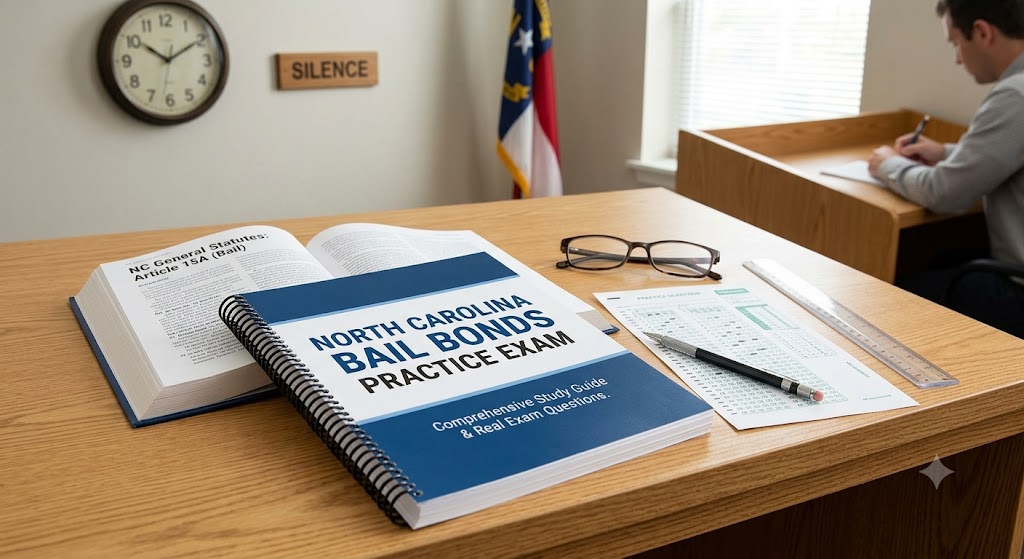
Additional Information
What the Course Entails and Exam Details
This examination does not exist in a vacuum; it is the culmination of mandated pre-licensing education. Students must successfully complete a state-approved course (usually 20 hours for general bondsmen and runners, plus an additional 13 hours for surety licensing) before being eligible to sit for the exam.
The core curriculum and subsequent examination cover five main knowledge pillars:
North Carolina General Statutes (NCGS Chapter 15A): Deep understanding of bail laws, bond types, and the specific duties of a bondsman.
The Judicial Process: A comprehensive overview of how the court system functions, from arrest to sentencing.
Bond Forfeiture Procedures: The critical regulations governing how bonds are forfeited and the resulting implications for the bondsman.
Bondsman Ethics and Responsibilities: The moral, legal, and professional obligations that define a successful practice.
North Carolina Administrative Code (Title 11, Chapter 13): The operational rules
What to Expect in the Final Exam
The North Carolina Bail Bonds examination is a computer-based, proctored test. Candidates must register and qualify through the North Carolina Department of Insurance (NCDOI) and its designated test administrator.
Format: The exam consists of multiple-choice questions. A separate, specialized exam exists for the Surety Bondsman license (focused purely on statutory knowledge) and a more extensive, comprehensive exam exists for Professional Bondsmen and Runners.
Passing Score: A passing score of 70% is required to qualify for licensure.
Time Limits: Candidates are typically allotted 120 minutes (2 hours) to complete the examination.
Specific Rules: This is a closed-book examination. Absolutely no notes, textbooks, electronic devices, or external aids are permitted in the testing area.
How to Study and Exam Centers
Preparation is the absolute variable in determining success. Because the material is highly technical and specific to North Carolina law, a passive reading of the textbook will not suffice. Active, focused strategies are essential.
Study Strategies:
Prioritize Statutes over Everything: The backbone of this exam is the North Carolina General Statutes (especially Chapter 15A). You must know these laws. Do not memorize them; understand their application.
Leverage Pre-Licensing Materials: Use the exact materials provided by your NCDOI-approved course. These courses are designed specifically to prepare you for the test, often highlighting high-probability exam topics.
Create Structured Flashcards: Do not just flashcard terms. Flashcard the core process of a bond forfeiture, the timeline for specific court filings, and the penalties for ethical violations.
Utilize High-Quality Practice Tests: A dedicated [North Carolina Bail Bonds Practice Exam] is your most effective tool. Take multiple practice exams, but do not simply look at your score. Review every single answer (correct and incorrect) to understand the rationale behind the law.
Exam Centers:
The NCDOI utilizes Pearson VUE as its official testing vendor.
Candidates must obtain pre-approval from the Department of Insurance before they can schedule an exam date.
Once approved, you can register and select a time slot at any authorized Pearson VUE testing center located throughout North Carolina. These are secure, professional facilities ensuring standardized testing conditions.
Job Opportunities from the Course
Successfully passing this exam and obtaining your license unlocks specific, regulated career paths. The exact opportunities depend on whether you qualify as a 'Surety' (working on behalf of an insurance company) or a 'Professional' (backing the bonds yourself) or a 'Runner' (working for a professional bondsman).
The primary job titles include:
Licensed Professional Bail Bondsman
Licensed Surety Bail Bondsman
Licensed Bail Bond Runner
Frequently Asked Questions
Reviews
5.0
Based on 0 reviews
Leave a Review
No reviews yet. Be the first to review!