
North Carolina Bee School Practice Exam
$69.00
- Buy to unlock unlimited access to all Quiz questions and Answers in this Quiz.
- After purchase you can print a PDF of the whole quiz at any point. The PDF will contain the questions and the correct answers.
About this Exam
Beekeeping is more than a hobby; it is a vital contribution to North Carolina’s agricultural health and ecological biodiversity. The North Carolina Bee School program, often aligned with the entry level of the North Carolina State Beekeepers Association (NCSBA) Master Beekeeper Program, represents the formal gateway to understanding this rewarding practice. This course is designed for aspiring apiarists, enthusiastic gardeners, and environmental stewards who wish to transition from curiosity to competence. By providing a structured, science-based foundation, the program ensures that new beekeepers are equipped to manage healthy, productive colonies responsibly within the specific climate and flora of the Tar Heel State.
Ready to test your knowledge?
Buy Now to Access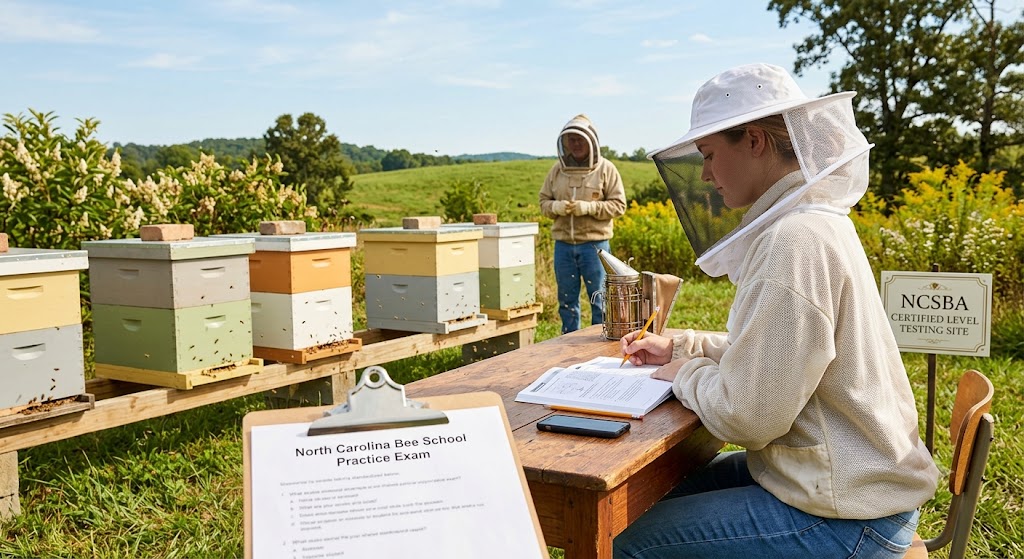
Additional Information
What the Course Entails and Exam Details
The comprehensive curriculum of a North Carolina Bee School covers the essential pillars of apiculture required for responsible hive management. Students dive deep into honey bee biology, understanding the lifecycle, caste systems (Queen, Drone, Worker), and the complex social structure of the colony. The syllabus meticulously details equipment and apiary setup, guiding beginners on selecting the right hive components, protective gear, and location for their first yard. A significant focus is placed on seasonal management, teaching the specific interventions needed from the spring buildup through the honey flow and into winter preparation. Crucially, the course provides intensive training on pests, parasites, and diseases, with a heavy emphasis on Varroa mite identification and integrated pest management (IPM) strategies to ensure colony survival. Additional modules cover the history of beekeeping, swarming behavior, and the fundamentals of harvesting honey and beeswax.
What to Expect in the Final Exam
To achieve the Certified Beekeeper status through the NCSBA program, candidates must successfully navigate a rigorous, two-part examination. This assessment is designed to validate both theoretical knowledge and practical competence.
The formal evaluation consists of:
A Written Examination: This is typically a multiple-choice, true/false, and short-answer test focused on the theory, biology, and management techniques covered in the course. Candidates must demonstrate a comprehensive grasp of vocabulary, disease symptoms, and seasonal interventions. A passing score of at least 70% is usually required to proceed.
A Practical (Hands-on) Test: This essential component takes place in an active apiary. Candidates must demonstrate proficiency in fundamental skills before an experienced Master Beekeeper or designated examiner. Required skills often include lighting and properly using a smoker, opening and manipulating a hive safely, identifying different castes of bees, recognizing types of brood (eggs, larvae, capped), and distinguishing between honey, pollen, and propolis stores.
How to Study and Exam Centers
Preparation for the North Carolina Bee School examination requires a blend of academic study and hands-on experience. The most effective strategy is to meticulously review the course materials provided by your local NCSBA chapter. Complement this by studying key textbooks, such as "First Lessons in Beekeeping." Utilize a dedicated North Carolina Bee School Practice Exam to assess your retention, identify knowledge gaps, and familiarize yourself with the phrasing of technical apiculture questions. Repeatedly reviewing your state’s specific management guidelines, particularly regarding Varroa mite treatment thresholds, is vital.
The North Carolina State Beekeepers Association structure determines where you will take your exam. Written exams are generally administered locally by authorized county chapters at the conclusion of their scheduled Bee Schools. Additionally, written and some practical testing opportunities are frequently offered during the NCSBA statewide Spring and Summer Conferences. Practical exams must be coordinated through your local chapter’s Master Beekeeper coordinator or a designated region supervisor, ensuring you have access to an active apiary for the assessment.
Job Opportunities from the Course
While many complete the North Carolina Bee School to manage their own colonies successfully, achieving Certified Beekeeper status validates your foundational knowledge to potential employers and the public. In a state with a robust agricultural economy, these validated skills can unlock numerous unique career and sideline paths.
This certification supports job titles and opportunities such as:
Commercial Apiary Assistant
Apiary Manager (Sideline Operation)
Beekeeping Supply Specialist / Retail Consultant
Beginner Beekeeping Instructor (Local Chapter level)
Contract Pollination Services Coordinator
Honey and Hive Products Entrepreneur
Agricultural Extension Program Assistant
Urban Agriculture or Community Garden Beekeeper
Frequently Asked Questions
Reviews
5.0
Based on 0 reviews
Leave a Review
No reviews yet. Be the first to review!