
North Carolina Certified Plant Professional Practice Exam Study Guide
$69.00
- Buy to unlock unlimited access to all Quiz questions and Answers in this Quiz.
- After purchase you can print a PDF of the whole quiz at any point. The PDF will contain the questions and the correct answers.
About this Exam
The North Carolina Certified Plant Professional (NCCPP) designation is a prestigious credential recognizing individuals who demonstrate comprehensive knowledge and proficiency in the green industry.
Designed primarily for nursery production employees, landscapers, garden center staff, and horticultural professionals within North Carolina, this certification signifies a commitment to horticultural excellence and standard practices.
Earning the NCCPP credential validates your expertise and helps elevate the professionalism of North Carolina's vibrant green sector.
Ready to test your knowledge?
Buy Now to Access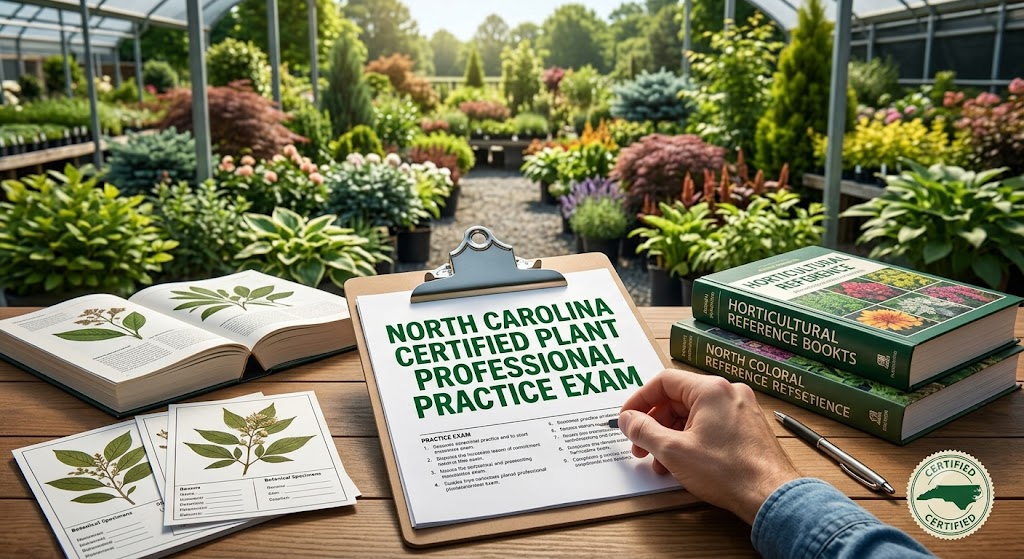
Additional Information
What the Course Entails and Exam Details
The curriculum and associated exams, including the practice test, generally encompass essential horticultural knowledge necessary for success in the industry.
Key areas you should focus your study on include: robust plant identification across numerous species (both native and common ornamental varieties in NC), plant anatomy and physiology, soil science and substrate composition, understanding essential nutrients and fertilization techniques, integrated pest management (IPM) strategies for common pests and diseases, effective pruning and maintenance practices, irrigation principles, landscape installation techniques, and crucial safety protocols.
Mastering these foundational topics is critical for achieving certification and excelling in plant professionalism.
What to Expect in the Final Exam
The final North Carolina Certified Plant Professional certification exam is typically a challenging assessment designed to rigorously test your practical and theoretical understanding.
Candidates can generally expect a comprehensive multiple-choice examination covering the varied horticultural disciplines.
The actual exam might differ in structure, but commonly includes approximately 100-150 questions to be completed within a specified timeframe, often ranging from two to three hours.
A passing score, typically around 70-75% or higher, is usually required to earn the designation.
Expect a fair and standard test-taking environment, whether conducted online or in person, demanding thorough preparation and attention to detail.
Specific details regarding exact question count, time, and passing requirements may vary slightly between testing administrations.
How to Study and Exam Centers
Effectively preparing for the NCCPP exam requires a combination of structured study and practical application.
Leverage the provided practice exam extensively; treat it as a realistic simulation to identify knowledge gaps and refine your test-taking skills.
Develop comprehensive flashcards for plant identification (scientific and common names, key characteristics) and intricate horticultural concepts.
Immerse yourself in practical experiences, such as plant identification walks in local nurseries, gardens, and natural areas, and reinforce landscape maintenance techniques.
Dedicate consistent time to reviewing relevant manuals and study materials provided by the certifying organization or industry associations.
The actual certification exam is typically administered either through secured online proctoring platforms or at designated physical testing centers across North Carolina.
These centers may include specific testing locations, community college facilities, or other venues authorized by the organization overseeing the certification process (often the North Carolina Nursery & Landscape Association or relevant state departments).
Check official resources and registration information closely for the most up-to-date details on available exam formats and physical testing locations convenient for you.
Job Opportunities from the Course
Earning the North Carolina Certified Plant Professional designation unlocks numerous exciting career opportunities and enhances your marketability within the vibrant green industry.
This credential demonstrates your expertise and dedication, making you a highly desirable candidate for various roles.
Potential job opportunities and career paths this certification can directly benefit or lead to include:
Nursery Production Supervisor or Manager
Landscape Installation and Maintenance Supervisor
Retail Garden Center Manager or Specialist
Commercial Landscape Account Manager
Grounds and Turf Management Specialist
Arborist or Plant Health Care Technician (leveraging plant knowledge)
Horticultural Extension Agent or Educator
Inside/Outside Sales Representative for horticulture products
Park Ranger or Municipal Horticultural Planner (leveraging plant identification and management expertise)
Greenhouse Manager
Frequently Asked Questions
Reviews
5.0
Based on 0 reviews
Leave a Review
No reviews yet. Be the first to review!