
North Carolina Mechanical Code Practice Exam Guide
$69.00
- Buy to unlock unlimited access to all Quiz questions and Answers in this Quiz.
- After purchase you can print a PDF of the whole quiz at any point. The PDF will contain the questions and the correct answers.
About this Exam
The North Carolina Mechanical Code Practice Exam is specifically designed as the ultimate preparation tool for aspiring HVAC professionals and mechanical contractors looking to secure licensure in the state of North Carolina. This examination validates that candidates possess the specialized technical knowledge and essential understanding of state safety regulations required to design, install, maintain, and inspect mechanical systems safely and effectively. Whether you are aiming to start your own contracting business or advance within an established mechanical firm, passing the state examination is a critical milestone, and this practice resource is your roadmap to success.
Ready to test your knowledge?
Buy Now to Access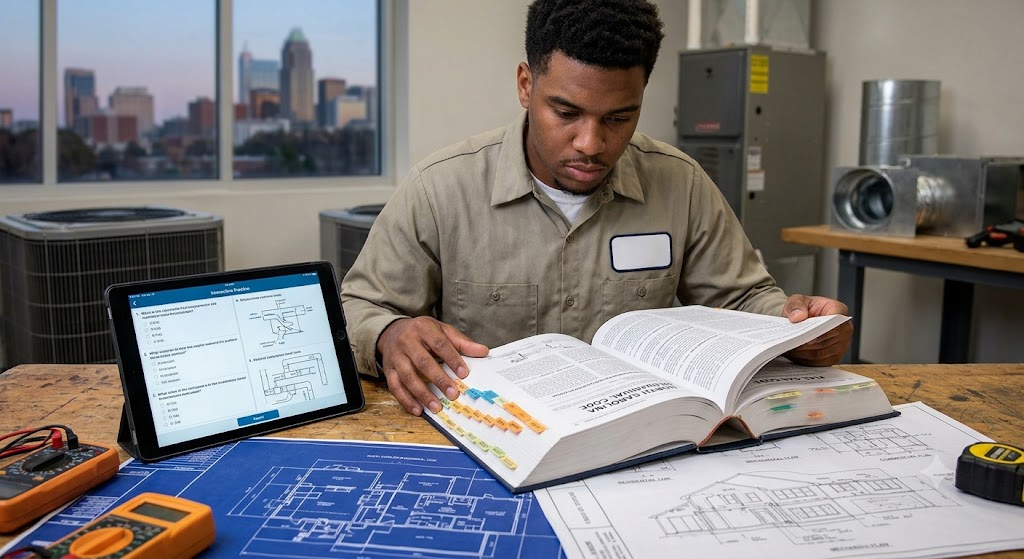
Additional Information
What the Course Entails and Exam Details
Preparing for licensure involves mastering the complexities of the official North Carolina Mechanical Code, which is based on the International Mechanical Code (IMC) but incorporates state-specific amendments. The examination syllabus encompasses a broad spectrum of mechanical system principles, regulations, and implementation strategies.
Core topics covered in the exam include:
General Regulations and Definitions: Mastering foundational terminology and administrative requirements essential for regulatory compliance.
Ventilation and Exhaust Systems: Understanding the design, air quality requirements, and safety protocols for varied ventilation setups.
Duct Systems: Principles of air distribution design, duct construction standards, and installation requirements.
Combustion Air: Ensuring proper air supply systems for fuel-burning appliances.
Chimneys and Vents: Requirements for the correct venting of combustion products.
Specific Appliances and Fireplaces: Installation standards for various types of heating and cooling equipment.
Refrigeration Systems: Specialized codes governing cooling systems, refrigerant piping, and safety controls.
Hydronic Piping: Regulations related to hot water heating systems.
Fuel Oil and Fuel Gas Piping: Requirements for the safe storage and distribution of fuel.
The North Carolina Mechanical Code Practice Exam mirrors these key sections, allowing you to identify knowledge gaps and focus your study efforts efficiently.
What to Expect in the Final Exam
The actual North Carolina licensing examination, administered by independent testing services like PSI, is rigorous and timed, requiring both precision and comprehensive knowledge of the material.
The final exam is typically a multiple-choice format, often split into a "Business and Law" section and a technical "Mechanical Contractor" section.
A major feature of this examination is that it is typically an "open-book" format. Candidates are permitted to bring specifically approved reference materials, such as the North Carolina Mechanical Code and the North Carolina Fuel Gas Code, into the testing center. This structure places emphasis not on rote memorization but on your ability to quickly find, interpret, and apply complex code language to practical scenarios.
The time limit is typically several hours (often divided into sessions), requiring candidates to work efficiently and manage their time effectively.
A passing score (usually around 70% to 72%, depending on the specific license class and testing service) is required to qualify for licensure. Because the passing threshold is high and the exam is timed, extensive practice is crucial to developing the required speed and accuracy.
How to Study and Exam Centers
Successfully navigating an open-book exam requires a strategic approach that maximizes time and leverages the allowed materials.
How to Study:
Tab and Highlight Your Code Books: Since you can bring official code books, invest time in organizing them. Use professional index tabs to mark key chapters (definitions, ventilation, duct systems, etc.). Highlight critical formulas, tables, and sections you frequently referenced during your study. This visual mapping is the single most effective way to save time during the actual exam.
Utilize the Practice Exam Repetitively: Don't just take the practice exam once. Simulate true exam conditions—set a timer, put away non-approved materials, and focus on answering the questions quickly. Repeat the practice until you comfortably and consistently achieve a score well above the passing threshold.
Focus on Navigation, Not Memory: Treat the practice test as navigation training. The goal isn't just to remember the answer, but to remember exactly where in the code book that answer can be found.
Join Study Groups or Prep Courses: Many professional associations and specialized schools offer NC-specific prep courses that provide structured study plans and expert instruction.
Exam Centers:
For the actual licensing exam, you must first receive approval from the North Carolina State Board of Examiners of Electrical Contractors or the State Board of Examiners of Plumbing, Heating and Fire Sprinkler Contractors (depending on the specific license class). Once approved, you will register with an official testing partner, such as PSI. Testing centers are located in multiple major cities across North Carolina, including Raleigh, Charlotte, Greensboro, Fayetteville, and Wilmington. You will select your preferred date and location during the registration process.
Job Opportunities from the Course
Earning your mechanical contracting license unlocks significant career opportunities within the booming construction and facility management industries. Passing this examination is the mandatory credential required to operate independently or hold a senior technical position within a mechanical company.
Careers unlocked by this certification include:
Licensed Mechanical Contractor (HVAC/R): The most direct path, allowing you to operate your own business or lead major projects for residential, commercial, or industrial mechanical systems.
HVAC Project Manager: Supervising large-scale mechanical installations, coordinating teams, and ensuring regulatory and budget compliance for commercial developments.
Mechanical Code Inspector: Utilizing your expertise to enforce safety standards by inspecting new and existing mechanical systems on behalf of municipalities or counties.
Facility Mechanical Engineer/Manager: Managing the complex HVAC, refrigeration, and mechanical infrastructure for hospitals, large office complexes, universities, or industrial plants.
Chief Mechanical Technician: Leading the service and installation departments within established mechanical firms.
Frequently Asked Questions
Reviews
5.0
Based on 0 reviews
Leave a Review
No reviews yet. Be the first to review!