
North Carolina Septic Installer Practice Exam Guide
$69.00
- Buy to unlock unlimited access to all Quiz questions and Answers in this Quiz.
- After purchase you can print a PDF of the whole quiz at any point. The PDF will contain the questions and the correct answers.
About this Exam
The North Carolina Septic Installer Practice Exam is an essential preparatory resource designed for individuals aspiring to obtain licensure as an On-Site Wastewater System Installer within the state of North Carolina. Administered by the North Carolina Department of Environmental Quality (DEQ), this certification is mandatory for any professional responsible for installing, constructing, or repairing septic systems to ensure they adhere to strict public health and environmental standards. This practice exam is tailor-made for new applicants and experienced professionals seeking a comprehensive review, helping candidates familiarize themselves with the official testing format, identify critical knowledge gaps, and build the required confidence to pass the state examination on their first attempt.
Ready to test your knowledge?
Buy Now to Access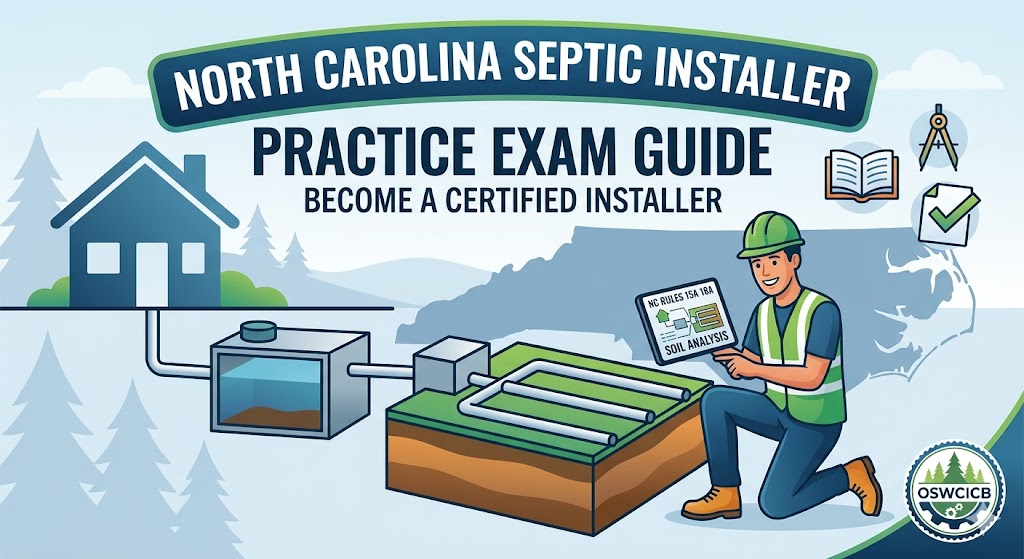
Additional Information
What the Course Entails and Exam Details
This preparatory study guide covers the core curriculum required by the North Carolina DEQ for installer certification. The practice exam and accompanying course materials focus on a deep understanding of the North Carolina On-Site Wastewater Laws (NC General Statutes 130A-333 through 345) and the extensive rules that govern wastewater systems (Title 15A, Subchapter 18A). Key topics include standard septic system components such as tanks, distribution boxes, and various drainfield types; advanced technologies including pump systems and pretreatment units; rigorous soil analysis and site evaluation procedures; and the practical technical skills necessary for correct, rule-compliant installations, including elevation measurements and proper sealing techniques.
What to Expect in the Final Exam
When candidates sit for the official North Carolina Septic Installer certification exam, they can expect a structured, proctored evaluation process. The official examination is primarily a comprehensive multiple-choice written test. It focuses heavily on the interpretation of regulatory rulebooks and the application of technical knowledge to real-world installation scenarios. While a small practical component may be included in some associated training workshops, the core certification is determined by the written assessment. Candidates must achieve a specific minimum passing score, generally defined as 70% or higher, to demonstrate proficiency. The exam is typically subject to a strict time limit (often two to three hours) which requires efficient time management. It is a closed-book examination, meaning no external resources, manuals, or unauthorized materials are permitted during the testing session.
How to Study and Exam Centers
Effective preparation for the North Carolina Septic Installer exam requires a strategic blend of statutory review and applied knowledge. The first critical step is to obtain and thoroughly study the official North Carolina DEQ training manual, as this document forms the foundation for nearly all exam questions. Utilize this practice exam multiple times to simulate the pressure of the test environment and pinpoint areas where your understanding is weak. Creating flashcards for specific rules, pipe measurement formulas, and soil types can be highly beneficial. Regarding testing locations, the official, proctored certification examinations are not conducted purely online but rather at specific, authorized regional training centers, local community colleges, or DEQ field offices throughout North Carolina; candidates must check the current DEQ schedule for specific dates and secure authorized center
Job Opportunities from the Course
Successfully passing the state examination and achieving licensure following the use of this practice exam guide opens the door to multiple specialized and high-demand career paths within North Carolina's infrastructure and environmental sectors:
Licensed Septic System Installer: The primary and most direct role, allowing you to legally operate a business or lead crews in the full construction and installation of residential and commercial wastewater systems.
Wastewater System Repair Contractor: A specialized field dedicated to diagnosing, permitting, and restoring failing or outdated systems in compliance with modern regulations.
Environmental Health Inspector: Qualified installers may find opportunities working for county health departments, performing inspections, and reviewing system plans for compliance.
Project Manager (Construction/Sanitary Services): Oversight positions within larger site development or civil engineering firms managing complex sanitation infrastructure.
Site Evaluation and Soil Technician: Roles focused specifically on the crucial initial phases of system planning, ensuring sites meet necessary soil and setback criteria for installation.
Frequently Asked Questions
Reviews
5.0
Based on 0 reviews
Leave a Review
No reviews yet. Be the first to review!