
Nova Scotia Pharmacy Jurisprudence Practice Exam
$69.00
- Buy to unlock unlimited access to all Quiz questions and Answers in this Quiz.
- After purchase you can print a PDF of the whole quiz at any point. The PDF will contain the questions and the correct answers.
About this Exam
The Nova Scotia Pharmacy Jurisprudence Examination (JP Exam) is a mandatory assessment for any individual seeking registration and licensure to practice pharmacy in Nova Scotia. It is administered by the Nova Scotia Pharmacy Regulator (NSPR), which was formerly known as the Nova Scotia College of Pharmacists. The JP Exam is designed not merely to test a candidate's memory of laws, but to ensure they possess the necessary knowledge and competence to interpret and apply the specific provincial and federal legislation, regulations, ethics, and standards of practice that govern the profession within the province.
This exam is designed for multiple candidates in the licensure pathway: pharmacy students, internationally trained pharmacy graduates, and pharmacy technicians seeking to obtain their practice licence in Nova Scotia. Successful completion of the jurisprudence exam is a critical component of professional registration and ensures a strong foundation for protecting public safety. It effectively serves as a bridge, transitioning your theoretical knowledge into practical, legally compliant professional action in a real-world setting.
Ready to test your knowledge?
Buy Now to Access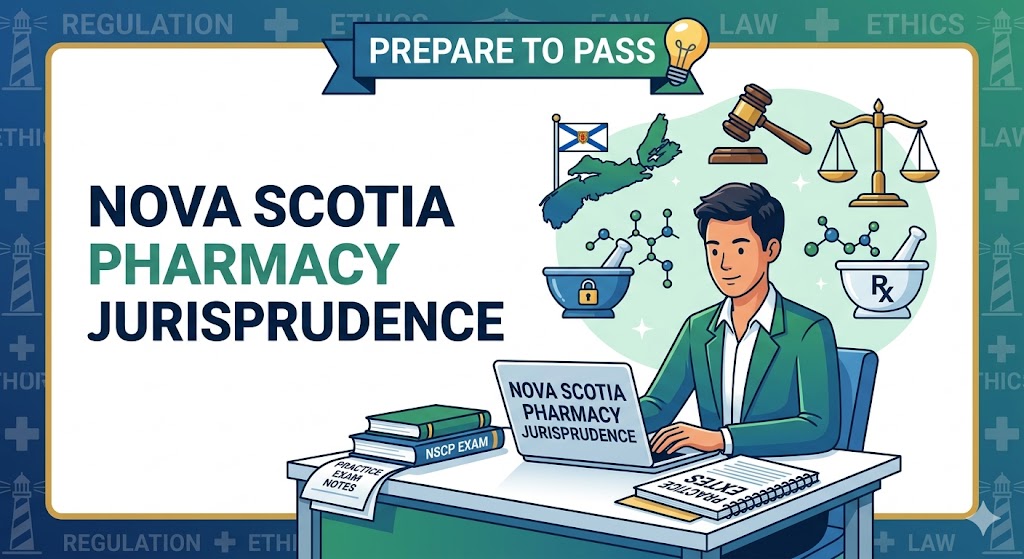
Additional Information
What the Course Entails and Exam Details
To prepare for the final exam, candidates must engage in a comprehensive course of self-study, focusing on the intricate legal and ethical framework of pharmacy practice. The study material is extensive and requires a deep level of understanding to apply concepts in practical scenarios.
The core syllabus and topics covered in your study and on high-quality jurisprudence practice tests include:
Provincial Pharmacy Legislation and Regulation: This is the most significant portion and covers the Regulated Health Professions Act (RHPA), the RHPA General Regulations, the RHPA Regulations Respecting Pharmacy, and the NSPR By-laws. This section defines the scope of practice, the structure of the regulator, and specific local requirements.
Federal Drug Legislation: A thorough understanding of national laws is essential, including the Food and Drugs Act, the Controlled Drugs and Substances Act (CDSA), and their respective regulations for narcotics, controlled drugs, and targeted substances.
Professional Standards and Ethics: You will study the NSPR Code of Ethics and the specific Standards of Practice that guide your professional conduct and decision-making on difficult moral or ethical issues.
Practice Provisions and Guidelines: This area includes NSPR practice policies, positions, guidelines, and directives, which provide further clarification on acceptable practice in various scenarios.
Scope of Practice and Controlled Acts: This defines what actions a licensed pharmacist or pharmacy technician is legally authorized to perform.
Record Keeping and Documentation: Legal requirements for maintaining accurate, secure records for prescriptions, patient profiles, drug inventory, and professional services are paramount.
Handling Prescriptions: Rules governing prescription authorization, transfers, labels, and authorization are covered.
Pharmacy Operations: This includes requirements for opening, closing, ownership, management, and accreditation of a pharmacy.
Other Affecting Legislation: Knowledge of other relevant laws, such as provincial privacy legislation (e.g., Personal Health Information Act - PHIA), is also required.
What to Expect in the Final Exam
The actual Nova Scotia Pharmacy Regulator Jurisprudence Examination is fully online and can be taken from a location of your choice that has a secure internet connection.
Exam Format: The JP Exam uses various question formats to assess your understanding, including multiple choice, select all that apply, yes/no, and true/false. This variety challenges your ability to analyze different situations and make compliant decisions.
Passing Score: To pass the JP Exam, you must achieve a score of 70%. This score demonstrates the minimum standard of competence required. Candidates who are successful will have their results valid for two years. Results are typically released by email within 10 business days.
Time Limit: Applicants are given a total of 3 hours and 15 minutes to complete the exam. This time is sufficient if you are familiar with where to find information.
Specific Rules: This is an "open-book" exam. Candidates are permitted to access resources, including the NSPR website, during the examination. However, you are cautioned to use external links carefully, as they may not contain the most up-to-date reference information. Completion of the exam must be an individual effort. Collaboration with others, turning on chat/email notifications, and sharing any exam questions is strictly prohibited. The exam is scheduled regularly, typically on the last Wednesday of each month, excluding December.
How to Study and Exam Centers
Preparation for an open-book exam requires a specific strategy, as the focus shifts from pure memorization to efficient navigation and application.
How to Study
Use Practice Tests: Integrating high-quality Nova Scotia Pharmacy Jurisprudence practice tests into your study routine is a highly effective strategy. Practice exams simulate the final exam's environment and question style, helping you manage your time and reduce anxiety.
Identify Knowledge Gaps: Taking practice tests will quickly reveal your weak areas, allowing you to focus your study time on those specific topics before the actual exam.
Practice 'Open-Book' Skills: The most valuable use of a practice test is to improve your efficiency. As you answer questions, practice navigating to the correct section in the primary source documents—like the NSPR By-laws or the Regulated Health Professions Act—quickly and accurately. You must learn to use the search function and index of documents.
Create 'cheat sheets': While you can access documents, creating your own organized reference sheets with key points, section numbers, and often-used regulations can be immensely helpful.
Master the Blueprint: A candidate's guide and exam blueprint are often provided. Use this to structure your study and allocate appropriate time to each topic, as it indicates which areas carry the most weight.
Exam Centers
You do not take the Nova Scotia Pharmacy Regulator Jurisprudence Examination at a physical testing center like Pearson VUE. The exam is fully online and is accessed via a specific exam link that will be emailed to you at your designated start time. To register for the exam, you must submit the correct application (e.g., Application for Pharmacist Jurisprudence Examination) on the NSPR website at least two weeks before your desired date, and pay the non-refundable examination fee.
Job Opportunities from the Course
Successfully passing the jurisprudence exam and achieving licensure in Nova Scotia is a critical key that unlocks numerous valuable job opportunities in a variety of practice settings. It demonstrates to employers your legal and professional competence, making you a highly desirable candidate. Licensure is necessary for roles such as:
Licensed Pharmacist (Community Pharmacy): Providing direct patient care, dispensing medication, and offering clinical services in retail settings throughout the province.
Licensed Pharmacist (Hospital Pharmacy): Working within acute care, managing complex medication therapies, and collaborating with interprofessional health care teams.
Licensed Pharmacist (Primary Care): Providing specialized patient care and medication management in primary care clinics or team-based practices.
Relief Pharmacist: Offering flexible coverage for community or hospital pharmacies on a temporary basis.
Pharmacy Manager: Leading a pharmacy team, ensuring regulatory compliance, and managing operations in a community setting.
Licensed Pharmacy Technician: Supporting pharmacists by performing technical duties, including prescription preparation and inventory management, in various environments.
Regulatory or Corporate Pharmacy Roles: Working for government agencies, pharmacy associations, or corporate chains in roles related to policy, compliance, or professional practice support.
Academic and Research Roles: Pursuing careers in pharmacy education or research, particularly in areas concerning legislation and policy.
Frequently Asked Questions
Reviews
5.0
Based on 0 reviews
Leave a Review
No reviews yet. Be the first to review!