
NRA Instructor Certification Practice Exam
$69.00
- Buy to unlock unlimited access to all Quiz questions and Answers in this Quiz.
- After purchase you can print a PDF of the whole quiz at any point. The PDF will contain the questions and the correct answers.
About this Exam
The NRA Instructor Certification is the gold standard credential for individuals dedicated to teaching firearms safety, responsible ownership, and marksmanship. Designed for experienced, law-abiding gun owners with strong fundamental shooting skills, this rigorous process transforms proficient shooters into qualified educators. Earning this certification empowers you to officially conduct official National Rifle Association training courses, passing on vital knowledge and skills to a new generation of enthusiasts while upholding the highest safety standards. This guide and practice overview are your starting points on the journey to becoming an NRA Certified Instructor and making a meaningful impact in your community.
Ready to test your knowledge?
Buy Now to Access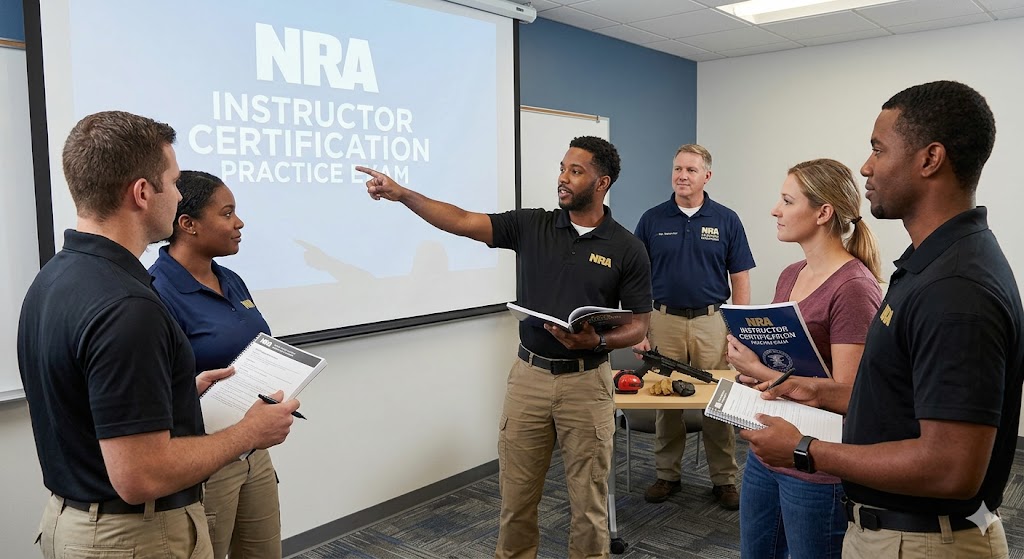
Additional Information
What the Course Entails and Exam Details
The pathway to becoming an NRA Instructor begins with identifying a specific discipline, such as Pistol, Rifle, Shotgun, or Home Firearm Safety. Comprehensive training courses, conducted in-person by NRA Training Counselors, dive deep into the essential skills of an educator rather than just a shooter. You will cover advanced teaching methodologies, develop engaging presentation and public speaking skills, learn effective lesson planning, and understand classroom management techniques. The curriculum extensively reinforces the fundamental NRA rules for gun safety, range organization, and procedures for conducting practical range training exercises. You will also review the legal considerations and responsibilities that come with instructing others in the use of firearms. Preparation with practice materials involves mastering these core pedagogical and safety principles, which form the bedrock of the entire certification process and the final examinations.
What to Expect in the Final Exam
The final assessment for NRA Instructor candidates is a multi-faceted evaluation that thoroughly tests both knowledge and practical ability. It typically includes a comprehensive written examination composed of multiple-choice and true-false questions covering teaching principles, NRA policies, course curriculum details, and extensive range safety protocols. You must achieve a high passing score, often 90% or higher, on this written test to qualify. Following the written portion, candidates undergo a rigorous practical evaluation. On the firing range, you will be required to demonstrate exceptional proficiency in gun handling, teach specific techniques to other candidates acting as students, manage a firing line effectively, and deliver concise, clear instructions with an unwavering commitment to safety. This practical exam is a critical "pass/fail" or satisfactory rating assessment, where your ability to safely and effectively instruct is put to the test under the watchful eye of an NRA Training Counselor. There are no standalone online testing centers or external proctors for these exams; they are an integral part of the authorized, in-person training course itself.
How to Study and Exam Centers
Succeeding on your journey to becoming an NRA Certified Instructor requires dedicated preparation. Here are actionable strategies for your study plan:
Official Study Materials: Thoroughly review the official NRA Trainer's Guide and the specific course materials for your chosen discipline. These contain the core curriculum and testing standards.
Practice Teaching: Take every opportunity to practice teaching concepts to friends or family (ensuring all safety rules are followed if practicing on the range). Work on clarity, confidence, and effective delivery.
Review Safety Protocols: Memorize and internalize the NRA's fundamental rules for gun safety and range procedures. Practice verbalizing these concepts flawlessly.
Study Practice Exams: Utilize available NRA Instructor Certification practice tests and quizzes to test your knowledge, identify weak areas, and become familiar with the types of questions you will face on the written exam. Focus on understanding the rationale behind each correct answer.
Enhance Shooting Proficiency: While the focus is on teaching, you must be a confident and safe shooter. Regular practice at the range to reinforce your fundamental skills will make you a more effective and credible instructor.
Prepare for Presentations: Practice presenting lesson segments in front of a mirror or with a partner. Record yourself to review your timing, body language, and voice projection.
The critical piece regarding exam centers is that NRA Instructor exams are not taken at separate testing centers like Pearson VUE. Instead, they are an integral part of the authorized, in-person training courses. To take the exam, you must first register for and complete an NRA Instructor training course conducted by a qualified NRA Training Counselor. You can find these authorized courses and counselors in your area by searching on the official NRA website. The training counselor will administer all evaluations—both written and practical—during the course of the training.
Job Opportunities from the Course
Becoming an NRA Certified Instructor opens doors to a diverse and rewarding array of career paths within the shooting sports industry. Some of the specific job opportunities and career paths include:
Certified Firearms Instructor (e.g., NRA Certified Pistol Instructor)
Range Safety Officer (RSO)
Chief Range Safety Officer (CRSO)
NRA Personal Protection In The Home Instructor
Concealed Carry (CCW) Class Instructor (where state-approved)
Basic Firearms Safety Course Instructor
Youth Shooting Sports Coach
Shooting Club Trainer and Instructor
Private Firearms Lesson Provider
Corporate Training Consultant (for safety or security applications)
Opportunities to conduct specialized workshops and clinics
Provides a foundation for pursuing advanced law enforcement or security training roles
Frequently Asked Questions
Reviews
5.0
Based on 0 reviews
Leave a Review
No reviews yet. Be the first to review!