
NSVT Module 3 Practice Exam
$69.00
- Buy to unlock unlimited access to all Quiz questions and Answers in this Quiz.
- After purchase you can print a PDF of the whole quiz at any point. The PDF will contain the questions and the correct answers.
About this Exam
The Network Security Vulnerability Technician (NSVT) certification is designed to equip IT professionals with the essential skills to identify, assess, and mitigate security weaknesses in modern network infrastructures. This specific practice test focuses on Module 3 of the full curriculum. The entire NSVT program is ideal for aspiring cybersecurity analysts, network administrators, and technical support specialists who want to specialize in defensive security practices. It offers a structured approach to understanding the lifecycle of a vulnerability, preparing candidates for real-world scenarios in protecting organizational data. This practice exam is an invaluable tool for validating your knowledge before attempting the final assessment for Module 3.
Ready to test your knowledge?
Buy Now to Access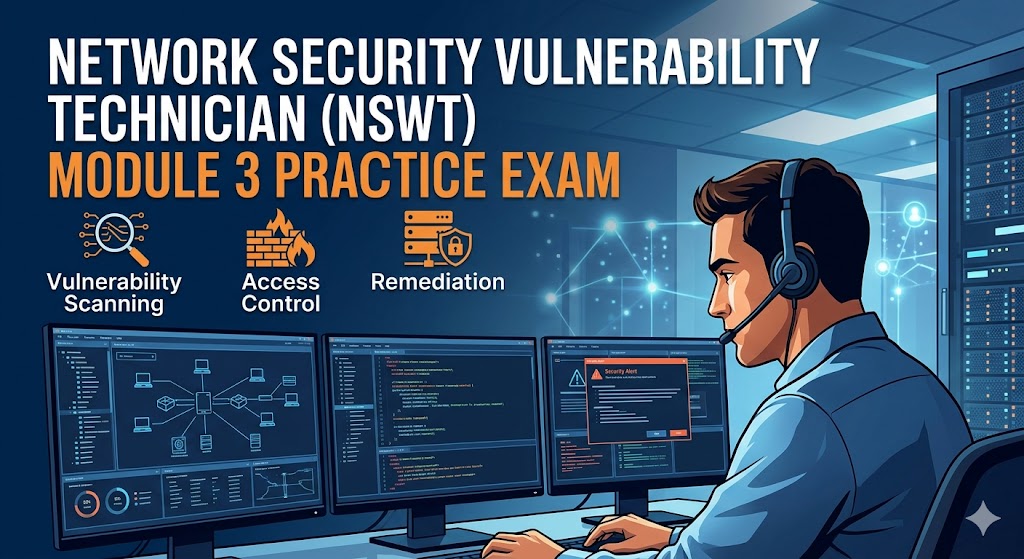
Additional Information
What the Course Entails and Exam Details
This practice exam covers the core concepts and techniques associated with network vulnerability management, a fundamental pillar of modern cybersecurity defenses. Key domains included are:
Understanding the difference between active and passive scanning and which to apply in various scenarios.
Navigating popular vulnerability scanners, understanding their output, and identifying false positives.
Prioritizing vulnerabilities based on CVSS (Common Vulnerability Scoring System) scores and organizational impact.
Developing and implementing effective remediation strategies, including patching, configuration changes, and compensating controls.
Documenting findings and creating actionable compliance reports for stakeholders.
The course entails master class-style video lessons, downloadable study guides, and hands-on lab exercises designed to simulate real-world networking environments. This particular practice test mirrors the structure of the official Module 3 exam, allowing you to gauge your readiness.
What to Expect in the Final Exam
While the NSVT program typically employs performance-based testing for final certification, the practice test format focuses on practical knowledge validation through multiple-choice questions.
Format: The final exam for Module 3 consists of approximately 40 to 60 multiple-choice questions. These questions are scenario-based and often present network diagrams or vulnerability scan data, requiring you to apply your theoretical knowledge.
Time Limit: You will typically be allocated 90 minutes to complete the exam. This requires efficient time management and confidence in your understanding of the material.
Passing Score: The passing score requirement is generally set around 70% or higher, emphasizing a strong grasp of the technical skills taught.
The exam is proctored, either in person or remotely, ensuring the integrity of the certification process. The practice test environment simulates these conditions to give you an accurate sense of the final assessment experience.
How to Study and Exam Centers
Effective preparation is key to succeeding on the NSVT Module 3 exam. Utilize a multi-pronged approach to your studies:
Active Learning: Do not just read or watch videos passively. After reviewing a topic, immediately apply it. If a lesson discusses scanning a specific protocol, set up a virtual lab and perform that scan. Active engagement dramatically improves recall.
Simulation with Practice Tests: Treat practice exams seriously. Simulate the real testing conditions—sit in a quiet room, set a timer, and avoid checking notes. This helps you build stamina and identify exactly where your knowledge gaps exist. Focus your revision efforts on the areas you consistently struggle with.
Peer Discussion and Forums: Join study groups or professional forums related to the NSVT or network security certifications. Discussing complex topics with peers often reveals new perspectives and deepens understanding.
Official Curriculum Review: Ensure you are using the official NSVT study materials as your primary source. Pay close attention to definitions, procedural steps for vulnerability assessment, and the standardized language used for scoring and reporting.
Exam Centers: The final NSVT certification exams are delivered through a network of authorized testing partners and recognized academic institutions. Many providers offer online proctoring, allowing you to take the exam securely from your home or office. Physical testing centers (such as authorized schools or recognized professional assessment facilities) are also available in many regions. You should register for your exam appointment well in advance, whether you choose the online or in-person option, ensuring you meet all pre-registration and ID requirements.
Job Opportunities from the Course
Earning the NSVT certification, particularly by mastering the assessment and remediation techniques in Module 3, opens up several lucrative and in-demand career paths in cybersecurity:
Cybersecurity Analyst
Network Security Technician
Vulnerability Management Specialist
Information Security Associate
IT Security Auditor
Network Administrator (with Security Focus)
Security Operations Center (SOC) Analyst
System Security Administrator
Frequently Asked Questions
Reviews
5.0
Based on 0 reviews
Leave a Review
No reviews yet. Be the first to review!