
NSW Safeworking Practice Exam
$69.00
- Buy to unlock unlimited access to all Quiz questions and Answers in this Quiz.
- After purchase you can print a PDF of the whole quiz at any point. The PDF will contain the questions and the correct answers.
About this Exam
The NSW Safeworking certification is a mandatory requirement for individuals wanting to work on or around the New South Wales railway network. Safeworking represents the comprehensive system of rules, procedures, and safety protocols designed to prevent accidents and protect both workers and rail operations. This practice exam is specifically designed to help aspiring rail professionals, such as handsignallers, protection officers, and track workers, prepare for their initial competence assessment. It serves as an excellent resource for confirming your understanding of the essential rules before you face the final examination administered by an authorized training organization.
Ready to test your knowledge?
Buy Now to Access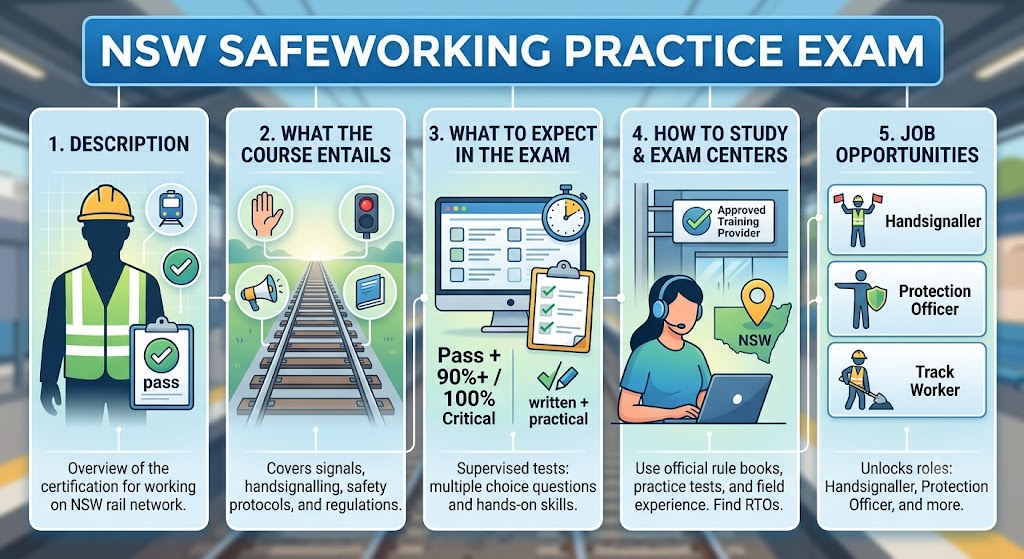
Additional Information
What the Course Entails and Exam Details
This examination is not a single course, but rather the culmination of training for a specific Safeworking level, such as "TLIF0020 Safely access the rail corridor" or a full Level 1 Safeworking qualification. The core topics generally include a thorough understanding of the NSW Network Rules and Procedures. You will study how to interpret various signals, use handsignals for directing rail traffic, and correctly use safety equipment like audible track warning devices. The course covers the critical protocols for communicating with Network Control and the proper procedures for establishing and removing worksite protection to ensure the safety of your team.
What to Expect in the Final Exam
You should expect the final Safeworking competence assessment to consist of two distinct parts: a theoretical component and a practical observation. The theoretical part is usually a supervised, written, multiple-choice exam, often taken through a computer portal. A very high passing score, typically 100% for critical safety questions and at least 90% overall, is required because of the safety-critical nature of the work. Following successful completion of the written exam, you will need to demonstrate your skills in a practical setting, where an assessor will observe you performing tasks like handsignalling or setting up a safe worksite.
How to Study and Exam Centers
Effective preparation is the key to success. Your primary study resource should be the official NSW Network Rules and Procedures and any learning materials provided by your Registered Training Organisation (RTO). We strongly encourage taking practice exams multiple times to get familiar with the question format and identify any weak areas in your knowledge. For the practical component, nothing beats supervised field experience; use every opportunity to observe and practice these procedures on-site under guidance. All official assessments must be completed through an RTO that is authorized by the relevant rail infrastructure manager, such as Transport for NSW or ARTC, rather than generic testing centers like Pearson VUE.
Job Opportunities from the Course
A Safeworking certification unlocks several vital roles within the rail industry, each forming a stepping stone to more advanced career paths.
Rail Industry Worker (RIW): The starting point for any job that requires access to the rail corridor, including general maintenance or trade roles.
Lookout / Handsignaller Level 1: This entry-level Safeworking role involves acting as a lookout for worksites and providing essential hand signals to train drivers.
Protection Officer Level 1: A step up in responsibility, a Protection Officer is responsible for assessing risks and implementing basic forms of protection for work crews.
Safeworking Officer / Network Control Officer: More advanced qualifications lead to positions responsible for coordinating rail traffic and supervising complex safety arrangements across the network.
Track Maintenance Worker: Many direct maintenance or construction jobs require an introductory level of Safeworking competency to ensure personal safety.
Frequently Asked Questions
Reviews
5.0
Based on 0 reviews
Leave a Review
No reviews yet. Be the first to review!