
Nuclear Surety Practice Exam Test
$69.00
- Buy to unlock unlimited access to all Quiz questions and Answers in this Quiz.
- After purchase you can print a PDF of the whole quiz at any point. The PDF will contain the questions and the correct answers.
About this Exam
The Nuclear Surety exam is a critical certification designed for individuals working within or aspiring to join sectors handling nuclear assets. This encompasses military personnel, specifically within branches like the Air Force, Department of Defense (DoD) civilians, and contractors. The primary focus of this certification is to validate a thorough understanding of the policies, procedures, and safety standards necessary to ensure nuclear weapons are safe, secure, and under positive control. It is designed to prevent accidents, unauthorized use, or any actions that could jeopardize the integrity of nuclear operations. Passing this exam is often a mandatory requirement for personnel assigned to critical nuclear-related duties.
Ready to test your knowledge?
Buy Now to Access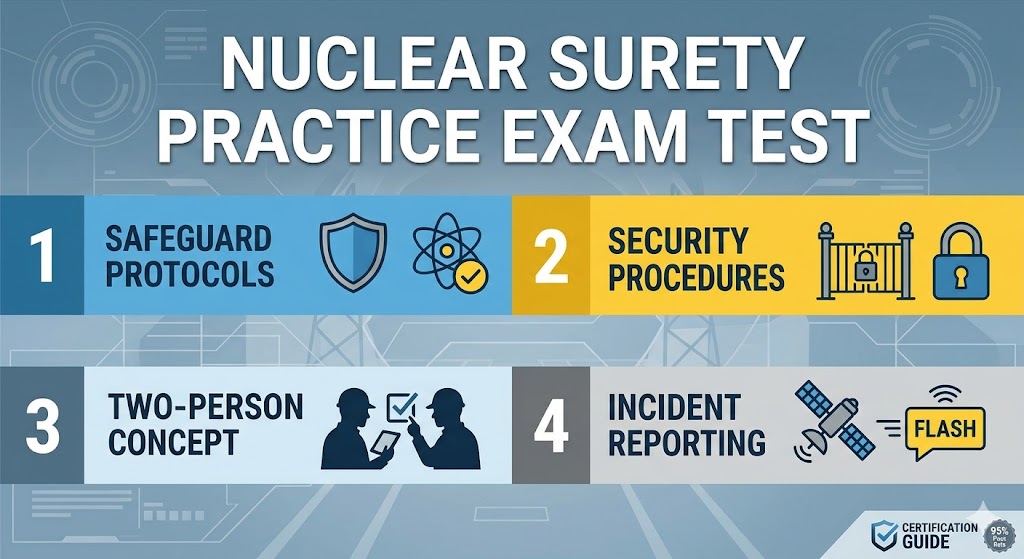
Additional Information
What the Course Entails and Exam Details
This course provides a comprehensive deep dive into the core pillars of the Nuclear Surety Program. Candidates will study the established Nuclear Weapon System Safety Standards, designed to maximize safety while maintaining operational readiness. A major component of the training covers severe incident reporting protocols (specifically OPREP-3 reporting) and the strict adherence to the "Two-Person Concept," ensuring no single individual ever has unsupervised access to a nuclear weapon. Furthermore, the curriculum thoroughly reviews the Personnel Reliability Program (PRP), which establishes high standards of individual reliability for those assigned to nuclear duties, focusing on factors like emotional stability, loyalty, and integrity.
What to Expect in the Final Exam
The final exam is a rigorous assessment typically administered in a multiple-choice format. Questions are designed not just to test recall but to evaluate the practical application of safety and security protocols in various scenarios. While exact passing scores and time limits can vary depending on the specific administering agency or branch of service, candidates should generally expect a required passing score of 80% or higher, reflecting the zero-defect nature of nuclear operations. The time limit is usually strict but sufficient for a well-prepared candidate to review all questions. The exam is closed-book, and strict proctoring rules apply to maintain the integrity of the certification process.
How to Study and Exam Centers
Preparation is paramount for success on this exam. Utilizing a dedicated practice exam, like the one this guide supports, is highly recommended to identify knowledge gaps and familiarize oneself with the questioning style. Candidates should thoroughly review all relevant official regulations and handbooks (such as specific Air Force Instructions or DoD manuals related to Nuclear Surety). Active studying techniques, such as creating flashcards for key terms, acronyms, and reporting procedures, are effective. Because this certification is highly specialized and security-sensitive, the exam is generally not administered at public testing centers like Pearson VUE. Instead, it is taken through secure, authorized military portals, specific training commands, or at authorized Department of Defense testing facilities.
Job Opportunities from the Course
A valid Nuclear Surety certification is a mandatory prerequisite for many critical roles within the nuclear enterprise, opening doors to specific career paths.
Nuclear Weapons Maintenance Technician
Missileer (Nuclear and Missile Operations Officer)
Specialized Security Forces (Nuclear Convoy/Facility Protection)
Munitions Systems Specialist (AMMO)
Nuclear Surety Manager
DoD Contract Compliance Specialist (Nuclear Sector)
Quality Assurance Inspector (Nuclear Operations)
Frequently Asked Questions
Reviews
5.0
Based on 0 reviews
Leave a Review
No reviews yet. Be the first to review!