
Nuisance Wildlife Control Operator Practice Exam
$69.00
- Buy to unlock unlimited access to all Quiz questions and Answers in this Quiz.
- After purchase you can print a PDF of the whole quiz at any point. The PDF will contain the questions and the correct answers.
About this Exam
The Nuisance Wildlife Control Operator (NWCO) Exam is a critical step for individuals looking to professionally manage wildlife interactions in urban, suburban, and rural settings. This certification is essential for anyone aiming to become a licensed wildlife control operator. It is designed to ensure that professionals understand the biological and ecological needs of the animals they handle, while prioritizing public safety, animal welfare, and relevant legal frameworks. This exam is ideal for aspiring wildlife rangers, ecological technicians, pest control professionals expanding their services, and conservationists looking to mitigate animal-human conflicts responsibly. Successfully passing the NWCO exam demonstrates your readiness to safely and ethically address wildlife challenges.
Ready to test your knowledge?
Buy Now to Access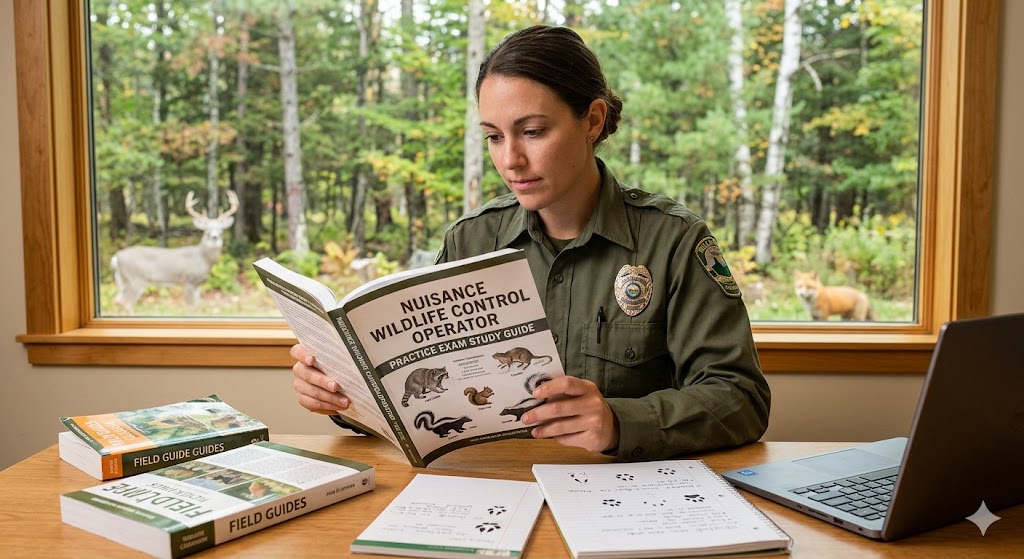
Additional Information
What the Course Entails and Exam Details
This examination covers a broad spectrum of topics related to wildlife control and management. It is designed to ensure that you possess the necessary knowledge and practical understanding to operate effectively and legally. The core areas covered include:
Wildlife Identification and Biology: Accurately identifying common nuisance wildlife species in your region, understanding their lifecycle, habitat requirements, behaviors, and ecological roles.
Integrated Pest Management (IPM) for Wildlife: Implementing sustainable and long-term solutions, focusing on prevention, exclusion, habitat modification, and lethal and non-lethal removal methods.
Humane Handling and Trapping Techniques: Mastering various trapping methods (live traps, leg-hold traps, etc.), understanding the ethical considerations of animal welfare, and preventing unnecessary harm.
Zoonotic Diseases and Public Health: Recognizing common diseases transmitted by wildlife (e.g., rabies, Lyme disease, Hantavirus) and following safety protocols to protect yourself and the public.
Legal and Regulatory Framework: Comprehensive knowledge of federal, state, and local laws governing wildlife management, including permits, protected species, and reporting requirements.
Safety Procedures and Equipment: Understanding and utilizing personal protective equipment (PPE), safe vehicle operation, and emergency procedures in the field.
Customer Relations and Ethics: Communicating effectively with property owners, providing ethical advice, and operating with professionalism.
What to Expect in the Final Exam
While the exact structure can vary slightly by state or province, the NWCO exam typically consists of multiple-choice questions designed to test your theoretical knowledge and practical applications of the concepts listed above. You can expect questions that range from identifying tracks and droppings to choosing the correct trapping method for a specific species and scenario. The exam is typically administered within a specific timeframe, often two to three hours. A passing score is usually set between 70% and 80%, depending on the state requirements. It is essential to arrive on time, follow all instructions, and be prepared to demonstrate a comprehensive understanding of each core area. Be ready to apply your knowledge to real-world scenarios rather than simply reciting facts.
How to Study and Exam Centers
Effective preparation is the key to success on the Nuisance Wildlife Control Operator exam. Utilize a multi-faceted approach to build your knowledge base. Start by obtaining the official study guide or manual provided by your state's wildlife management agency. These resources are specifically tailored to the legal and biological context of your region. Consider purchasing or utilizing additional practice exams that simulate the official test format. These practice tests help familiarize you with the question style and identify your areas of weakness. Complement your reading with practical field guides for wildlife identification in your area. Attending workshops or courses offered by authorized institutions or associations can also provide invaluable hands-on experience and expert insights. Engaging in field studies or shadowing an experienced wildlife control operator can deepen your understanding. Create flashcards for key definitions, species facts, and legal requirements. Practice identifying species using different resources and test yourself with scenarios.
Regarding exam centers, NWCO examinations are usually coordinated by the state or provincial agency responsible for wildlife management. While some regions may offer online proctored exams, others rely on a network of authorized testing centers. This can include specific physical testing locations, community colleges, or university extension programs. In some cases, third-party testing services like Pearson VUE might be utilized. Always check the official website of your specific state's department of fish and wildlife or natural resources to find information on authorized exam locations, registration processes, and scheduling. It's crucial to find the specific procedures for your jurisdiction, as they vary.
Job Opportunities from the Course
Earning your Nuisance Wildlife Control Operator (NWCO) certification opens doors to a wide range of rewarding career paths in wildlife management and conservation. This certification is a valuable asset in the public and private sectors, equipping you with marketable skills to address wildlife challenges. Here are some key job opportunities that this certification can unlock:
Nuisance Wildlife Control Operator (NWCO) / Technician: The primary role, directly working to manage animal conflicts for residential, commercial, and agricultural clients, including trapping, exclusion, and animal proofing.
Wildlife Control Business Owner/Manager: A pathway to entrepreneurship, allowing you to establish and run your own wildlife services business or manage teams.
Animal Control Officer: Government roles focusing on enforcing local ordinances related to domestic and wild animals, responding to wildlife complaints.
Park Ranger / Wildlife Technician: Positions within government agencies or conservation organizations where you might mitigate wildlife conflicts in parks or manage wildlife populations.
Wildlife Biologist (in a field setting): Field-based roles that involve assessing wildlife populations and implementing management strategies.
Ecological Technician / Environmental Consultant: Working with consulting firms to address wildlife-related environmental issues for construction and development projects.
Urban Wildlife Manager: Positions dedicated to managing wildlife populations and reducing conflicts within metropolitan areas.
Veterinary Technician (in wildlife rehab or control settings): While requiring veterinary training, NWCO knowledge is essential for those working with wildlife, specifically in animal welfare organizations.
Wildlife Removal Specialist (Pest Control Industry): Many existing pest control companies integrate wildlife services, making this a relevant rol
Frequently Asked Questions
Reviews
5.0
Based on 0 reviews
Leave a Review
No reviews yet. Be the first to review!