
NYS Private Investigator Practice Exam
$69.00
- Buy to unlock unlimited access to all Quiz questions and Answers in this Quiz.
- After purchase you can print a PDF of the whole quiz at any point. The PDF will contain the questions and the correct answers.
About this Exam
Embarking on a career as a private investigator in New York requires not only keen observational skills but also a thorough understanding of the state’s laws and regulations. The New York State Private Investigator licensure is essential for anyone looking to offer investigative services independently or within a firm in the Empire State. This licensure exam, often supplemented by a private investigator practice exam, is designed for aspiring investigators, security professionals looking to transition, and individuals aiming for a career in corporate or legal investigation within New York State.
This rigorous certification process ensures that all licensed private investigators possess the necessary knowledge and ethical standards to operate legally and effectively. It serves as a validation of your expertise in key areas such as evidence collection, legal procedures, and client confidentiality, setting a high standard for professionals in the field. Preparing with a New York State private investigator practice exam is a crucial step to passing.
Ready to test your knowledge?
Buy Now to Access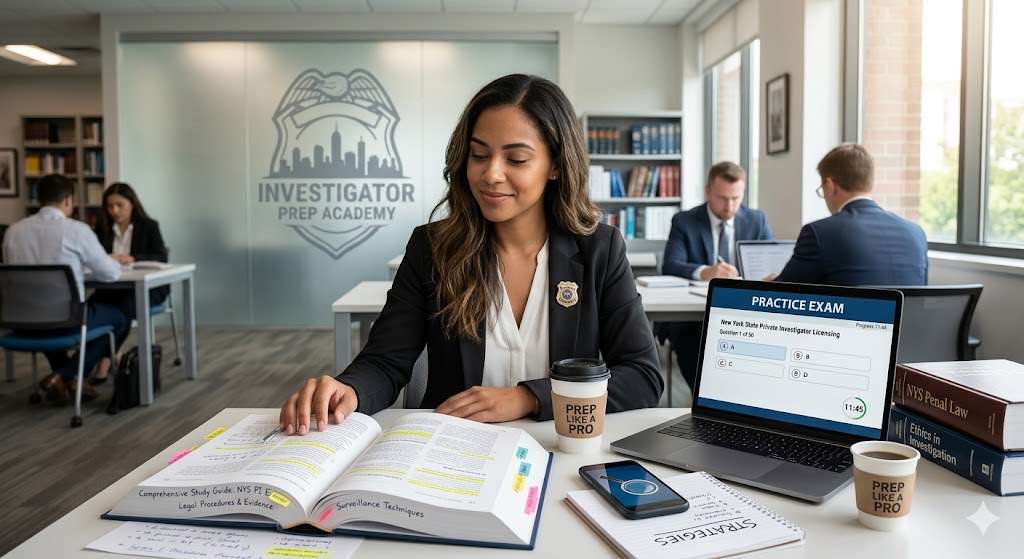
Additional Information
What the Course Entails and Exam Details
Preparing for the New York State Private Investigator licensure involves understanding a broad range of topics critical to the profession. The exam tests your knowledge across several key areas outlined in the New York State Department of State division of licensing services. The curriculum and practice exams are structured to ensure you grasp the legal frameworks and practical skills required. Use a private investigator practice exam to build your knowledge.
You will delve deep into relevant New York State laws, particularly Article 7 of the General Business Law, which governs the private investigation industry. Understanding the penal law, criminal procedure, and civil practice law as they apply to private investigations is paramount. A New York State private investigator practice exam will feature questions about these.
The core syllabus and private investigator practice exam material cover.
State Laws and Regulations: Thorough knowledge of the rules specifically for licensed private investigators in New York.
Ethical and Professional Responsibilities: Standards for conducting investigations with integrity and maintaining confidentiality.
Investigative Techniques: Best practices for gathering evidence, surveillance, interviewing witnesses, and conducting background checks.
Reporting and Documentation: Methods for accurately documenting findings and compiling professional reports suitable for legal use.
Client Relations and Business Practices: Legal and professional aspects of managing clients, contracts, and operating an investigative business in NY.
Understanding these details through study and a private investigator practice exam is crucial.
What to Expect in the Final Exam
The New York State Private Investigator licensure exam is a critical hurdle. Here’s what you need to know about the exam format and expectations to prepare effectively. The exam is administered by the NYS Department of State. Taking a private investigator practice exam will help you prepare.
Format: The exam typically consists of multiple-choice questions. These questions are designed to assess both your factual knowledge and your ability to apply investigative principles to specific scenarios common to New York.
Time Limit: Candidates are generally given 2.5 hours to complete the exam. You will need to manage your time wisely, as the questions require careful consideration of legal nuance.
Passing Score: The passing score is 70%. It is not enough to just pass; a high score reflects a strong grasp of the material, which you can practice using a private investigator practice exam.
Rules: Standard exam rules apply. You will need a valid government-issued ID. Electronic devices, study materials, and unauthorized aids are strictly prohibited in the testing room. Preparing in advance will help manage any test anxiety. Practicing with a private investigator practice exam will build confidence.
Understanding these exam day expectations will help you feel more prepared and confident. Regular use of a private investigator practice exam will reinforce your knowledge.
How to Study and Exam Centers
Preparation is key to succeeding on the NYS Private Investigator exam. A disciplined study plan that incorporates a mix of review and practical testing is essential. You need strong practice exams to prepare.
Study the Official Material: Start with the official study guide and relevant NYS laws, particularly the General Business Law, Article 7. This is the foundation of the exam content.
Use the New York State Private Investigator Practice Exam: A high-quality private investigator practice exam is indispensable. Practice exams help you get used to the wording, identify knowledge gaps, and improve your time management. Look for a practice exam that closely mimics the actual test format.
Focus on Areas of Weakness: Use your practice exam scores to determine which topics need more focus. If you struggle with questions related to criminal law, dedicate more study time to that section.
Understand Legal Context: Don't just memorize definitions; focus on understanding how laws apply to real-world investigative scenarios.
Where to Take the Exam
The New York State Private Investigator exam is administered by the New York State Department of State (NYSDOS), Division of Licensing Services. Exams are generally held at designated exam centers in major cities across the state, such as New York City, Albany, Buffalo, and Syracuse.
You must register for the exam through the NYSDOS official portal (typically using the NYS License Center). The official portal provides detailed instructions on selecting an exam date and location. Online testing options might be available, so check the latest updates on the official website. Ensure you are looking at official New York State private investigator practice exam resources.
Job Opportunities from the Course
Earning your New York State Private Investigator license opens a wide range of career opportunities across various sectors. This license not only allows you to operate as an independent investigator but also makes you a valuable asset to law firms, corporations, and specialized investigative agencies. Your practice with a private investigator practice exam will prepare you for these roles.
Here are some of the career paths you can pursue with this certification:
Private Investigator/Detective: Conduct investigations for individuals, lawyers, and businesses, covering cases like infidelity, missing persons, background checks, and fraud.
Corporate Investigator: Work within a company to investigate internal issues like embezzlement, asset protection, intellectual property theft, and corporate espionage.
Legal Investigator: Employed by law firms or defense attorneys to gather evidence, interview witnesses, and prepare information crucial for legal defense or litigation.
Insurance Fraud Investigator: Investigate suspicious claims for insurance companies to determine their legitimacy, saving companies from potential losses.
Background Investigator/Screener: Specialize in conducting thorough background checks for employment, pre-employment screening, and vetting for security clearances.
Surveillance Specialist: Utilize advanced surveillance techniques and technology to gather covert evidence and monitor activities in a variety of settings.
Frequently Asked Questions
Reviews
5.0
Based on 0 reviews
Leave a Review
No reviews yet. Be the first to review!