
OASC MIOT and Pilot Roles Practice Exam
$69.00
- Buy to unlock unlimited access to all Quiz questions and Answers in this Quiz.
- After purchase you can print a PDF of the whole quiz at any point. The PDF will contain the questions and the correct answers.
About this Exam
Welcome to your essential preparation guide for the OASC – Modular Initial Officer Training (MIOT), Pilot Training and Roles, UN, and NATO Practice Test.
This specialized exam is designed for aspiring officers and aircrew candidates aiming to join military services, particularly the Royal Air Force (RAF), and navigate the rigorous selection process at the Officer and Aircrew Selection Centre (OASC).
The test assesses not only your potential for leadership and Officer qualities but also your baseline knowledge of key operational environments.
It is tailored for individuals who are serious about a career as a military pilot and who need to demonstrate a strong understanding of foundational military doctrine, international alliances, and the complexities of global peacekeeping operations.
Success on this practice test indicates readiness for the intensive Modular Initial Officer Training (MIOT) and the challenging pilot selection pipeline.
Ready to test your knowledge?
Buy Now to Access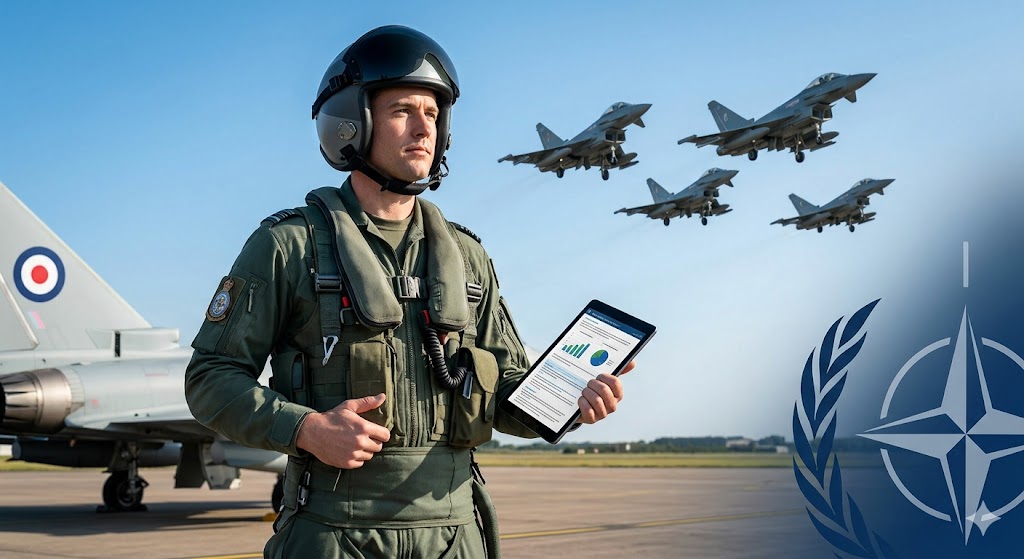
Additional Information
What the Course Entails and Exam Details
This comprehensive practice exam is structured to test a wide array of knowledge critical for a modern military officer.
It does not cover basic aptitude (which is tested elsewhere in OASC) but focuses on the cognitive and knowledge-based requirements of the role.
The core syllabus covered in this test includes:
OASC and MIOT Overview: You must understand the stages of the selection process itself and the structure, values, and expectations of the Modular Initial Officer Training course at RAF Cranwell.
Pilot Training Pipeline: Candidates must demonstrate a detailed understanding of the entire flight training process, from Elementary Flying Training (EFT) to Basic and Advanced Flying Training, including specific aircraft types used in the pipeline.
Pilot Roles and Specializations: The exam covers the operational roles available, including Fast Jet, Rotary (Helicopter), Multi-Engine, and Intelligence, Surveillance, Target Acquisition, and Reconnaissance (ISTAR) roles.
International Organizations: A significant portion of the test evaluates your knowledge of the United Nations (UN) and the North Atlantic Treaty Organization (NATO). This includes their history, structure, core missions, and the legal and operational framework within which military
What to Expect in the Final Exam
When sitting this specific practice test, you should expect a challenging, time-constrained environment that simulates the pressures of actual OASC written assessments.
The exam format is primarily focused on Multiple Choice Questions (MCQs).
These questions are designed to test both rapid recall of facts (e.g., "What is the primary role of NATO's Article 5?") and the application of knowledge (e.g., "Which aircraft type is currently used for Multi-Engine Advanced Flying Training?").
You will generally face a strict time limit (e.g., 60 minutes for 60 questions), requiring you to work quickly and accurately.
The passing score is typically set high (often around 70-80%) to reflect the competitive nature of officer selection.
Specific rules emphasize integrity; no external resources or study aids are permitted during the test.
How to Study and Exam Centers
Effective study for this exam requires a strategic approach combining memorization with contextual understanding.
Actionable Study Strategies:
Master Official Doctrine: The primary source materials are official RAF, NATO, and UN publications. Utilize the RAF recruitment website, the MIOT course overview, and the official fact sheets from the UN and NATO websites.
Focus on "The Why": Don’t just memorize dates and structures. Understand why NATO was formed and how the UN mandates peacekeeping missions. For pilot roles, understand the distinct strategic purpose of a Fast Jet role versus an ISTAR role.
Flashcards for Rapid Recall: Use flashcards for aircraft names, training bases, key terminology (e.g., Rules of Engagement, Article 5), and international organization structures.
Timed Practice: This is crucial. Take this practice test multiple times under strict timed conditions to build your speed and identify weak areas.
Exam Centers and Access:
Because this is a practice test associated with military selection preparation, it is typically accessed through authorized pre-joining portals, specific military career offices (AFCOs), or recognized online preparation platforms specializing in OASC candidate training.
It is not commonly hosted at civilian testing centers like Pearson VUE; access is strictly controlled for genuine candidates.
Job Opportunities from the Course
Successfully navigating OASC, MIOT, and the Pilot Training pipeline opens the door to some of the most prestigious and challenging careers in the aviation world.
Achieving a strong result on this practice test is a vital step toward securing a commission and a pilot training slot.
Successful completion of the actual training pipeline leads to specialized careers such as:
Fast Jet Pilot (e.g., flying the Eurofighter Typhoon or F-35 Lightning II)
Rotary Wing Pilot (Helicopters, e.g., flying the Chinook or Apache)
Multi-Engine Pilot (e.g., flying the Voyager, A400M, or Poseidon P-8A)
ISTAR Pilot/Remotely Piloted Aircraft System (RPAS) Pilot
Test Pilot (following extensive operational experience)
Flying Instructor
RAF Officer (Command, Staff, and Leadership roles within flying squadrons and wider defense)
Frequently Asked Questions
Reviews
5.0
Based on 0 reviews
Leave a Review
No reviews yet. Be the first to review!