
Objective Structured Clinical Examination (OSCE) Practice Exam
$69.00
- Buy to unlock unlimited access to all Quiz questions and Answers in this Quiz.
- After purchase you can print a PDF of the whole quiz at any point. The PDF will contain the questions and the correct answers.
About this Exam
What the Course Entails and Exam Details
Preparing for the CDCA Local Anesthesia exam requires a deep
dive into several interconnected areas of dental science. The curriculum
typically includes:
- Neurophysiology:
Understanding how nerves work and how pain signals are processed.
- Pharmacology
of Local Anesthetics and Vasoconstrictors: Detailed knowledge of
different anesthetic agents, their mechanisms, and dosages.
- Anatomy:
Comprehensive understanding of head and neck anatomy, particularly nerve
pathways.
- Patient
Assessment: Learning to evaluate patients’ medical history and health
status for safe administration.
- Anesthesia
Techniques: Mastering various injection techniques, including nerve
blocks and infiltrations.
- Local
and Systemic Complications: Recognizing and managing potential adverse
reactions.
- Medical
Emergencies: Knowing the immediate response to emergencies that may
arise during or after administration.
The exam itself evaluates this knowledge through
standardized written questions and, in many cases, a practical clinical
component that requires you to demonstrate your clinical competency on a
patient or a standardized model under examiner supervision.
What to Expect in the Final Exam
The CDCA Local Anesthesia licensure exam typically consists
of two distinct parts, ensuring a complete evaluation of your knowledge and
clinical skills.
Written Examination:
- Format:
This is usually a computer-based, multiple-choice examination.
- Content:
Questions will cover the entire scope of the curriculum: pharmacology,
neuroanatomy, patient assessment, and the management of complications.
- Time
Limit: You will have a defined time to complete this portion, which is
standardized.
- Passing
Score: A passing score of 75% or higher is typically required.
Practical/Clinical Examination:
- Format:
A hands-on evaluation in a clinical setting, often requiring you to
administer local anesthesia to a live patient.
- Procedures:
You may be asked to perform specific injections, such as an inferior
alveolar nerve block or an infiltration, showcasing proper technique and
safety.
- Evaluation:
Examiners will grade you against precise criteria, including safe needle
handling, proper anatomical placement, patient management, and following
aseptic protocols. Passing criteria often involve demonstrating perfect
execution on the core procedures.
- Note:
Candidates should always refer to the official CDCA (ADEX) Candidate Guide
for the most precise and up-to-date information on the current exam
format.
How to Study and Exam Centers
Preparation for success on test day must be a blend of
active study and hands-on practice.
- Review
Official CDCA Materials: The CDCA Candidate Guide is your best
starting point. Read it thoroughly to understand every requirement.
- Use
Comprehensive Textbooks: Re-engage with dental anesthesia textbooks.
Pay extra attention to diagrams and charts that summarize drug properties
and dosage calculations.
- Create
Flashcards: These are excellent for memorizing nerve pathways, drug
dosages, and complication management.
- Take
Practice Exams: Reputable practice exams are invaluable for simulating
the exam format and identifying knowledge gaps. Time yourself to practice
time management.
- Clinical
Practice: Seek opportunities for supervised clinical practice within
your program or with a mentor to perfect your injection techniques.
- Manage
Anxiety: Implement standard test-taking strategies like deep breathing
and adequate sleep leading up to the exam.
For registration and exam centers:
- Exam
Registration: You must typically apply through the dental licensing
board in your state or via the ADEX/CDCA official website.
- Written
Exam Centers: These are often administered at standardized testing
facilities like Prometric centers, located throughout the country.
- Clinical
Exam Sites: The practical portion is typically scheduled at an
authorized dental school clinic. Candidates will select their preferred
location and date during the registration process.
Job Opportunities from the Course
Earning licensure in local anesthesia dramatically broadens
your professional horizon and increases your value in any dental setting. Here
are clear job paths and opportunities unlocked by this certification:
- Registered
Dental Hygienist (RDH): The primary and most sought-after role,
allowing hygienists to take ownership of patient pain management.
- Periodontal
Dental Hygienist: Specialized opportunities in treating advanced gum
disease, where profound anesthesia is often required.
- Public
Health Dental Hygienist: Working in community clinics or educational
settings where expanded skills are necessary to provide comprehensive
care.
- Dental
Hygiene Instructor: Many programs require or prefer instructors to be
licensed to teach local anesthesia.
- Dental
Consultant: Using your advanced knowledge to train other dental
professionals.
- Arestin
or Specialty Product Specialist: Opportunities in sales or clinical
education for companies focused on advanced periodontal products.
Study Resource and Context Visual
To provide visual context for your study efforts, here is an
image illustrating a student diligently preparing for the CDCA Local Anesthesia
Practice Exam. It highlights the integration of different study materials—from
online assessments to textbook reference—needed for success.
Ready to test your knowledge?
Buy Now to Access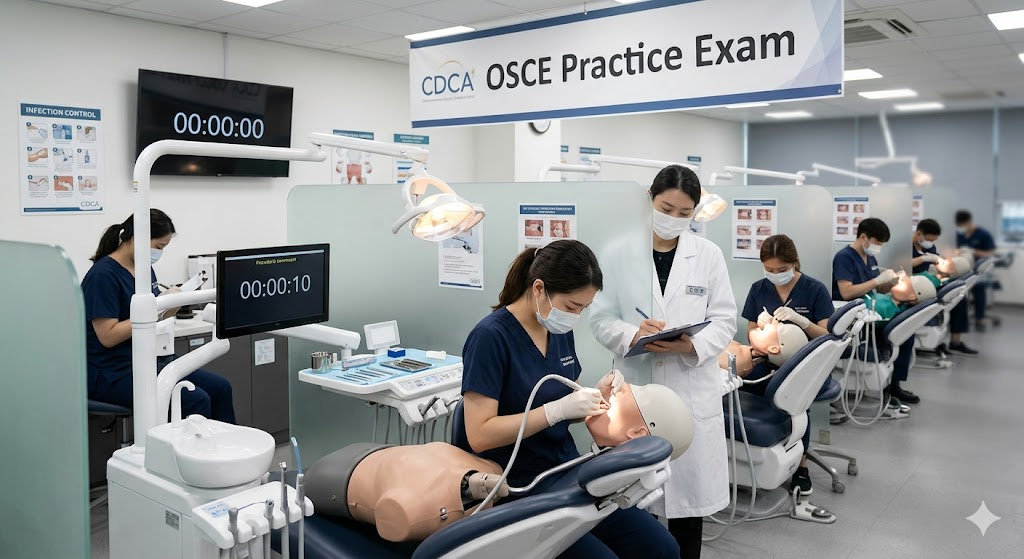
Additional Information
The CDCA Local Anesthesia licensure exam, administered by the Commission on Dental Competency Assessments (now a part of ADEX), is a rigorous assessment designed to test the knowledge and skills required for dental professionals to administer local anesthesia safely and effectively. This certification is a critical step for dental hygienists seeking to expand their scope of practice and take on more advanced roles in patient care. The exam is engineered for individuals who have already completed foundational education in dental hygiene or a related dental field and are now looking to validate their clinical competency in anesthesia administration. By earning this credential, professionals demonstrate their proficiency in administering pain control, which enhances patient comfort during dental procedures and opens up new career opportunities. This comprehensive study guide is your ultimate resource to navigate the exam process, from understanding the core curriculum to mastering practical techniques, so you can approach test day with confidence.
What the Course Entails and Exam Details
Preparing for the CDCA Local Anesthesia exam requires a deep understanding of a specific and technical syllabus. The comprehensive course that candidates typically complete before testing covers a wide range of essential topics. Key areas of focus include:
Neurophysiology and Neuroanatomy: Understanding the pathways and mechanisms of pain transmission, as well as the detailed anatomy of the head and neck, is foundational. Candidates must be well-versed in the location and structure of nerves.
Pharmacology of Local Anesthetics: This critical section covers the classification, composition, mechanisms of action, and metabolic pathways of various local anesthetic agents (e.g., lidocaine, mepivacaine, prilocaine, bupivacaine).
Vasoconstrictors: Candidates study the purpose, selection, dosages, and interactions of vasoconstrictors like epinephrine, including their physiological effects and potential risks.
Patient Assessment and Medical History: A robust section focused on assessing patient health to determine the safest and most appropriate anesthesia plan. This includes interpreting medical history and identifying contraindications.
Techniques for Local Anesthesia Administration: This part involves learning various injection techniques, such as the posterior superior alveolar (PSA), middle superior alveolar (MSA), anterior superior alveolar (ASA), and inferior alveolar nerve block (IANB), as well as variations and adjuncts.
Local and Systemic Complications: This area covers recognizing and managing possible adverse reactions, from localized hematomas and nerve paresthesia to systemic issues like toxicity, allergic reactions, and interactions with other medications.
Medical Emergencies: Candidates must know how to recognize and respond to emergency situations that may arise during or after the administration of local anesthesia, ensuring patient safety.
The exam itself is designed to evaluate this breadth of knowledge, often through a two-part assessment: a written multiple-choice component and a practical clinical evaluation.
What to Expect in the Final Exam
The actual CDCA (ADEX) Local Anesthesia exam is a standardized test with clear expectations and requirements. Knowing what to expect is key to managing test-day anxiety and performing at your best. While specific details can vary slightly by jurisdiction and time, here are the general components you can anticipate:
Written Examination:
Format: Typically a multiple-choice exam that covers all the theoretical knowledge outlined in the section above.
Content: Questions will be focused on pharmacology, neuroanatomy, dosages, complications, and ethical/legal considerations.
Time Limit: There will be a set time limit for completing the written portion, which is standardized across test-takers.
Passing Score: A passing score of 75% or higher is commonly required.
Practical/Clinical Examination:
Format: A hands-on clinical assessment where the candidate is required to administer local anesthesia on a live patient or a typodont, depending on current exam regulations.
Procedures: Candidates may be asked to perform specific injections, such as an inferior alveolar nerve block and an infiltration, demonstrating safe, accurate technique.
Evaluation: Examiners will grade candidates based on specific clinical criteria, including safe handling of instruments, patient management, proper injection technique, and aseptic procedures. Any major breach in safety protocols could result in automatic failure.
Passing Criteria: Scoring for the clinical portion is often binary (Pass/Fail) or graded against a checklist of required competencies. Each section of the clinical exam must typically be passed to achieve licensure.
Candidates should consult the official CDCA (ADEX) Candidate Guide for the most up-to-date and specific details on their exam location, format, and passing requirements.
How to Study and Exam Centers
Preparation for the CDCA Local Anesthesia exam must be comprehensive, utilizing various methods to master both theoretical knowledge and clinical application. Here are some actionable study strategies:
Create a Structured Study Plan: Break down the syllabus into manageable study sessions. Dedicate specific blocks of time to each topic, prioritizing areas where you feel less confident.
Utilize Official Resources: The primary source for study should be the CDCA (ADEX) Candidate Guide. Use it as a checklist to ensure you have covered every required element.
Review Textbooks and Course Notes: Dust off your anesthesia textbooks. Focus on key diagrams of anatomy, tables for dosages and pharmacology, and flowcharts for complication management. Re-read course notes and lecture materials.
Engage in Active Study: Don't just read. Highlight, summarize, make flashcards for drug information and nerve blocks, and create mnemonics. Draw diagrams of the head and neck from memory.
Take Practice Exams: This is one of the most effective strategies. Seek out reputable practice tests and sample questions to simulate the exam experience. Analyze your results to identify knowledge gaps.
Practice Clinical Skills (Legally): If you are still in a dental hygiene program, take advantage of clinical lab time. If you have graduated, seek opportunities for supervised practice, ensuring all your activities are within the legal scope of practice in your location.
Focus on Patient Assessment: Spend extra time on determining dosages based on patient weight and medical status, as this is a common area for questions and clinical evaluations.
Simulate Test Conditions: When taking practice tests, time yourself and eliminate distractions to build endurance and manage time effectively.
For registering and taking the exam:
Licensing Board: Licensure is typically granted through the state licensing board where you intend to practice. Contact them for specific instructions and links to the official CDCA (ADEX) testing service.
Testing Centers: Written portions of the exam are often administered at standardized testing facilities like Prometric or specific dental school locations. The clinical component may be scheduled at an authorized dental school clinic or a specialized testing site.
Online Registration: Candidates will register for the exam online through the ADEX/CDCA portal or their licensing board's system, selecting their preferred exam date and location.
Job Opportunities from the Course
A certification to administer local anesthesia unlocks significant career advancement and increases your value within the dental field. This comprehensive study guide prepares you for licensure, which is not only a professional milestone but also a way to secure more rewarding employment. Here are some of the job opportunities and career paths this certification enables:
Registered Dental Hygienist (RDH): This is the most common role. With local anesthesia licensure, you become a more integral part of the clinical team, able to manage patient pain independently, which is highly sought after by dental practices.
Specialty Dental Practice Hygienist: Opportunities may open up in practices specializing in periodontics, endodontics, or oral surgery, where local anesthesia skills are essential.
Public Health Dental Hygienist: Work in community health centers or schools, where you can provide a broader range of care to underserved populations.
Dental Hygiene Instructor: Many programs require or prefer instructors to be licensed in local anesthesia, allowing you to mentor and educate the next generation of dental professionals.
Expanded Function Dental Assistant (EFDA): Depending on your state’s regulations, some dental assistants with expanded functions may seek licensure in local anesthesia, broadening their clinical responsibilities.
Arestin or Specialty Treatment Specialist: The ability to administer anesthesia makes you well-suited for roles where delivering advanced periodontal therapy is required.
In summary, this certification not only deepens your knowledge but also positions you for a dynamic and rewarding career with expanded clinical responsibilities and enhanced job security. Success on the CDCA Local Anesthesia exam is a worthy achievement on your professional journey.
CDCA Local Anesthesia Practice Exam Prep Guide
Welcome to your comprehensive guide for the CDCA Local Anesthesia Practice Exam. Mastering this exam is a pivotal moment in your journey as a dental professional, validating your competency to provide safe, comfortable patient care through effective local anesthesia.
1. Description
The CDCA Local Anesthesia licensure exam, administered by the Commission on Dental Competency Assessments (now ADEX), is a fundamental assessment designed to verify that dental professionals possess the essential knowledge and clinical skills to administer local anesthesia safely. This certification is crucial for dental hygienists seeking to expand their scope of practice, allowing them to provide a higher level of pain control and patient care during diverse procedures. By earning this credential, you demonstrate your proficiency in a critical area of dentistry, enhancing patient comfort and significantly expanding your professional opportunities within a dental team.
2. What the Course Entails and Exam Details
Preparing for the CDCA Local Anesthesia exam requires a deep dive into several interconnected areas of dental science. The curriculum typically includes:
Neurophysiology: Understanding how nerves work and how pain signals are processed.
Pharmacology of Local Anesthetics and Vasoconstrictors: Detailed knowledge of different anesthetic agents, their mechanisms, and dosages.
Anatomy: Comprehensive understanding of head and neck anatomy, particularly nerve pathways.
Patient Assessment: Learning to evaluate patients’ medical history and health status for safe administration.
Anesthesia Techniques: Mastering various injection techniques, including nerve blocks and infiltrations.
Local and Systemic Complications: Recognizing and managing potential adverse reactions.
Medical Emergencies: Knowing the immediate response to emergencies that may arise during or after administration.
The exam itself evaluates this knowledge through standardized written questions and, in many cases, a practical clinical component that requires you to demonstrate your clinical competency on a patient or a standardized model under examiner supervision.
3. What to Expect in the Final Exam
The CDCA Local Anesthesia licensure exam typically consists of two distinct parts, ensuring a complete evaluation of your knowledge and clinical skills.
Written Examination:
Format: This is usually a computer-based, multiple-choice examination.
Content: Questions will cover the entire scope of the curriculum: pharmacology, neuroanatomy, patient assessment, and the management of complications.
Time Limit: You will have a defined time to complete this portion, which is standardized.
Passing Score: A passing score of 75% or higher is typically required.
Practical/Clinical Examination:
Format: A hands-on evaluation in a clinical setting, often requiring you to administer local anesthesia to a live patient.
Procedures: You may be asked to perform specific injections, such as an inferior alveolar nerve block or an infiltration, showcasing proper technique and safety.
Evaluation: Examiners will grade you against precise criteria, including safe needle handling, proper anatomical placement, patient management, and following aseptic protocols. Passing criteria often involve demonstrating perfect execution on the core procedures.
Note: Candidates should always refer to the official CDCA (ADEX) Candidate Guide for the most precise and up-to-date information on the current exam format.
4. How to Study and Exam Centers
Preparation for success on test day must be a blend of active study and hands-on practice.
Review Official CDCA Materials: The CDCA Candidate Guide is your best starting point. Read it thoroughly to understand every requirement.
Use Comprehensive Textbooks: Re-engage with dental anesthesia textbooks. Pay extra attention to diagrams and charts that summarize drug properties and dosage calculations.
Create Flashcards: These are excellent for memorizing nerve pathways, drug dosages, and complication management.
Take Practice Exams: Reputable practice exams are invaluable for simulating the exam format and identifying knowledge gaps. Time yourself to practice time management.
Clinical Practice: Seek opportunities for supervised clinical practice within your program or with a mentor to perfect your injection techniques.
Manage Anxiety: Implement standard test-taking strategies like deep breathing and adequate sleep leading up to the exam.
For registration and exam centers:
Exam Registration: You must typically apply through the dental licensing board in your state or via the ADEX/CDCA official website.
Written Exam Centers: These are often administered at standardized testing facilities like Prometric centers, located throughout the country.
Clinical Exam Sites: The practical portion is typically scheduled at an authorized dental school clinic. Candidates will select their preferred location and date during the registration process.
5. Job Opportunities from the Course
Earning licensure in local anesthesia dramatically broadens your professional horizon and increases your value in any dental setting. Here are clear job paths and opportunities unlocked by this certification:
Registered Dental Hygienist (RDH): The primary and most sought-after role, allowing hygienists to take ownership of patient pain management.
Periodontal Dental Hygienist: Specialized opportunities in treating advanced gum disease, where profound anesthesia is often required.
Public Health Dental Hygienist: Working in community clinics or educational settings where expanded skills are necessary to provide comprehensive care.
Dental Hygiene Instructor: Many programs require or prefer instructors to be licensed to teach local anesthesia.
Dental Consultant: Using your advanced knowledge to train other dental professionals.
Arestin or Specialty Product Specialist: Opportunities in sales or clinical education for companies focused on advanced periodontal products.
Study Resource and Context Visual
To provide visual context for your study efforts, here is an image illustrating a student diligently preparing for the CDCA Local Anesthesia Practice Exam. It highlights the integration of different study materials—from online assessments to textbook reference—needed for success.
Frequently Asked Questions
Reviews
5.0
Based on 0 reviews
Leave a Review
No reviews yet. Be the first to review!