
Ohio 36-Hour Volunteer Firefighter Practice Exam
$69.00
- Buy to unlock unlimited access to all Quiz questions and Answers in this Quiz.
- After purchase you can print a PDF of the whole quiz at any point. The PDF will contain the questions and the correct answers.
About this Exam
The Ohio 36-Hour Volunteer Firefighter certification represents a vital entry point for dedicated individuals committed to serving their local communities. This certification, overseen by the Ohio Department of Public Safety (ODPS), prepares volunteers with the fundamental knowledge and practical skills required to safely and effectively respond to fire emergencies within their fire departments. It is designed for passionate residents who want to make a tangible difference as volunteer firefighters in Ohio.
Ready to test your knowledge?
Buy Now to Access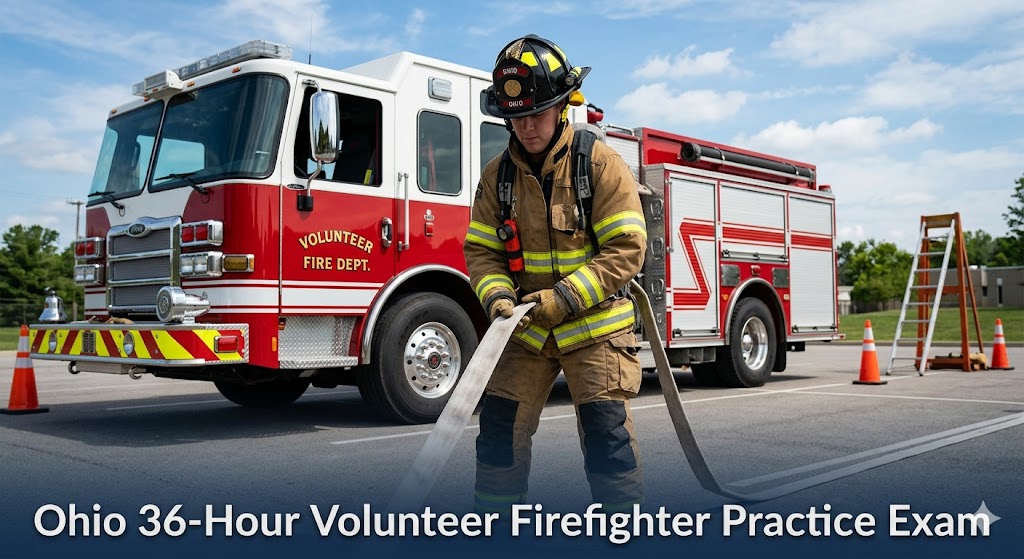
Additional Information
What the Course Entails and Exam Details
The comprehensive 36-hour training course focuses on core safety and basic fireground operations. Students delve into critical topics including personal protective equipment (PPE) and self-contained breathing apparatus (SCBA), hose handling and deployment, ladder operations, basic fire behavior and control, ventilation principles, salvaging and overhaul techniques, and essential communication skills. A significant portion of the course emphasizes the Ohio Safety First manual and standard operating procedures (SOPs), ensuring participants can operate as part of a safe and efficient team. The culminating event is the state-administered certification exam, designed to validate the student’s grasp of these fundamental skills.
What to Expect in the Final Exam
The final exam for the Ohio 36-Hour Volunteer Firefighter certification typically consists of both a written cognitive test and a practical skills evaluation. The written portion generally features multiple-choice questions covering all theoretical aspects learned during the course and from the Ohio Safety First manual. Students must achieve a passing score, often 70% or higher, on this written section. The practical exam assesses the candidate's hands-on proficiency in critical tasks like donning PPE and SCBA within specific time limits, deploying a hose line, and demonstrating safe ladder placement. Successful completion of both components is necessary for state certification.
How to Study and Exam Centers
Effective preparation is key to success on the 36-Hour Volunteer Firefighter exam. Candidates should thoroughly study the provided Ohio Safety First manual, which serves as the primary resource. Utilizing a practice test tailored to the Ohio-specific curriculum is highly recommended, as it familiarizes you with the question format and highlights areas for improvement. Consistent review of fireground terminology and safety procedures is crucial. Practice the hands-on skills frequently under the supervision of qualified instructors in your fire department or training facility to build confidence and muscle memory. Testing locations and scheduling are typically coordinated through authorized Ohio fire training schools or regional public safety training centers in collaboration with the ODPS.
Job Opportunities from the Course
Upon earning the Ohio 36-Hour Volunteer Firefighter certification, you open the door to impactful service and potential career advancement within the fire service, including:
Volunteer Firefighter: Directly respond to emergencies within your local community.
On-Call Firefighter: Participate in scheduled shifts or response calls for smaller departments.
Prerequisite for Higher Certification: Completion of this 36-hour course is often a required first step toward pursuing the more advanced Level I or Level II Firefighter certifications in Ohio.
Frequently Asked Questions
Reviews
5.0
Based on 0 reviews
Leave a Review
No reviews yet. Be the first to review!