
Oil Heat Technician Practice Exam
$69.00
- Buy to unlock unlimited access to all Quiz questions and Answers in this Quiz.
- After purchase you can print a PDF of the whole quiz at any point. The PDF will contain the questions and the correct answers.
About this Exam
The Oil Heat Technician certification is an industry-recognized credential designed for HVAC professionals and maintenance workers who specialize in liquid fuel heating systems.
This certification validates your expertise in safely installing, servicing, and maintaining residential and commercial oil burners.
It is specifically tailored for entry-level apprentices looking to prove their foundational knowledge, as well as seasoned technicians seeking to elevate their professional standing through organizations like the National Oilheat Research Alliance (NORA).
Earning this credential assures employers and customers that you are fully competent, safety-conscious, and up-to-date with modern combustion technologies and environmental standards.
Ready to test your knowledge?
Buy Now to Access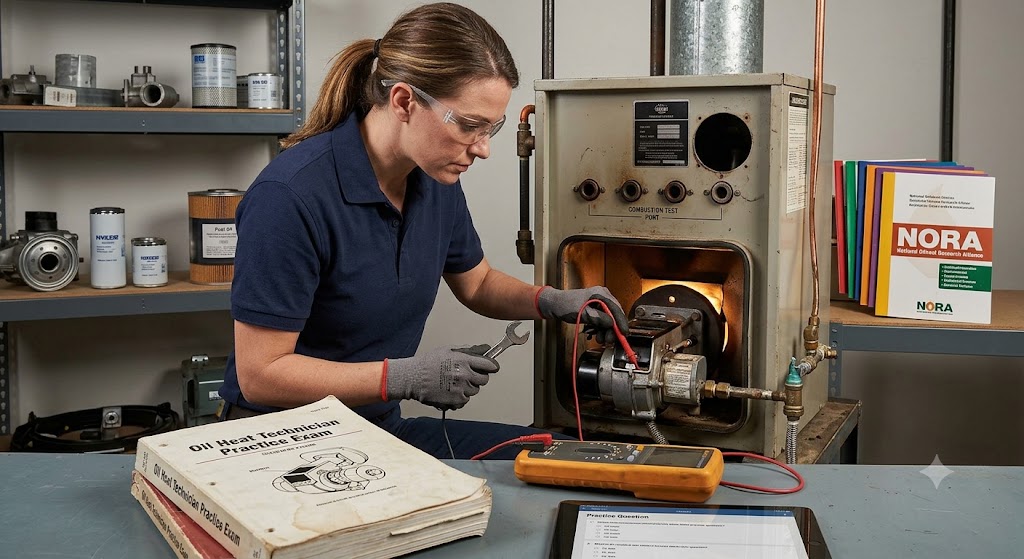
Additional Information
What the Course Entails and Exam Details
Preparing for the Oil Heat Technician exam involves a deep dive into the mechanical, electrical, and chemical principles of heating systems.
The core syllabus thoroughly covers heating oil properties, fuel storage tanks, and safe piping methods.
You will also learn the intricate details of oil burners, combustion theory, and proper venting techniques to prevent carbon monoxide hazards.
Furthermore, the curriculum delves into electrical controls, hydronic heating systems, and advanced diagnostic procedures for troubleshooting system failures.
Mastering these topics ensures you have the comprehensive technical skills required to maximize boiler efficiency and maintain safe residential environments.
What to Expect in the Final Exam
The final exam is a rigorous assessment designed to test both your theoretical knowledge and practical troubleshooting abilities.
Typically, the test consists of 100 multiple-choice questions that cover everything from basic fuel characteristics to complex electrical wiring diagrams.
Candidates are generally given a strict time limit of two to three hours to complete the examination.
To achieve a passing grade and earn your certification, you must score at least a 70% or higher, depending on the specific tier of certification you are pursuing.
No outside reference materials or programmable devices are allowed in the testing room, making thorough memorization and conceptual understanding absolutely critical.
How to Study and Exam Centers
Success on this exam requires a strategic blend of hands-on experience and dedicated textbook review.
Begin by securing the official industry manuals, such as the NORA Technician's Manual, and build a consistent study schedule around its chapters.
Utilizing an online practice exam is one of the most actionable strategies you can employ, as it helps you identify weak points and get comfortable with the pacing of the real test.
Flashcards are highly recommended for memorizing electrical codes, clearances, and specific combustion formulas.
When you are ready to test, exams are typically administered at authorized vocational schools, technical colleges, or certified regional training centers.
Additionally, many certification boards now offer secure, proctored online exams via platforms like Pearson VUE, allowing you to take the test from the comfort of your own home.
Job Opportunities from the Course
Earning your Oil Heat Technician certification opens the door to a variety of stable, high-demand career paths in the heating and cooling industry. Below are some of the specific job titles this credential unlocks.
Certified Oil Heat Technician – The primary role where you will directly service, repair, and install residential oil heating systems.
HVAC/R Service Mechanic – A broader role that combines heating knowledge with ventilation and air conditioning maintenance.
Fuel Delivery and Service Specialist – A hybrid position where you deliver heating oil while performing routine safety inspections and minor repairs on client tanks.
Preventative Maintenance Inspector – A specialist focused entirely on performing annual tune-ups, efficiency testing, and safety audits.
HVAC Installation Supervisor – A senior-level role managing teams of technicians, overseeing complex system installations, and ensuring code compliance.
Frequently Asked Questions
Reviews
5.0
Based on 0 reviews
Leave a Review
No reviews yet. Be the first to review!