
Oklahoma Electronic Access Control Practice Test
$69.00
- Buy to unlock unlimited access to all Quiz questions and Answers in this Quiz.
- After purchase you can print a PDF of the whole quiz at any point. The PDF will contain the questions and the correct answers.
About this Exam
The Oklahoma Electronic Access Control certification is a crucial credential for professionals looking to build a secure and rewarding career in the security and alarm industry.
This specialized licensing exam, mandated by the Oklahoma Department of Labor (ODOL), ensures that technicians have the necessary knowledge to safely install, service, and maintain electronic access control systems.
It is designed for aspiring security technicians, low-voltage electricians, and locksmiths who want to transition into the fast-growing world of commercial and residential electronic security.
Earning this credential proves to employers and clients that you are well-versed in state regulations, electrical safety codes, and modern access control technologies.
Ready to test your knowledge?
Buy Now to Access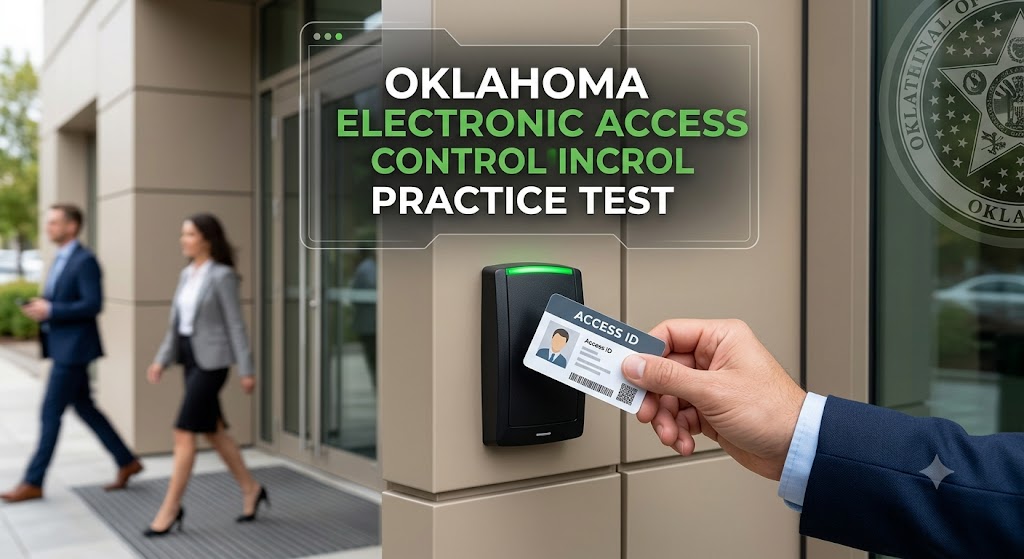
Additional Information
What the Course Entails and Exam Details
Preparing for the Oklahoma Electronic Access Control exam involves mastering a wide blend of electrical theory, practical hardware application, and state-specific legal requirements.
Candidates will dive deep into the fundamentals of low-voltage electronics, learning how circuits, relays, and power supplies function within a security network.
The syllabus heavily covers access control components, including magnetic locks, electronic strikes, biometric scanners, RFID card readers, and request-to-exit devices.
Additionally, the curriculum places a strong emphasis on life safety codes, such as the National Electrical Code (NEC) and National Fire Protection Association (NFPA) standards, ensuring that systems do not trap occupants during emergencies.
You will also be tested heavily on the Oklahoma Alarm, Locksmith, and Fire Sprinkler Industry Act, so knowing the state statutes inside and out is absolutely essential.
What to Expect in the Final Exam
The official certification test is a closed-book, computer-based exam designed to assess both your technical knowledge and your understanding of legal compliance.
You can expect multiple-choice questions that cover everything from electrical calculations to specific code requirements for fire alarm integration.
Candidates are generally given a strict time limit, typically around two hours, to complete the exam.
To achieve a passing score, you will need to answer at least 70% of the questions correctly.
Calculators are usually permitted, provided they are non-programmable, but you will not be allowed to bring outside reference materials, cell phones, or smartwatches into the testing room.
How to Study and Exam Centers
Success on this exam requires a strategic combination of hands-on familiarization and focused textbook studying.
Start by downloading the official statute and rule books from the Oklahoma Department of Labor website, as legal and administrative questions make up a significant portion of the test.
Utilize high-quality practice exams to get comfortable with the multiple-choice format and to identify any weak areas in your knowledge of NFPA and NEC codes.
Flashcards are highly recommended for memorizing specific voltage drops, wire gauges, and clearance codes.
When you are ready to take the official exam, you will need to schedule your test through PSI Services, which is the authorized testing vendor for Oklahoma state licensing.
PSI operates numerous secure, proctored testing centers throughout Oklahoma, including locations in Oklahoma City, Tulsa, and McAlester, ensuring you can find a facility near you.
Job Opportunities from the Course
Passing the Oklahoma Electronic Access Control exam unlocks a variety of specialized, high-demand career paths in the security sector.
Electronic Access Control Technician You will be responsible for the direct installation, wiring, and maintenance of card readers, keypad entries, and locking hardware in commercial buildings.
Low-Voltage Security Installer This role focuses on running the necessary cabling and setting up the network infrastructure that allows security devices to communicate with main control panels.
Commercial Locksmith Traditional locksmiths use this certification to expand their services, blending mechanical door hardware with electronic strike systems for modern businesses.
Security Systems Integrator In this advanced role, you will design and connect access control networks with CCTV cameras and fire alarm systems to create comprehensive, building-wide security solutions.
Field Service Engineer This position involves troubleshooting complex, enterprise-level security systems, repairing malfunctioning hardware, and performing routine software updates for corporate clients.
Frequently Asked Questions
Reviews
5.0
Based on 0 reviews
Leave a Review
No reviews yet. Be the first to review!