
Oklahoma FCCLA District Officer Practice Test
$69.00
- Buy to unlock unlimited access to all Quiz questions and Answers in this Quiz.
- After purchase you can print a PDF of the whole quiz at any point. The PDF will contain the questions and the correct answers.
About this Exam
The Oklahoma Family, Career and Community Leaders of America (FCCLA) District Officer exam is a highly respected credentialing step for driven students.
This assessment is specifically designed for ambitious high school and middle school members who wish to step into higher leadership roles within their district.
It serves as a benchmark to ensure that prospective officers possess a deep understanding of the organization's core values, history, and operational procedures.
By passing this exam, students prove they have the dedication and foundational knowledge required to represent their peers and lead regional initiatives successfully.
Ultimately, this test acts as a gateway for young leaders to refine their professional skills, boost their resumes, and make a tangible impact on their local communities.
Ready to test your knowledge?
Buy Now to Access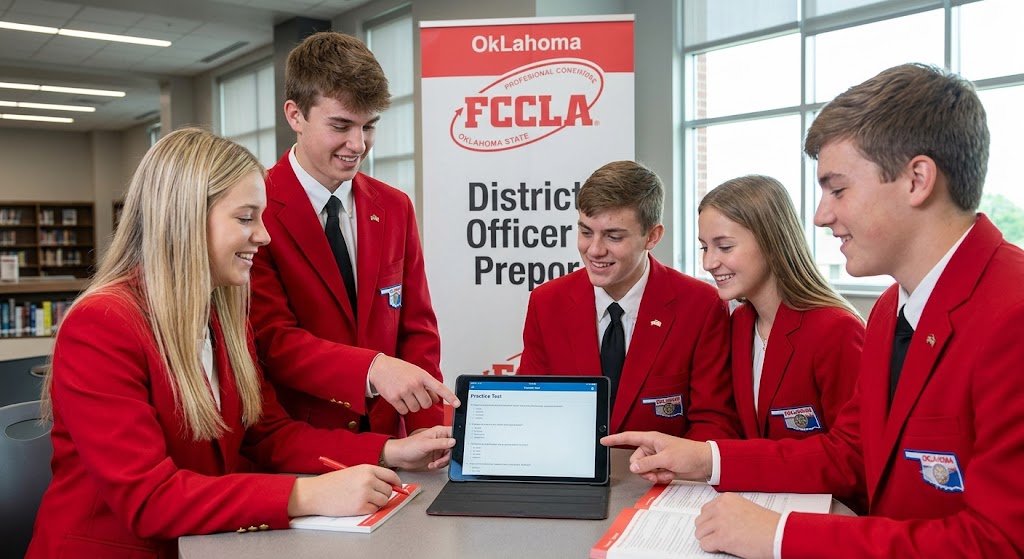
Additional Information
What the Course Entails and Exam Details
Preparing for the district officer position entails mastering a comprehensive syllabus centered around leadership and organizational knowledge.
Candidates are required to study the rich history of FCCLA, including its founding dates, pivotal milestones, and the evolution of its mission.
A core component of the syllabus focuses on the FCCLA creed, motto, purposes, and the significance of the official colors and emblem.
Students will also dive deep into national programs, such as STAR Events (Students Taking Action with Recognition), FACTS (Families Acting for Community Traffic Safety), and Career Connection.
Furthermore, the curriculum covers parliamentary procedure, primarily based on Robert’s Rules of Order, to ensure future officers can conduct professional and efficient meetings.
State-specific knowledge is also tested, requiring candidates to know current state officers, the Oklahoma state advisor, and regional district breakdowns.
What to Expect in the Final Exam
When you sit for the final exam, you can expect a streamlined, objective testing format designed to accurately measure your foundational knowledge.
The assessment typically consists of a multiple-choice format, presenting questions that range from basic historical facts to situational leadership scenarios.
Test-takers are usually given a strict time limit, frequently between 30 to 60 minutes, which challenges them to recall information quickly and accurately.
To pass and qualify for the officer candidate interview rounds, students generally need to achieve a minimum passing score, which is often set at 70% or higher depending on the specific district guidelines.
The rules are strictly enforced, prohibiting the use of outside study materials, smartphones, or unauthorized web browsing during the exam session to maintain academic integrity.
It is important to read each question carefully, as some options may seem similar but test your precise knowledge of the organization's bylaws and programs.
How to Study and Exam Centers
Achieving a high score requires strategic preparation and a proactive approach to studying.
Start by downloading the official Oklahoma FCCLA Step One and officer study guides from the state website, as these documents outline the exact material that will be tested.
Create digital flashcards using platforms like Quizlet to memorize important dates, national program acronyms, and parliamentary procedure terms.
Forming study groups with your local chapter members or running mock exams with your chapter advisor can incredibly boost your confidence and information retention.
Regarding testing locations, the exam is typically proctored in a familiar environment to reduce student anxiety.
Most candidates will take the exam online through a secure portal directly at their own high school, heavily monitored by their authorized Family and Consumer Sciences teacher or FCCLA advisor.
In some cases, the exam may be administered in person at designated regional testing centers or during the official district leadership conferences.
Job Opportunities from the Course
While FCCLA is a student organization rather than a professional degree, the leadership certification and knowledge gained here directly unlock exceptional future career paths.
The skills mastered—such as public speaking, event planning, and parliamentary procedure—make candidates highly competitive in various professional fields.
Family and Consumer Sciences Teacher: Many officers go on to become educators themselves, guiding the next generation of students in life skills and leadership.
Public Relations Specialist: The communication and networking skills developed as an officer seamlessly translate into crafting public images for companies and brands.
Event Coordinator: Organizing district conferences and community service projects provides perfect hands-on experience for a lucrative career in professional event planning.
Nonprofit Director: A deep understanding of community service and organizational bylaws lays the ideal foundation for running charitable organizations and NGOs.
Policy Advocate: The experience gained from implementing national programs and advocating for youth initiatives empowers students to pursue impactful roles in public policy and government relations.
Frequently Asked Questions
Reviews
5.0
Based on 0 reviews
Leave a Review
No reviews yet. Be the first to review!