
Oklahoma Subject Area Tests (OSAT) Art Practice Test
$69.00
- Buy to unlock unlimited access to all Quiz questions and Answers in this Quiz.
- After purchase you can print a PDF of the whole quiz at any point. The PDF will contain the questions and the correct answers.
About this Exam
The Oklahoma Subject Area Tests (OSAT) Art exam is a comprehensive assessment designed for aspiring art educators seeking certification to teach visual arts in Oklahoma's public schools, typically across grades K-12. This test evaluates whether candidates possess the essential knowledge and skills necessary to effectively plan, implement, and assess art education programs. Passing the OSAT Art exam is a crucial step in obtaining state licensure, demonstrating competence in various art forms, historical contexts, artistic principles, and pedagogical strategies required for a successful and impactful career teaching art to diverse student populations.
Ready to test your knowledge?
Buy Now to Access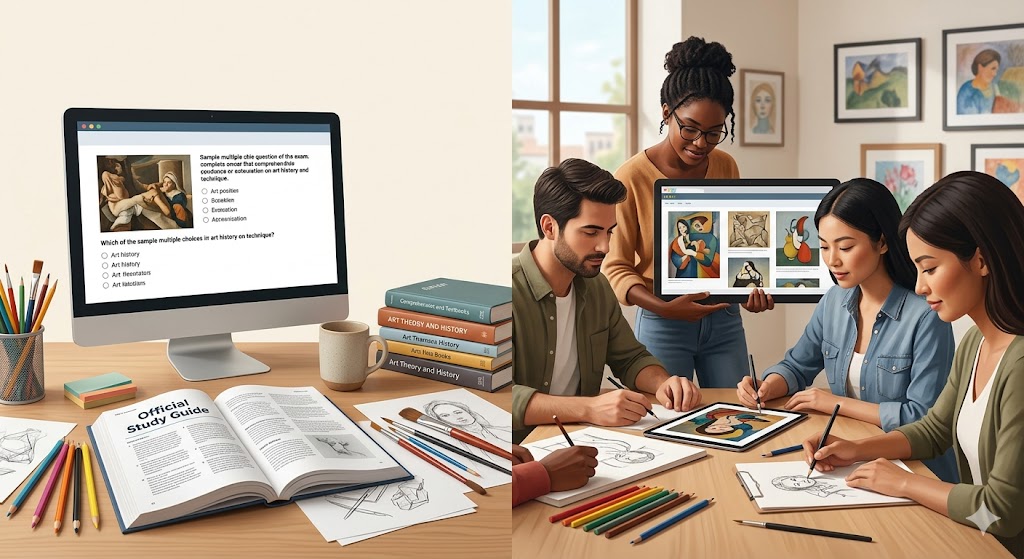
Additional Information
What the Course Entails and Exam Details
Preparing for the OSAT Art exam involves a deep understanding of multiple content domains that cover the visual arts field extensively. The exam assesses a candidate’s knowledge of both theoretical concepts and practical applications within art education. The core topics and skills generally covered include:
Art Media, Tools, and Techniques: Familiarity with various materials, processes, and safety protocols in areas like drawing, painting, sculpture, printmaking, ceramics, photography, graphic design, and mixed media.
Elements of Art and Principles of Design: Understanding the foundational language of art and composition, such as line, shape, color, form, texture, space, value, balance, contrast, unity, and emphasis.
Art History and Criticism: Knowledge of major periods, styles, and artists across diverse cultures and timeframes. The ability to analyze, interpret, and evaluate artworks using critical frameworks and historical context.
Aesthetics and Art Theory: Exploring the nature of art, beauty, and artistic expression, and different philosophies about art.
Visual Arts Education: Understanding K-12 art curriculum development, instructional strategies, student assessment methods, classroom management, and the role of art in human development and learning.
What to Expect in the Final Exam
The OSAT Art exam is a computer-based test (CBT) that consists solely of select-response (multiple-choice) questions. Test-takers should prepare for a rigorous examination that evaluates conceptual understanding and practical application across the designated domains. Here are key details regarding the exam format:
Format: The exam typically features approximately 100 select-response questions. Each question has four options, and there is no penalty for guessing, so it is beneficial to answer every question.
Time Limit: Candidates are generally allocated about 4 hours for the entire test session, which includes time for check-in and an introductory tutorial. The actual testing time is substantial, requiring efficient time management.
Passing Score: The OSAT Art exam is scored on a scaled range, with a minimum scaled score of 240 typically required to pass. Scores are determined by the number of correct answers, which is then converted to a scaled score.
Rules: The test environment is standardized and secure. Specific rules regarding identification, prohibited items (such as phones or notes), and conduct during the exam must be strictly followed. Official score reports are usually available within a few weeks of the test date.
How to Study and Exam Centers
Effective preparation for the OSAT Art exam is key to achieving a passing score. Candidates should adopt a multi-faceted study approach that includes the following strategies:
Review Official Study Materials: Start with the official OSAT Art (002) study guide and preparation materials provided by the testing company and the Oklahoma State Department of Education. These resources outline the test framework and content objectives.
Take Practice Tests: Engage with official full-length practice tests under timed conditions. This helps familiarize you with the question format, pacing, and types of content covered, and allows you to identify areas needing further review.
Review Key Art Concepts: Dedicate time to thoroughly studying art vocabulary, techniques, periods, influential artists, and educational theories. Revisit textbooks, online resources, and your coursework notes.
Form Study Groups: Collaborating with peers preparing for the same exam can provide motivation, diverse perspectives, and a structured environment for reviewing complex topics.
Manage Test Anxiety: Practice relaxation techniques and ensure you get adequate rest and nutrition leading up to the exam day to maintain focus and concentration.
The OSAT Art exam is typically administered through Pearson VUE test centers located throughout Oklahoma and at authorized testing locations in other states. Candidates must create an account on the official OSAT website, register for the exam, pay the required fees, and then schedule their testing appointment at a convenient location and time. It is advisable to register well in advance, especially during peak periods, as testing slots can fill up quickly.
Job Opportunities from the Course
Successfully passing the OSAT Art exam and obtaining Oklahoma teacher certification in visual arts unlocks various rewarding career opportunities within the state’s education system and related fields. Candidates may pursue roles such as:
Elementary School Art Teacher
Middle School Art Teacher
High School Art Teacher
K-12 Visual Arts Instructor (spanning different grade levels)
Art Specialist for School Districts
Arts Program Director within school systems or community centers
Museum Educator or Art Gallery Instructor
Curriculum Developer for Arts Education
Private Art School or Workshop Instructor
Arts and Crafts Instructor in recreational or after-school programs
Frequently Asked Questions
Reviews
5.0
Based on 0 reviews
Leave a Review
No reviews yet. Be the first to review!