
On Track Safety Practice Exam
$69.00
- Buy to unlock unlimited access to all Quiz questions and Answers in this Quiz.
- After purchase you can print a PDF of the whole quiz at any point. The PDF will contain the questions and the correct answers.
About this Exam
The On Track Safety Certification, often specifically referred to as Personal Track Safety (PTS) in jurisdictions like the UK, is the fundamental safety qualification required for anyone whose job involves working on or near railway tracks. This essential certification is designed to ensure the safety of all personnel, including track workers, signal engineers, maintenance staff, and contractors, by providing them with the knowledge to recognize and avoid the unique hazards of the railway environment. For aspiring railway professionals, passing the On Track Safety exam is the non-negotiable first step towards a rewarding and safe career.
Ready to test your knowledge?
Buy Now to Access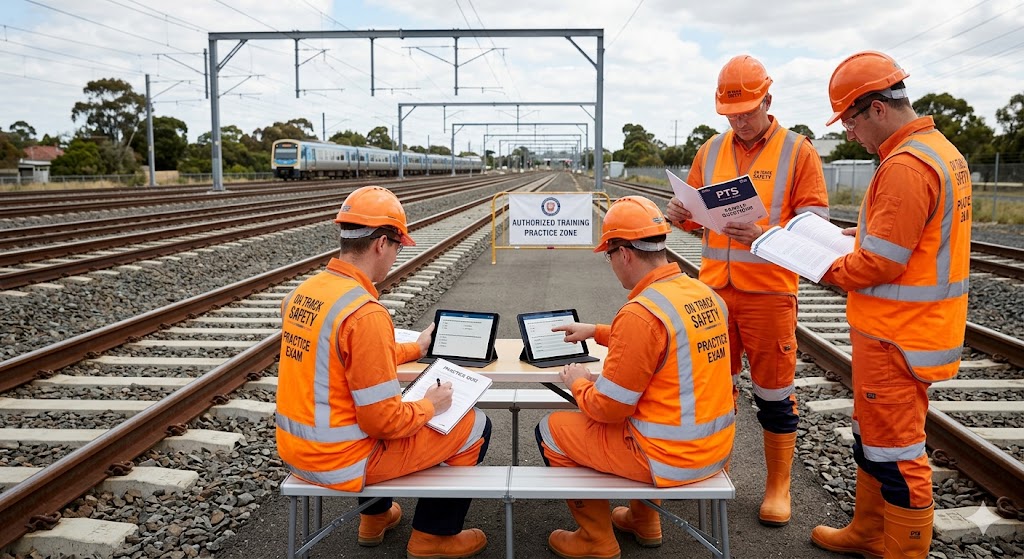
Additional Information
What the Course Entails and Exam Details
An On Track Safety or PTS course is a comprehensive program that covers the theoretical and practical aspects of railway safety. The core syllabus typically includes understanding the railway infrastructure, such as different track types, the 'cess', 'six foot', and safe cess. Candidates learn to identify and manage the major risks, including being struck by trains, dynamic and static electrical hazards from overhead lines and third rails, and other on-site dangers. A critical part of the course is mastering the Safe Systems of Work, which dictates how work is planned and executed to keep everyone safe. Key topics include recognizing signs and signals, clear communication using standard railway phrases and the phonetic alphabet, emergency procedures, the importance of personal protective equipment (PPE), and understanding the Sentinel competence management system and the role of the Controller of Site Safety (COSS).
What to Expect in the Final Exam
The final assessment for an On Track Safety certification generally consists of a formal, timed examination and a practical skills assessment. The theory exam is typically a multiple-choice paper, often completed digitally or in person, and is designed to test a candidate's comprehensive understanding of the safety rules and procedures covered in the course. For example, a common format might be a 90-minute exam with around 50 questions, covering all safety-critical areas. The passing score is high, often required to be 80% or above, reflecting the critical importance of mastering safety knowledge. The practical assessment, usually integrated into the training, requires candidates to demonstrate, under observation, their ability to apply safe working practices on a simulated or live track environment.
How to Study and Exam Centers
To prepare effectively for the On Track Safety exam, candidates should start by thoroughly studying the official course materials, including rule books, handbooks, and guidance notes provided during training. Utilizing an On Track Safety Practice Exam is a powerful strategy, allowing students to familiarize themselves with the question format, identify areas where their knowledge is weak, and practice under timed conditions to build confidence. Engaging in active study, such as creating flashcards for key terms and procedures, and discussing complex scenarios with peers or instructors, is highly beneficial. The certification must be obtained through authorized railway training providers, which are often specialized schools or internal training departments of railway companies, rather than generic testing centers like Pearson VUE. These providers facilitate both the training course and the final examinations. Booking the exam is typically managed by an individual's employer or primary sponsor, who will have a Sentinel account to track competence and arrange necessary training.
Job Opportunities from the Course
Obtaining an On Track Safety/PTS certification unlocks a vast array of technical and operational roles within the vital and growing railway industry.
Track Worker / Track Maintenance Operative
Signal Engineer / Technician
Overhead Line Equipment (OLE) Technician
Track Welder
Railway Surveyor
Rolling Stock Maintenance Technician
Controller of Site Safety (COSS) (following further advanced training)
Railway Construction Operative
Railway Civils Operative
Protection Controller (PC)
Frequently Asked Questions
Reviews
5.0
Based on 0 reviews
Leave a Review
No reviews yet. Be the first to review!