
Ontario Barrister Civil Practice Exam
$69.00
- Buy to unlock unlimited access to all Quiz questions and Answers in this Quiz.
- After purchase you can print a PDF of the whole quiz at any point. The PDF will contain the questions and the correct answers.
About this Exam
The Ontario Barrister Civil Practice Exam is a critical step in the licensing process for aspiring lawyers in Ontario, Canada. It is one of two examinations, the other being the Solicitor Licensing Examination, that candidates must pass to be called to the Bar and authorized to practice law in the province. Managed by the Law Society of Ontario (LSO), this exam specifically targets the skills and knowledge required for barristers – lawyers who primarily represent clients in courtroom litigation. It is designed for licensing candidates, typically recent graduates of Canadian law schools or those who have completed the National Committee on Accreditation (NCA) process, who have also completed or are in the process of completing their experiential training, such as articling. This exam ensures that new barristers possess the entry-level competence needed to navigate the complexities of Ontario’s civil litigation system while upholding the highest ethical standards.
Ready to test your knowledge?
Buy Now to Access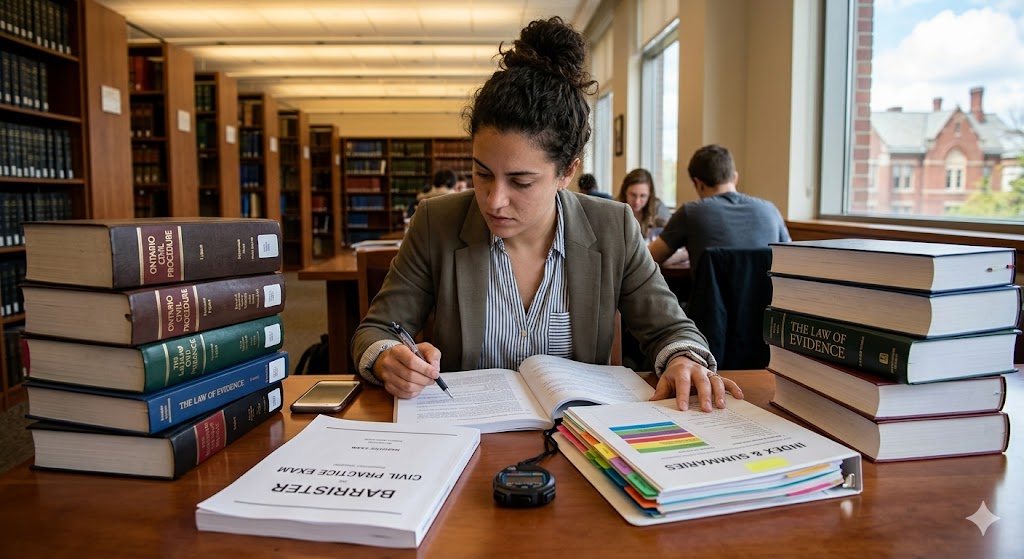
Additional Information
What the Course Entails and Exam Details
This examination does not result from a specific "course" but rather tests candidates on a vast set of materials provided directly by the Law Society of Ontario. The content is expansive, covering substantive law, procedural rules, and ethical considerations inherent in a barrister's practice. The core areas tested within the civil practice component include:
Civil Procedure: A comprehensive understanding of the Rules of Civil Procedure, which govern the steps in a civil lawsuit in Ontario’s courts.
Jurisdiction of Courts: Determining the correct court, such as the Superior Court of Justice, to commence an action based on the nature of the claim and geographic location.
Limitation Periods: Knowledge of the strict time limits within which a civil claim must be filed under the Limitations Act, 2002 and other relevant statutes.
Pleadings: The ability to draft and respond to the formal documents, such as Statements of Claim and Statements of Defence, that define a lawsuit.
Discovery Process: Navigating the essential steps of documentary and oral discovery, including examinations for discovery and the disclosure of relevant information.
Motions: Handling interlocutory proceedings to request court orders on specific issues before a final trial.
Trial and Enforcement: Preparing for the stages of a trial and understanding the methods for enforcing a court’s judgment.
Ethics and Professional Responsibility: Integrating ethical duties, as outlined in the LSO’s Rules of Professional Conduct, throughout every stage of a barrister’s work.
What to Expect in the Final Exam
The Ontario Barrister Civil Practice Exam is a single, rigorous, and open-book assessment. While the specific details are subject to change by the Law Society of Ontario, here is what candidates can typically expect based on standard practice:
Format: The exam consists entirely of multiple-choice questions. These questions are designed to be practical, often presenting short, scenario-based fact patterns that require the application of the law and procedure found in the LSO materials.
Open Book: This is a vital feature. Candidates are allowed, and indeed expected, to bring their LSO-provided study materials into the exam room. The test assesses a candidate's ability to navigate these materials efficiently under time pressure, not their memory of specific rules.
Duration: The total exam time is typically 4.5 hours. Time management is one of the biggest challenges candidates face, with little time allowed per question.
Question Count: Each licensing exam usually contains approximately 160 questions, meaning you must work through about 35-40 questions per hour.
Passing Score: The exact passing score is not publicly disclosed by the LSO. It is determined using a process of psychometric analysis to ensure fairness, reflecting a set standard of "entry-level competence." Candidates are not graded against each other; they either pass or fail based on whether they meet this consistent standard. Results are provided as a simple "Pass" or "Fail," and usually take 6 to 10 weeks to be released.
How to Study and Exam Centers
Studying for this open-book exam requires a completely different approach from traditional law school exams. The focus must be on navigation and application, not memorization. Here are actionable study strategies:
Master Your Materials: The primary tool is the set of materials provided by the LSO. Your goal is to know how to find answers quickly.
Create Your Indices: This is the most crucial step. A detailed Table of Contents (DTC) and comprehensive, personalized indices are your lifelines. Organize them by subject, rule number, key terms, and limitation periods. Many candidates use professional third-party indices and then customize them.
Color-Code Everything: Use colorful tabs to mark important sections and color-code your indices for visual reference during the exam.
Practice with Realism: Taking practice exams under strict timed conditions is essential. This helps build speed, familiarizes you with the question style, and tests the effectiveness of your indexing system.
Form or Join a Study Group: Collaborative study allows you to quiz each other on obscure points, share indexing tips, and provide moral support during the intense preparation process.
For testing logistics:
Exam Centers: The Ontario Barrister Civil Practice Exam is taken at specific physical testing centers designated by the Law Society of Ontario. These can be large conference centers or specialized computer-based testing venues, like those managed by Pearson VUE, across Ontario. The LSO communicates specific locations to candidates.
Registration: You must be an approved licensing candidate and register for a specific exam sitting, choosing your preferred location through your online candidate portal.
Online Option: While traditionally in-person, the LSO has introduced online proctoring for some licensing examinations. Candidates must carefully check the current LSO announcements for the delivery method of their particular sitting.
Job Opportunities from the Course
Successfully passing the Ontario Barrister Civil Practice Exam and the subsequent call to the Bar opens the door to a wide range of career paths within the legal profession. As a newly licensed barrister, you will be qualified to represent clients and appear before all levels of court in Ontario. Key job opportunities include:
Barrister
Litigation Associate in Private Practice (from boutique to large multi-service firms)
Corporate Litigator
Legal Aid Lawyer (focusing on civil matters, such as landlord-tenant or family law)
In-house Counsel (with a specialization in litigation management or dispute resolution)
Government Lawyer (serving within various ministries, departments, or agencies)
Crown Attorney (within the civil division of the Ministry of the Attorney General)
Court Adjudicator or Tribunal Member (with experience)
Legal Researcher or Academic (often requiring additional advanced degrees)
Frequently Asked Questions
Reviews
5.0
Based on 0 reviews
Leave a Review
No reviews yet. Be the first to review!