
Ontario Building Code Compendium Practice Test
$69.00
- Buy to unlock unlimited access to all Quiz questions and Answers in this Quiz.
- After purchase you can print a PDF of the whole quiz at any point. The PDF will contain the questions and the correct answers.
About this Exam
The Ontario Building Code (OBC) Compendium is a extensive document establishing safety, health, accessibility, fire protection, and resource conservation standards for all construction and renovation projects in Ontario. Earning a qualification based on this code is essential for a wide range of professionals, from designers and architects to builders and inspectors. Passing the required exams demonstrates your understanding and ability to correctly apply these complex regulations. This Ontario Building Code Practice Exam is designed to help you prepare effectively, test your knowledge, and build the confidence needed to succeed. Whether you're seeking a specific classification or a broader understanding of the code, this resource is a critical step towards your professional goals in the Ontario construction industry.
Ready to test your knowledge?
Buy Now to Access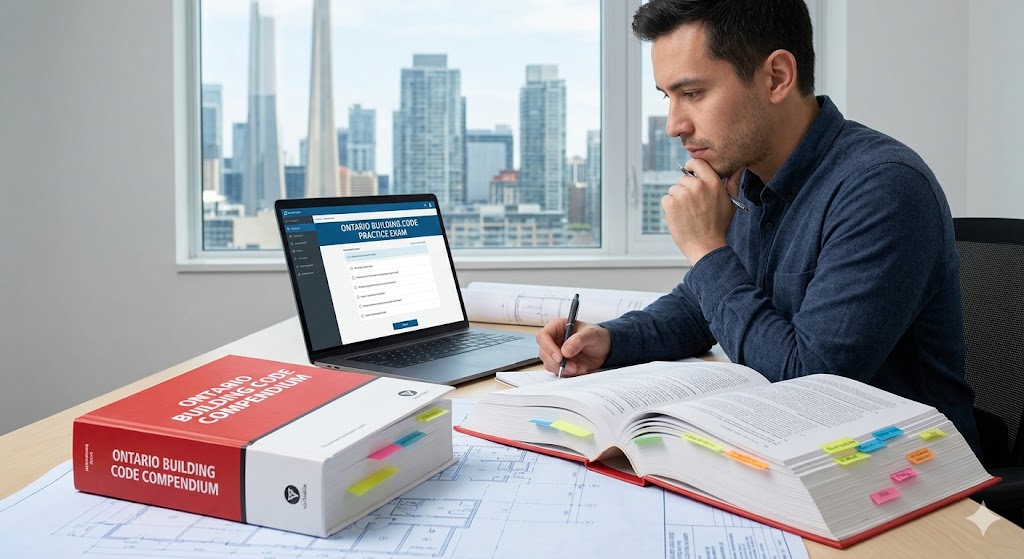
Additional Information
What the Course Entails and Exam Details
Preparing for the Ontario Building Code qualification exams involves much more than just memorizing facts. The underlying "courses" or study programs focus on providing a deep understanding of the compendium’s structure and teaching you how to efficiently navigate and interpret its extensive contents. Key subject areas covered include general legal processes, permit application procedures, plans examination, inspections, and enforcement. You will learn to work with the core parts of the OBC, such as Part 3 (Fire Protection, Occupant Safety, and Accessibility), Part 9 (Housing and Small Buildings), Part 10 (Change of Use), Part 11 (Renovations), and various technical provisions related to structural design, plumbing, heating, ventilation, and air conditioning. Mastery involves identifying relevant regulations, referencing correct articles, understanding exceptions, and applying complex code requirements to real-world building scenarios. A solid foundation in blueprint reading and basic construction practices is highly beneficial for success in this comprehensive subject matter.
What to Expect in the Final Exam
The official Ontario Building Code Qualification Exams are typically delivered in an open-book format. This means you will be permitted to use the actual OBC Compendium (or relevant volumes) during the test. Do not mistake open-book for easy; the questions are often designed to test your ability to quickly and accurately find specific, detailed regulations rather than simple recall. The exams are generally multiple-choice questions. A passing score is usually set around 70% to 75%, depending on the specific exam and classification you are taking. Be prepared for a timed assessment; you will usually have between 2.5 to 4 hours to complete the examination, requiring excellent time management skills and efficient code-searching abilities. Depending on the testing method chosen, specific rules regarding allowed materials, identification, proctoring (for online exams), and test center etiquette will apply. Ensuring you understand these rules beforehand is crucial for a smooth experience. Our practice tests are structured to mirror these realistic conditions, including the typical complexity of questions and time constraints.
How to Study and Exam Centers
Developing an effective study plan is critical for success on the OBC exams. Start by obtaining the current Ontario Building Code Compendium, as you'll need to know it inside out. Use tabs or highlighters to mark key sections for quick reference. Take multiple practice exams, like this one, to simulate the actual test environment, experience realistic questions, and practice your time management. Many individuals benefit from enrolling in preparatory courses offered by colleges like Humber College or private training organizations. Carefully review and understand the structure of the code (Parts, Sections, Subsections, Articles). Dedicate focused study time to the specific Parts most relevant to your intended qualification area (e.g., Part 9 for residential builders). Discussing complex problems with peers or instructors can clarify difficult interpretations. Regarding exam administration, the official Ontario Building Code Qualification Exams are typically scheduled through authorized platforms, often linked to the Ministry of Municipal Affairs and Housing or delivered through recognized educational institutions or online testing services. Check the official government or administering body's website for current registration processes, available online options, or locations for physical test centers.
Job Opportunities from the Course
Successfully passing the Ontario Building Code Qualification Exams and obtaining the relevant certifications can open numerous career paths across the province's dynamic construction sector. A wide variety of challenging and rewarding job opportunities become available, including roles within municipal governments, design firms, and construction companies. Here are some of the key job titles and career paths this qualification can unlock:
Municipal Building Inspector
Plans Examiner
Building Official
Chief Building Official
Building Consultant
Project Manager (Construction)
Site Supervisor
Construction Manager
Construction Health and Safety Inspector
Residential or Commercial Designer (with specific qualifications)
Contractor or Subcontractor (various specializations)
Home Inspector (with appropriate context/certifications)
Developer or Land Use Planner
Ontario Building Code Practice Exam
Description
This guide is tailored for professionals preparing for the Ontario Building Code (OBC) Compendium exams. Whether you are an aspiring building official, a designer, or a contractor, mastery of the Code is essential for career advancement and compliance. This article provides critical resources and strategies to help you navigate the Compendium efficiently and succeed on your practice tests and final exam.
What the Course Entails and Exam Details
Preparatory resources for the OBC Compendium exam focus on understanding the Code's organization, interpretation, and application. The underlying course material covers the Legal Process (understanding the Building Code Act), General Requirements, and specialized sections such as Housing and Small Buildings (Part 9) and Large Buildings (Part 3). You will learn how to reference regulations, determine building classifications, and assess compliance for fire protection, structural safety, and accessibility. Practice exams are designed to test your ability to quickly find and correctly interpret specific requirements within the extensive Code documents.
What to Expect in the Final Exam
The final examination is typically a rigorous, proctored test administered in an open-book format. While the layout may vary depending on the specific module, you can expect multiple-choice questions requiring precise referencing. Time management is crucial, as you must locate and apply specific regulations quickly. The exam assessing the Legal Process often contains around 80 questions to be completed within 3 hours. A passing score of 70% is generally required.
How to Study and Exam Centers
Effective study strategies involve both Code familiarity and test-taking practice.
Code Familiarity: Start by thoroughly reviewing the OBC Compendium. Practice navigating the index, parts, sections, and subsections.
Practice Tests: Utilize practice exams frequently. They are invaluable for improving speed and accuracy in locating specific regulations. Analyze any errors to identify areas needing further review.
Formal Training: Consider enrolling in preparatory courses offered by colleges or authorized training providers. These can provide structured learning and expert guidance.
Exams are administered at authorized testing centers across Ontario, including select colleges and specialized assessment centers. Online proctoring options may also be available for added convenience.
Job Opportunities from the Course
Passing the OBC qualification exams is a prerequisite for many fulfilling career paths:
Municipal Building Inspector
Plans Examiner
Building Official
Building Code Consultant
Qualified Designer (e.g., BCIN registered)
Construction Project Manager
Contractor specializing in Code-compliant renovations and new builds
Frequently Asked Questions
Reviews
5.0
Based on 0 reviews
Leave a Review
No reviews yet. Be the first to review!