
Ontario Grade 12 Kinesiology Practice Exam
$69.00
- Buy to unlock unlimited access to all Quiz questions and Answers in this Quiz.
- After purchase you can print a PDF of the whole quiz at any point. The PDF will contain the questions and the correct answers.
About this Exam
Welcome to your essential preparation resource for the Grade 12 Introductory Kinesiology (PSK4U) final evaluation. This practice exam is designed specifically for Ontario high school students enrolled in the PSK4U course, which explores the science of human movement and performance. Whether you're aspiring to a career in physiotherapy, sports management, or healthcare, mastering the concepts in this course is a crucial foundation. This practice exam is a vital tool to assess your readiness and build confidence for your official final test. It provides an opportunity to apply the theoretical and practical knowledge you've gained throughout the semester in a simulated exam environment.
Ready to test your knowledge?
Buy Now to Access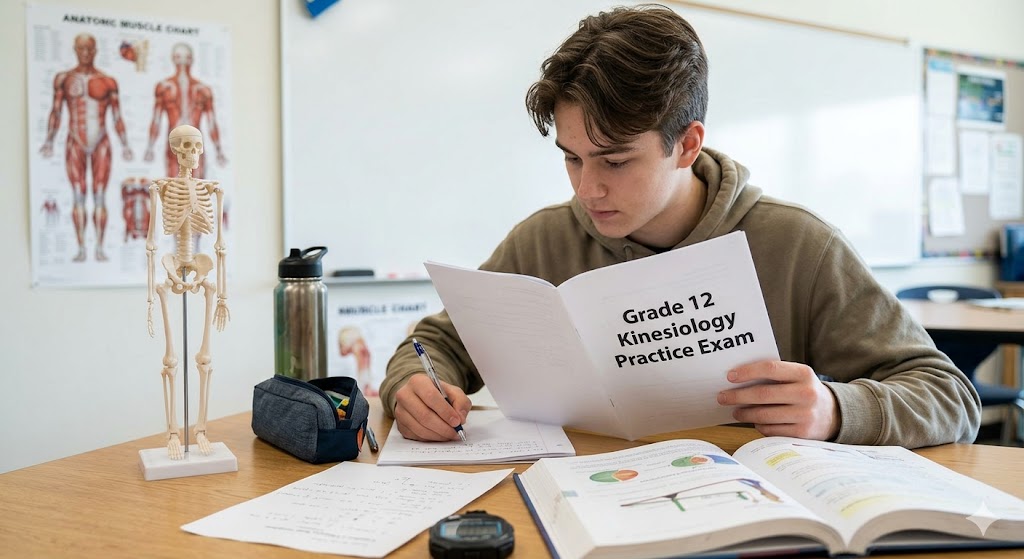
Additional Information
What the Course Entails and Exam Details
The Ontario Grade 12 Kinesiology course (PSK4U) provides a comprehensive overview of the systems that facilitate human movement. The syllabus is diverse, combining biological sciences with the social impact of physical activity. Key units covered include the musculoskeletal system (anatomy of bones, joints, muscles), physiology (energy systems, muscle contraction, cardiorespiratory system), biomechanics (principles of physics applied to movement), and social/psychological aspects (motor development, exercise psychology, sociology of sport). The final exam is a cumulative assessment designed by your individual school or school board, based on the specific content and assessments you’ve completed during the term.
What to Expect in the Final Exam
You can generally expect a mixed-format exam designed to test both knowledge and application skills. Typical question types include multiple-choice questions to assess broad knowledge across all units. You will also encounter labeling diagrams, requiring you to identify bones, muscles, and joint structures accurately. Short-answer and long-answer questions are also standard, asking you to explain concepts like energy systems (e.g., ATP-PC vs. aerobic glycolysis) or analyze movement using biomechanical principles (e.g., Newton's Laws, lever systems). The exam duration is usually 1.5 to 2 hours, and a passing grade is consistent with standard Ontario Ministry of Education guidelines (typically 50%). It's always best to clarify the specific format with your PSK4U teacher.
How to Study and Exam Centers
Effective study for Kinesiology requires active learning. Start by thoroughly reviewing the anatomical terminology; using flashcards for bones, major muscle groups, and joints is invaluable. Practice labeling diagrams repeatedly until you can do it without assistance. Focus on understanding the mechanisms, not just memorizing terms – for instance, explain the sliding filament theory in your own words. Utilize this practice exam to identify weak areas. Group study can also be highly beneficial for discussing biomechanics problems or debating sports psychology concepts. For the vast majority of Grade 12 students, the "exam center" is simply your regular high school classroom, with the test administered by your teacher during the scheduled examination period. Students taking the course through continuing education or online portals (like TVO ILC) will receive specific instructions on how and where to access their exam.
Job Opportunities from the Course
A strong performance in Grade 12 Kinesiology is an excellent stepping stone toward numerous fulfilling careers in the health and wellness sector. While this high school credit itself is a prerequisite for post-secondary studies rather than a professional certification, it opens the door to degrees that lead directly to these paths:
Registered Kinesiologist (R.Kin)
Physiotherapist
Occupational Therapist
Exercise Physiologist
Strength and Conditioning Coach
Chiropractor
Sports Medicine Doctor
Personal Trainer or Fitness Instructor
Rehabilitation Assistant
Wellness Coordinator (Corporate or Community)
Physical Education Teacher (Primary or Secondary)
High-Performance Sport Coach
Frequently Asked Questions
Reviews
5.0
Based on 0 reviews
Leave a Review
No reviews yet. Be the first to review!