
Ontario M1 Motorcycle License Practice Test
$69.00
- Buy to unlock unlimited access to all Quiz questions and Answers in this Quiz.
- After purchase you can print a PDF of the whole quiz at any point. The PDF will contain the questions and the correct answers.
About this Exam
Aspiring to hit the open road on two wheels in Ontario? Your journey begins with obtaining an Ontario M1 motorcycle license. This initial step, essentially a motorcycle learner's permit, is required for anyone 16 or older wishing to legally operate a motorcycle, moped, or motor-assisted bicycle on public roads. The path can seem daunting, but our Ontario M1 Motorcycle Practice Test is designed specifically for students like you. This practice resource acts as your essential preparation tool, helping you gain the confidence and knowledge needed to pass the official, mandatory knowledge test on your very first try. Master road signs, traffic laws, and safe riding principles in a low-stakes environment, setting yourself up for success and safer riding adventures across Ontario.
Ready to test your knowledge?
Buy Now to Access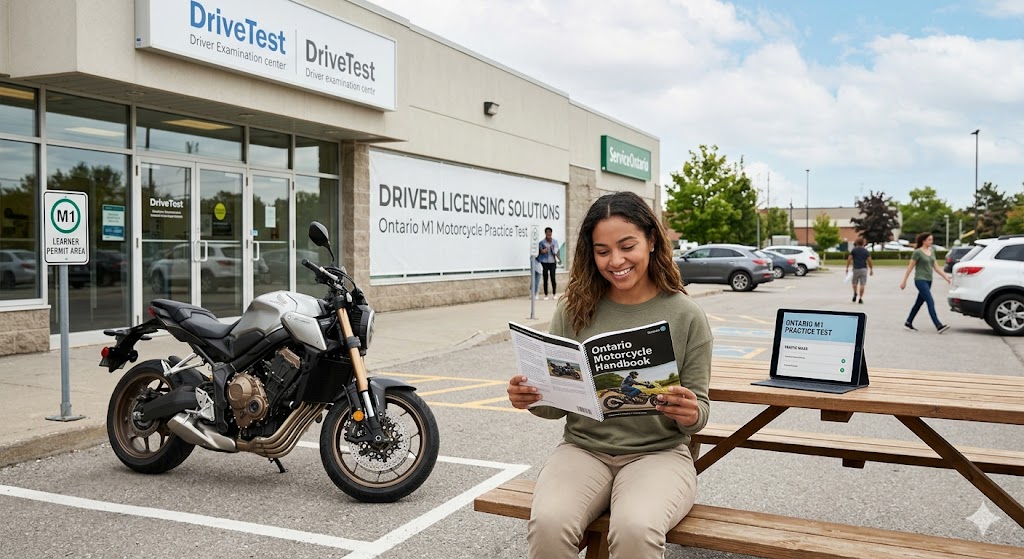
Additional Information
What the Course Entails and Exam Details
Understanding the foundation of motorcycle operation and road safety is paramount before ever swinging a leg over a bike. While this is a practice resource and not a formal course itself, it is meticulously designed to mirror the essential knowledge covered in Ontario's official M1 knowledge test. This comprehensive test assesses a rider's theoretical understanding across several key areas:
Rules of the Road & Traffic Laws: Master general Ontario traffic regulations as well as specific laws unique to motorcycles and their operation.
Safe Riding Practices: Deepen your knowledge of defensive riding strategies, visibility, lane positioning, and maintaining control.
Road Sign Recognition: Confidently identify and understand the meanings of all regulatory, warning, and informational signs you'll encounter.
Sharing the Road: Learn how to safely interact with passenger vehicles, trucks, cyclists, and pedestrians, ensuring mutual safety.
Handling & Braking (Theory): Gain theoretical insights into fundamental motorcycle handling, proper braking techniques, and curve navigation before applying them practically.
By engaging thoroughly with these concepts, you'll be well-equipped not just for the exam, but for a lifetime of responsible riding in Ontario.
What to Expect in the Final Exam
Stepping into the DriveTest Centre to take the official M1 knowledge test can feel nerve-wracking, but understanding the exam structure and requirements significantly builds confidence. Here’s a detailed breakdown of what you can expect during the final assessment:
Official M1 Knowledge Test Structure: The official knowledge test is a comprehensive in-person, typically computerized, exam. It is divided into two distinct sections:
Section 1: Road Signs: Focuses entirely on identifying and understanding regulatory, warning, and informational road signs. You will encounter approximately 20 multiple-choice questions in this section.
Section 2: Traffic Rules & Safe Riding: Assesses your knowledge of Ontario's road laws, specific rules for motorcycles, defensive riding, and sharing the road. This section also consists of approximately 20 multiple-choice questions.
Passing Score Requirements: To pass the M1 knowledge test and obtain your learner's permit, you must succeed in both sections individually. You will need a minimum score of 16 correct answers out of 20 in each of the two sections (80% minimum per section). There is no practical component or riding test required to obtain the initial M1 license.
Time Limits & Environment: There is generally no strict time limit for completing the M1 knowledge test once you have started. This allows you to carefully read and consider each question without undue pressure. The testing environment is quiet and focused, providing you with optimal concentration.
Important Rules & Requirements:
Where to Take the Exam: The official M1 knowledge test can only be taken in person at an authorized DriveTest Centre, not online. Be sure to check the specific DriveTest locations that offer driver examination services across Ontario.
Arrival & Procedures: You must arrive at the DriveTest Centre with valid identification (e.g., passport, birth certificate, permanent resident card) demonstrating your full name, date of birth, and signature. Importantly, if you do not currently hold an Ontario driver's license (like a G-class license), you must also pass a vision test at the centre before taking the knowledge test. If you already hold a valid Ontario license, you likely won't need to take the vision test again, but always confirm specific details directly with DriveTest.
Prohibited Items: No electronic devices, mobile phones, study materials, or notes are permitted during the examination. Violation of these rules can lead to immediate disqualification and potential penalties.
By familiarizing yourself with this process and focusing your preparation on both signs and rules, you’ll be well-prepared to excel and take that crucial first step towards becoming a licensed motorcycle rider in Ontario.
How to Study and Exam Centers
Preparation is key to success on any examination, especially one as important as your initial motorcycle license test. Here are effective strategies and details on how to approach your studies and where to take the exam:
Effective Study Strategies:
Utilize the Official Handbook: Obtain and thoroughly study the Official MTO Motorcycle Handbook (or Driver's Handbook with motorcycle section if applicable). This is the definitive source of information the official test is based upon. Read it multiple times, pay attention to diagrams, specific laws, safety tips, and the definitions/images of road signs. Highlight key concepts.
Take Practice Tests Regularly: This is where our Ontario M1 Motorcycle Practice Test becomes invaluable. Take practice tests frequently to simulate the real exam experience, identify knowledge gaps, and get comfortable with the multiple-choice format. Dedicate focused sessions, striving not just for high scores, but for truly understanding why each answer is correct. Review any incorrect answers against the handbook. Mix up practice to cover both signs and rules extensively.
Break Down Topics: Don’t try to memorize everything at once. Focus your study sessions on specific chapters or topics like "Defensive Riding," "Sharing the Road," or focusing solely on sign identification for a period. This structured approach improves retention.
Simulate Real Conditions: Occasionally, take practice tests with a timer or under quiet conditions to mimic the exam environment, boosting your familiarity and reducing anxiety.
Seek Clarification: If you encounter conflicting information or concepts you don't fully grasp in your studies, seek clarification from trusted sources. This could involve online forums (carefully vetted), contacting DriveTest or ServiceOntario (for procedural/rule specifics), or even speaking with experienced riders or instructors.
Form a Study Group: Studying with friends who are also preparing can make the process more engaging. Quiz each other, discuss tricky topics, and share insights.
Relax and Prioritize Sleep: In the days leading up to the test, ensure you get sufficient sleep, eat well, and allow yourself dedicated relaxation time to minimize stress and maintain focus. A well-rested mind performs significantly better.
Where and How to Take the Exam:
Official M1 Knowledge Test: You cannot take the official M1 knowledge test online. It must be taken in person at a designated DriveTest Centre in Ontario.
Find a Center: Visibly search for a "DriveTest location near me" using the official DriveTest website or reliable mapping services. Ensure the location you choose specifically offers driver examination services. Most major cities and towns in Ontario have accessible centres.
Prepare Your Visit: Review the DriveTest website for specific opening hours, any potential booking requirements (though many locations operate on a walk-in basis for knowledge tests, booking is highly recommended for other services/tests to minimize waiting times), associated fees (bring acceptable payment methods), and confirmation of exact documents needed (ID is essential). Aim to arrive early on your chosen day to allow ample time for registration and the test itself. Check for any current notices, closures, or special procedures.
By dedicating yourself to thorough study using diverse methods and strategically planning your test-day logistics, you will maximize your chances of passing the M1 knowledge test confidently on your first attempt.
Job Opportunities from the Course
While obtaining an Ontario M1 motorcycle license itself is primarily a recreational or personal transport achievement, it represents the vital first requirement towards full motorcycle licensing and potentially opens doors (or facilitates specific pathways) for various job opportunities and career directions within the transportation and automotive sectors, as well as roles requiring travel or specialized vehicle knowledge in Ontario:
Delivery Driver: Many food, document, or small parcel delivery services in urban areas utilize motorcycles for their agility and speed. Progressing beyond the M1 restrictions would be essential.
Motorcycle Salesperson/Advisor: Working at a dealership, assisting customers with purchasing motorcycles, gear, and related accessories. Your firsthand experience and knowledge can be a significant asset, even with just foundational knowledge in Ontario, though further licensing/experience is beneficial.
Motorcycle Mechanic/Technician: Pursuing specific vocational training in motorcycle repair and maintenance can lead to careers in dealerships, independent repair shops, or potentially owning your own business. Understanding the licensing structure and operating theory is relevant.
Motorcycle Instructor: After gaining significant riding experience and further licensing, you could eventually train to become a licensed motorcycle instructor, helping others learn to ride safely. This is a longer-term path requiring progression from your M1.
Motorcycle Tour Guide: Organizing and leading guided motorcycle tours within Ontario or potentially other regions, leveraging your licensed ability and regional knowledge once you have appropriate experience and licensing.
Parts Specialist/Manager: Working in the parts department of an automotive or motorcycle dealership, managing inventory and assisting customers with finding necessary components. Understanding the local licensing context adds value.
Service Advisor: Acting as the liaison between customers and mechanics in a motorcycle service center, requiring strong communication skills and basic mechanical/vehicle knowledge relevant to Ontario's riding community.
Logistics Coordinator (Motorcycle Fleet Focus): Coordinating motorcycle fleets for delivery services or specialized transport operations within larger logistics companies operating in Ontario.
Motorcycle Journalist/Blogger/Content Creator: Creating content related to motorcycles, reviews, travel writing, or riding tips specifically tailored to the Ontario or Canadian audience, starting with documented preparation and licensing.
Ultimately, the M1 license isn't a direct job credential on its own, especially with its substantial restrictions. However, it is an essential prerequisite and a significant foundational step towards full licensing, which unlocks a wider range of career opportunities within Ontario’s dynamic motorcycle landscape, from dealership roles and repair careers to specialized transport services and beyond. Focus on mastering the M1 test to begin this fulfilling journey.
Frequently Asked Questions
Reviews
5.0
Based on 0 reviews
Leave a Review
No reviews yet. Be the first to review!