
Ontario Paramedic Neurological Emergencies Practice Exam
$69.00
- Buy to unlock unlimited access to all Quiz questions and Answers in this Quiz.
- After purchase you can print a PDF of the whole quiz at any point. The PDF will contain the questions and the correct answers.
About this Exam
This practice test is an essential resource for Primary Care Paramedics (PCPs) and Advanced Care Paramedics (ACPs) across Ontario who are preparing for certification, recertification, or simply aiming to sharpen their critical care skills.
The study guide focuses specifically on the assessment and management of neurological emergencies in the pre-hospital setting, based on the latest Ontario Provincial Paramedic Medical Directives and relevant medical protocols.
It is designed to give you a realistic preview of the types of questions and clinical scenarios you will encounter in high-stakes Ontario paramedic exams.
Whether you are a student paramedic or an experienced clinician, this practice test will identify your strengths and weaknesses in this critical subject area, boosting your confidence for the actual examination.
Ready to test your knowledge?
Buy Now to Access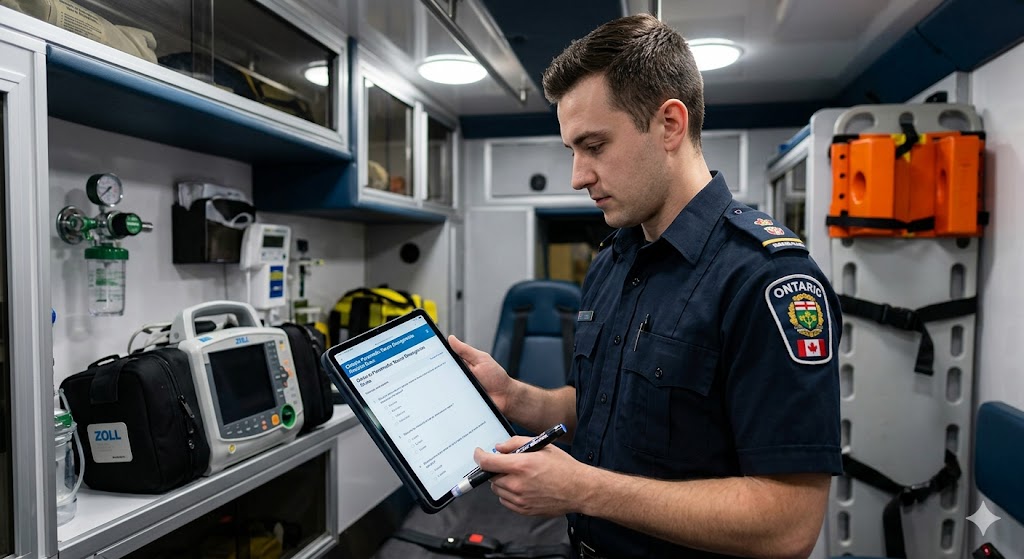
Additional Information
What the Course Entails and Exam Details
This practice test assesses your knowledge and clinical decision-making skills across a wide range of neurological conditions.
Key topics covered within the practice test include:
Comprehensive neurological assessment and examination techniques, including the Glasgow Coma Scale (GCS) and Cincinnati Prehospital Stroke Scale (CPSS).
Pathophysiology, signs, symptoms, and management protocols for Acute Ischemic Stroke and Hemorrhagic Stroke, including the application of the Ontario Stroke System pathways.
Types of seizures (e.g., tonic-clonic, focal, status epilepticus) and their emergency management and pharmacological interventions.
Traumatic Brain Injury (TBI) assessment, management of intracranial pressure, and prevention of secondary brain injury.
Spinal Cord Injury (SCI) assessment, immobilization criteria, and neurogenic shock management.
Altered Mental Status (AMS) differentials, including metabolic, infectious, and toxicological causes (e.g., hypoglycemia, opioid overdose, meningitis).
Understanding and application of relevant Ontario ALS and BLS Patient Care Standards.
The practice test aims to simulate the cognitive demands of the real exam, requiring you to apply theory to complex patient scenarios commonly found in Ontario practice.
What to Expect in the Final Exam
While this is a practice test, it is designed to mirror the format of the actual final certification or competency exams you will face.
For the practice test, you can expect:
Format: A multiple-choice question format, which is the most common method for testing medical knowledge in Ontario paramedic certification. Some questions may also involve case-based scenarios.
Number of Questions: The practice test typically contains 50 to 100 questions, providing a robust sampling of the subject matter.
Time Limit: You will often have a generous time limit to complete the test at your own pace, encouraging a focus on learning and reviewing rather than raw speed.
Passing Score: While a passing score isn't usually mandatory for a practice test, a result of 80% or higher is a good benchmark to indicate readiness for the real exam.
Rules: The practice test is self-administered, allowing you to pause, review, and revisit questions. The primary goal is education and self-assessment, not rigid examination conditions.
How to Study and Exam Centers
Effective study methods are key to mastering neurological emergencies.
Here are some strategies to get the most out of your preparation:
Review Ontario Medical Directives: Your primary study resource should be the most current version of the Ontario Provincial Paramedic Medical Directives for both PCPs and ACPs. Pay close attention to the protocols for Stroke, Seizures, Altered Level of Consciousness, and Trauma.
Use Practice Tests: Complete the "Neurological Emergencies for Paramedics in Ontario Practice Test" multiple times. Focus on the rationales for both correct and incorrect answers to understand the clinical logic required.
Scenario-Based Learning: Practice dynamic patient simulations with colleagues or study groups. Run through stroke alerts, status epilepticus management, and TBI scenarios using a timer to improve your decision-making under pressure.
Focus on Pathophysiology: Don't just memorize protocols; understand the underlying pathophysiology of neurological emergencies. Knowing why certain interventions are performed will help you adapt to complex cases.
Study the GCS and Stroke Scales: Become an expert in rapidly and accurately calculating the GCS and applying stroke scales like the LAMS (Los Angeles Motor Scale) or other region-specific tools used in Ontario.
Regarding exam centers, this practice test is typically offered in an online, digital format. You can access it through the education portal or website of the specific training provider, paramedic service, or educational institution you are using. This allows you to study from anywhere with an internet connection, without needing to visit a physical testing facility. For the actual final certification or Base Hospital competency exams, you will be directed to specific, proctored locations, which could be at regional training bases, college campus testing centers, or sometimes the provincial ministry's designated examination sites. Always confirm the location with your examining body.
Job Opportunities from the Course
A strong command of neurological emergencies is critical for all paramedics in Ontario.
Excelling in this area enhances your competency and opens the door to numerous career paths within the Ontario Emergency Medical Services (EMS) system.
Possible job titles and opportunities include:
Primary Care Paramedic (PCP): Mastering this content is essential for initial certification and to meet the standard of care required for provincial practice.
Advanced Care Paramedic (ACP): ACPs require a deeper understanding of neurological pathophysiology to perform advanced skills and administer a wider range of medications.
Critical Care Paramedic (CCP): Advanced knowledge is mandatory for those specializing in high-acuity inter-facility transfers, often involving complex neurological patients.
Flight Paramedic: Operating in the air ambulance environment demands expert-level assessment and critical thinking for neurological emergencies.
Paramedic Preceptor/Educator: A proven expertise allows you to mentor students and teach continuing education courses.
Base Hospital Medical Program Roles: Opportunities exist to work in quality assurance, education, or leadership within the regional Base Hospital programs that oversee paramedic practice in Ontario
Frequently Asked Questions
Reviews
5.0
Based on 0 reviews
Leave a Review
No reviews yet. Be the first to review!