
OPOTA Private Security Practice Exam
$69.00
- Buy to unlock unlimited access to all Quiz questions and Answers in this Quiz.
- After purchase you can print a PDF of the whole quiz at any point. The PDF will contain the questions and the correct answers.
About this Exam
The OPOTA (Ohio Peace Officer Training Academy) Private Security Academic/Examination program is the foundational requirement for individuals seeking a career in Ohio’s private security industry. This certification is essential for anyone aspiring to work as a private security officer, bodyguard, or in asset protection. It validates that the holder possesses the necessary knowledge regarding Ohio laws, safety protocols, and operational procedures to perform their duties effectively and legally.
Ready to test your knowledge?
Buy Now to Access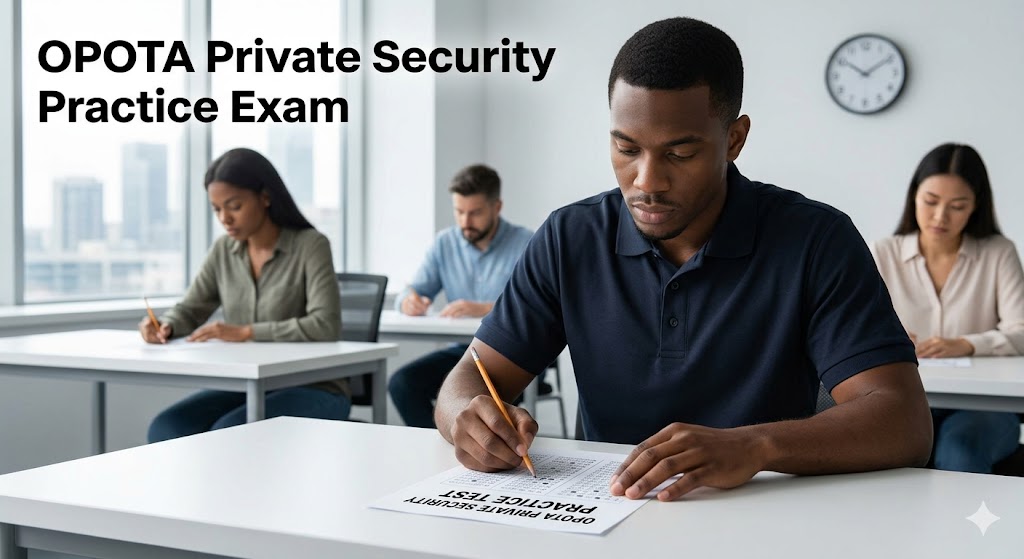
Additional Information
What the Course Entails and Exam Details
The preparatory coursework for the OPOTA Private Security exam is rigorous, designed to ensure field readiness. The syllabus generally covers several core domains. Candidates must become deeply familiar with the Ohio Revised Code, specifically legal authorities, limits, and liabilities relating to private security personnel.
The curriculum also emphasizes professional ethics, report writing, communication skills, and conflict management techniques. Operational security skills are a major component, covering patrol techniques, crowd control, emergency response, and fire safety. Depending on the specific certification path (armed vs. unarmed), students may also receive critical training in first aid, CPR, and the safe handling and legal use of firearms or other defensive tactics.
What to Expect in the Final Exam
The final certification exam assesses comprehension of the training material through a written format. You should expect a series of multiple-choice and true/false questions based directly on the OPOTA curriculum. While exact time limits and the specific number of questions can vary by training provider, the exam typically takes approximately two hours to complete.
A thorough understanding of each topic area is crucial, as students are usually required to achieve a minimum passing score of 70% to receive their certification. It is important to remember that this is a proctored, closed-book examination; you cannot use notes or reference materials during the test.
How to Study and Exam Centers
Preparation is paramount to success on this high-stakes exam. To study effectively, begin by thoroughly reviewing all materials and textbooks provided by your instructor during your OPOTA-certified training course. Utilize active learning strategies: convert major topics into flashcards and practice writing summary reports, as precise notation is often a tested concept.
The single best strategy for success is taking a OPOTA Private Security Practice Test. Taking practice tests helps you identify gaps in your knowledge and familiarizes you with the phrasing and format of the questions you will encounter on the official exam. Dedicate significant time to reviewing the questions you missed.
Regarding test locations, the final OPOTA certification exam is administered on-site at the certified local career center, community college, or authorized private training academy where you completed your prerequisite training hours.
Job Opportunities from the Course
Successfully passing the OPOTA Private Security exam unlocks a variety of career paths within Ohio’s security sector. Achieving this certification demonstrates to employers that you have met the state's rigorous standards for professional competency. Common job titles and career opportunities available to graduates include:
Unarmed Private Security Guard
Armed Security Officer
Corporate Security Specialist
Loss Prevention Detective
Hospital Security Officer
Campus Security Officer
Contract Security Contractor
Mobile Patrol Officer
Special Event Security Staff
Access Control Specialist
Frequently Asked Questions
Reviews
5.0
Based on 0 reviews
Leave a Review
No reviews yet. Be the first to review!