
Optician Practical Practice Exam
$69.00
- Buy to unlock unlimited access to all Quiz questions and Answers in this Quiz.
- After purchase you can print a PDF of the whole quiz at any point. The PDF will contain the questions and the correct answers.
About this Exam
The Optician Practical Practice Exam is a crucial final step for aspiring opticians, designed to validate their hands-on skills and technical proficiency before entering the field professionally. This rigorous examination simulates real-world optical scenarios to ensure candidates can accurately interpret prescriptions, handle delicate optical equipment, and dispense eyewear with precision. Successful completion of this practical test, often combined with a written exam, is required for state licensure and dynamic careers in vision care. It is specifically designed for individuals who have completed an accredited opticianry program or finished a requisite number of apprenticeship hours.
Ready to test your knowledge?
Buy Now to Access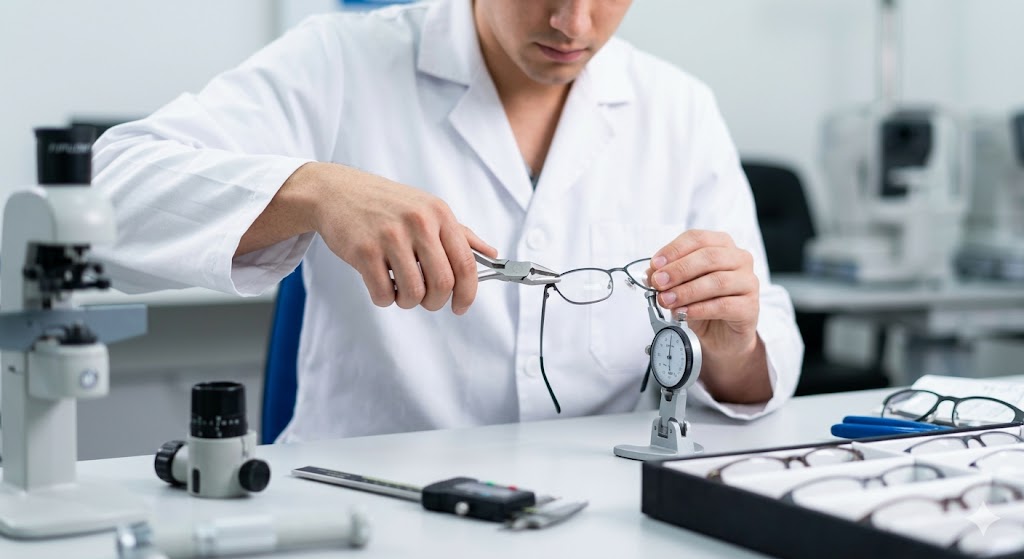
Additional Information
What the Course Entails and Exam Details
This examination is not a "course" in the traditional sense, but rather a final evaluation. To qualify, candidates must have previously master specialized coursework. These preparatory courses cover a comprehensive syllabus that includes detailed studies in geometric and physical optics, the anatomy and physiology of the eye, ophthalmic lens design, and material sciences. The practical exam rigorously assesses a candidate's ability to apply this knowledge. Key evaluated skills include accurate lens neutralization and verification (using a lensometer), performing facial measurements (PD and fitting heights), adjusting and repairing frames, and demonstrating appropriate dispensing techniques for both spectacles and contact lenses.
What to Expect in the Final Exam
The final practical exam is a multi-station, hands-on assessment overseen by licensed examiners. Candidates must move sequentially through several distinct stations, each focusing on a specific optical skill. For example, one station might require identifying an unknown lens prescription on a manual lensometer, while another focuses on frame manipulation for a patient fitting. You can expect specific time limits for each task, often ranging from 15 to 30 minutes. Scoring is based on accuracy, proficiency with tools, and adherence to safety and professional standards. A minimum passing score, often 70% or higher depending on the jurisdiction, is strictly required for licensure.
How to Study and Exam Centers
The key to succeeding in this practical test is consistent, supervised practice, rather than simple rote memorization. Candidates should dedicate significant hours to working in a dispensing clinic, focusing on the core evaluated tasks. Utilize practice models of various lens types (progressive, bifocal, high-index) and a wide array of frame styles. We recommend forming study groups to perform mock exams with peers, simulating the timed conditions of the actual test. Regarding logistics, the exam is typically administered at specific physical testing centers or within the facilities of authorized optical schools and colleges, not through general online portals or providers like Pearson VUE. Check with your state licensing board for the exact, current list of authorized locations.
Job Opportunities from the Course
Earning this credential significantly enhances your professional credibility and marketability, unlocking numerous career paths within the optical industry.
A non-exhaustive list of potential career paths includes:
Licensed Optician
Optical Dispensary Manager
Ophthalmic Technician (Clinical)
Contact Lens Fitter
Laboratory Manager (Ophthalmic)
Optical Sales Representative
Independent Optical Shop Owner
Frequently Asked Questions
Reviews
5.0
Based on 0 reviews
Leave a Review
No reviews yet. Be the first to review!