
Optometric Technician Level 1 Practice Test
$69.00
- Buy to unlock unlimited access to all Quiz questions and Answers in this Quiz.
- After purchase you can print a PDF of the whole quiz at any point. The PDF will contain the questions and the correct answers.
About this Exam
Embarking on a career as an optometric technician is an excellent entry point into the dynamic field of eye care, and the Level 1 certification is designed for individuals seeking foundational knowledge and skills in this area. This certification is ideal for newcomers wanting to support optometrists effectively, as well as existing clinic staff aiming to validate their expertise. It covers essential principles of eye health, patient interaction, and preliminary testing procedures, ensuring you are well-prepared for entry-level responsibilities within an optometry practice. The Level 1 Practice Test serves as a crucial tool for assessing your readiness and building confidence before attempting the official final exam.
Ready to test your knowledge?
Buy Now to Access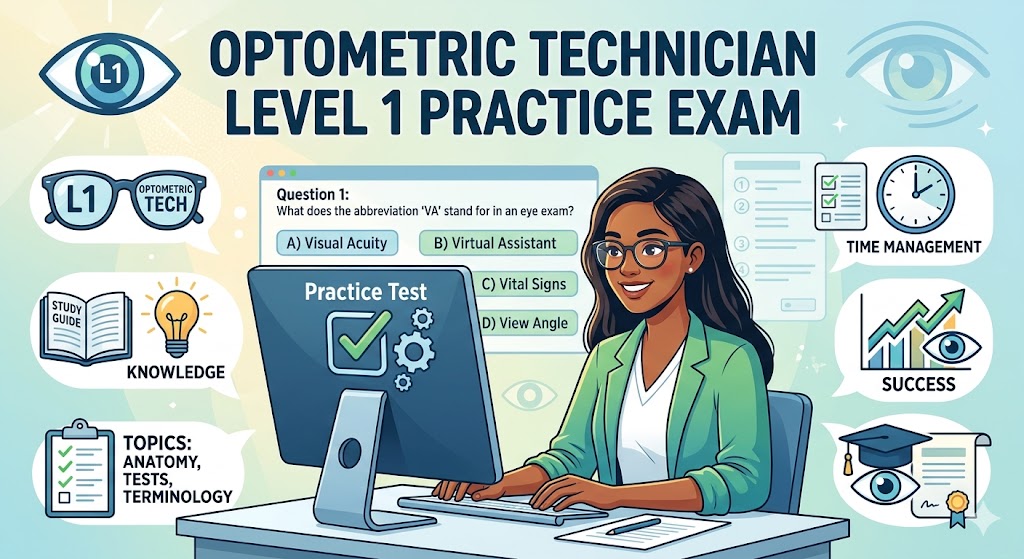
Additional Information
What the Course Entails and Exam Details
A typical Level 1 Optometric Technician course or training program covers a comprehensive syllabus designed to build your core competency. You can expect to learn about basic ocular anatomy and physiology, common eye conditions, and medical terminology specific to optometry. The course will equip you with essential patient communication and history-taking skills, as well as the ability to perform vital preliminary tests such as measuring visual acuity, assessing color vision, and determining depth perception. Furthermore, you will delve into the fundamentals of optical principles, including lens types and frame selection, and gain crucial knowledge about office procedures, safety protocols, and ethical considerations like patient privacy (HIPAA). While specific exam details can vary, they are typically structured to thoroughly test your comprehension of these foundational subjects.
What to Expect in the Final Exam
The official final exam for the Level 1 Optometric Technician certification generally utilizes a knowledge-based format to evaluate your understanding of the curriculum. Most often, you can expect a comprehensive multiple-choice question (MCQ) exam, potentially augmented by some true/false or matching questions, administered either online through a proctored system or at a designated testing center. The number of questions typically ranges from 50 to 100 or more, and you will be allocated a specific time limit, often around 60 to 90 minutes, to complete the test. A specific passing score requirement, often between 70% and 75%, will be necessary to achieve your certification. It is vital to adhere to all exam rules, which may include restrictions on materials, requirements for valid identification, and specific proctoring guidelines to ensure integrity.
How to Study and Exam Centers
Effective preparation is key to succeeding on your certification exam, and actionable study strategies are essential. Begin by thoroughly reviewing any official study manuals or course materials provided by your certifying body. Actively engage with practice tests—like the Level 1 Optometric Technician Practice Test—as these are invaluable for familiarizing yourself with the exam format, identifying knowledge gaps, and practicing time management. Create flashcards to memorize terminology, anatomy, and procedural steps. If possible, complement your theoretical learning with hands-on practice in a clinical setting or skills lab to reinforce your understanding of preliminary testing techniques. As for exam centers, many certifying organizations now offer the convenience of secure, online proctored exams that you can take from your own home or office computer. Alternatively, you may be required to schedule and take your exam at authorized physical testing centers, specific authorized schools, or through specified online portals provided upon registration. Always confirm the exact testing method and location options with your chosen certification provider.
Job Opportunities from the Course
Successfully earning your Level 1 Optometric Technician certification unlocks several promising entry-level job opportunities and career paths within the eye care industry, empowering you to make a meaningful difference in patients' vision health. Here are some common job titles and paths you can pursue:
Optometric Technician: The most direct career path, working under the supervision of an optometrist to perform preliminary testing, assist with exams, and manage patient flow.
Ophthalmic Assistant (Entry-Level): While often associated with ophthalmologists, many practices hire certified technicians for assistant roles involving similar duties.
Optical Assistant: Focuses more on the retail and dispensary side of the practice, assisting patients with frame selection, adjustments, and basic lens education.
Patient Care Coordinator: Manages patient scheduling, communication, and basic administrative tasks within an eye care clinic, requiring foundational knowledge of optometry procedures.
Frame Stylist: An entry-level role specialized in helping patients choose fashionable and functional eyewear that meets their prescription and lifestyle needs.
Frequently Asked Questions
Reviews
5.0
Based on 0 reviews
Leave a Review
No reviews yet. Be the first to review!