
Oral & Maxillofacial Surgery Assistant (OMSA) Recertification Practice Test
$69.00
- Buy to unlock unlimited access to all Quiz questions and Answers in this Quiz.
- After purchase you can print a PDF of the whole quiz at any point. The PDF will contain the questions and the correct answers.
About this Exam
The Oral & Maxillofacial Surgery Assistant (OMSA) Recertification ensures that experienced oral surgery assistants maintain the high-level skills, knowledge, and safety standards necessary for assisting in complex oral and maxillofacial procedures. This recertification process is designed for professionals who have already achieved an initial certification and wish to validate their continued competence in areas like surgical assisting, anesthesia monitoring, and medical emergencies. Maintaining this credential demonstrates an ongoing commitment to patient safety and surgical excellence within this demanding dental specialty. It is typically required every two to five years, depending on the specific certifying body, to ensure practitioners stay current with evolving techniques, technologies, and regulations.
Ready to test your knowledge?
Buy Now to Access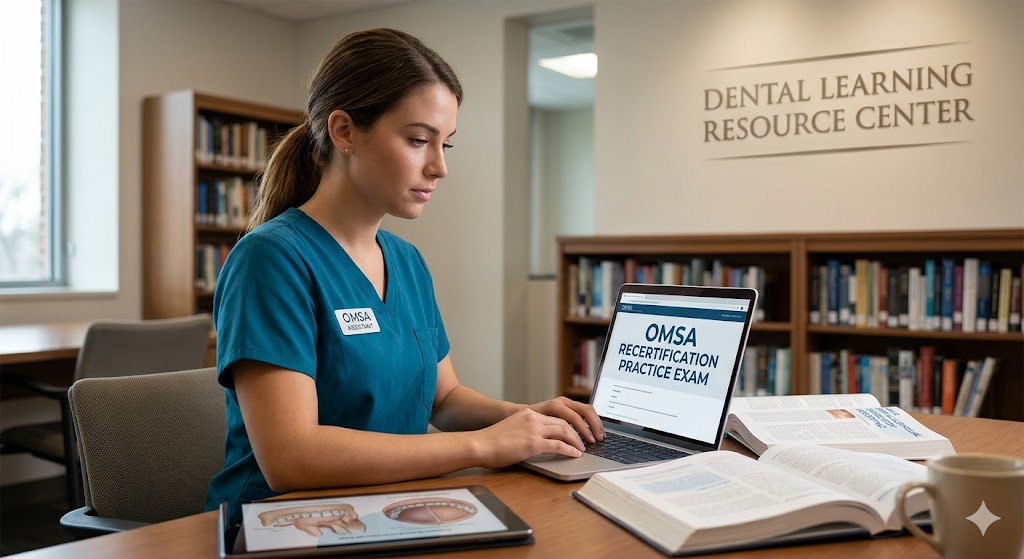
Additional Information
What the Course Entails and Exam Details
To maintain an OMSA certification, most dental assistants must complete a designated number of continuing education (CE) units during their certification cycle. These CE topics usually cover areas crucial to oral surgery: advanced surgical assisting procedures, pharmacology (especially relating to anesthesia and analgesia), patient monitoring (vital signs, ECG, pulse oximetry), managing medical emergencies in the dental office, infection control, and legal/ethical aspects of patient care. In many instances, candidates may opt or be required to pass a recertification examination, which covers this broad syllabus to verify their retained and updated knowledge. This exam evaluates understanding of patient assessment, anesthesia principles, surgical complications, emergency response protocols, and overall surgical safety, reflecting a comprehensive overview of the field.
What to Expect in the Final Exam
Candidates preparing for the OMSA Recertification Exam should expect a rigorous assessment designed to challenge their comprehensive knowledge and critical thinking. The exam typically consists of multiple-choice questions administered via a computer-based format. While specific passing scores vary by certifying body, a benchmark such as 70% or 75% is common. The time limit is structured to allow adequate time for thoughtful responses, often ranging from two to three hours. During the exam, specific rules apply: the test environment is proctored, use of references is prohibited, and unauthorized aids are strictly forbidden to ensure academic integrity. Practicing with targeted questions that mimic this format can significantly enhance exam performance.
How to Study and Exam Centers
Effective study strategies are essential for success on the OMSA Recertification Exam. Engaging deeply with comprehensive textbooks and professional resources is foundational. Utilizing OMSA Recertification practice tests and sample questions is one of the most powerful preparation methods, as it helps identify knowledge gaps, improves time management, and builds confidence. Joining study groups, reviewing relevant continuing education materials, and creating structured study schedules focusing on specific content domains also yields significant benefits. Candidates typically register for the exam through an online portal provided by their certifying organization. The actual test is commonly administered at authorized computer-based testing centers such as Pearson VUE or Prometric, located across the country. In some cases, organizations might offer secure online proctoring as an alternative.
Job Opportunities from the Course
Successfully maintaining OMSA Recertification unlocks and solidifies various job opportunities in the specialized field of oral and maxillofacial surgery. Achieving this high-level credential signals expertise and reliability, making assistants highly competitive candidates for advanced roles. Specific career opportunities and job titles include:
Certified Oral & Maxillofacial Surgery Assistant
Lead Surgical Dental Assistant
Dental Anesthesia Assistant
Clinical Coordinator in an Oral Surgery Practice
Surgical Practice Manager
Traveling Surgical Assistant
Specialized Dental Office Administrator
Dental Assisting Instructor (specializing in Oral Surgery)
Frequently Asked Questions
Reviews
5.0
Based on 0 reviews
Leave a Review
No reviews yet. Be the first to review!