
Orthodontics OSCE Practice Exam
$69.00
- Buy to unlock unlimited access to all Quiz questions and Answers in this Quiz.
- After purchase you can print a PDF of the whole quiz at any point. The PDF will contain the questions and the correct answers.
About this Exam
The Orthodontics Objective Structured Clinical Examination (OSCE) Practice Exam is a comprehensive preparatory tool designed for dental professionals, including aspiring orthodontists, dental students, and orthodontic therapists, seeking to demonstrate their clinical competency in orthodontics. This rigorous simulation replicates the format and content of official certifying examinations, such as those administered by royal colleges, national dental boards, or specialized orthodontic academies.
It is specifically crafted to evaluate a candidate’s ability to apply theoretical knowledge to practical clinical scenarios, assess patient communication skills, and perform essential orthodontic tasks accurately and safely. By engaging with this realistic practice, candidates can build their confidence, identify knowledge gaps, and optimize their performance for the high-stakes final examination that ultimately leads to specialist certification or licensure.
Ready to test your knowledge?
Buy Now to Access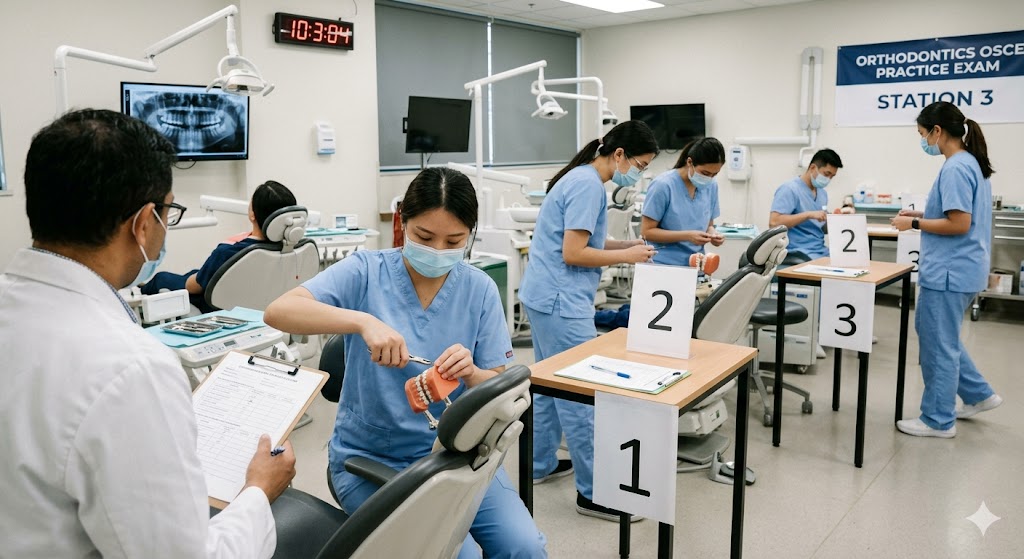
Additional Information
What the Course Entails and Exam Details
The course and its associated practice exam focus on the core competencies required of a practicing orthodontist. This program is not a substitute for formal specialty training but serves as a crucial final step for assessment.
Key topics covered include:
Comprehensive Case Assessment: Analyzing patient records (models, photos, radiographs like Cephalometric and Panoramic views) to formulate accurate diagnoses and treatment plans for Malocclusion Classes I, II, and III.
Clinical Skills Performance: Demonstrating proficiency in practical tasks, such as fitting and adjusting fixed appliances (brackets and bands), manipulating wires, placing separators, and managing orthodontic emergencies.
Treatment Planning and Strategy: Developing structured, sequential treatment phases, including anchorage management, space closure techniques, and retention strategies.
Communication and Interpersonal Skills: Discussing complex treatment options, risks, and consent with mock patients (actors); explaining oral hygiene protocols and appliance care; and communicating effectively with other dental specialists.
Ethics and Professionalism: Adhering to professional standards, informed consent, and patient confidentiality in clinical practice.
What to Expect in the Final Exam
The final Orthodontics OSCE is a structured assessment consisting of multiple timed "stations," usually ranging from 10 to 20 per session. Candidates rotate sequentially through these stations, each focusing on a different clinical task or competency. There are two primary types of stations:
Practical Stations: These involve performing specific physical tasks on simulation models (typodonts), dental mannequins, or interpreting real patient data (radiographs, photographs). For example, a candidate may be asked to bend a specific wire, bond a bracket, or identify skeletal anomalies on a cephalometric tracing. An examiner is often present to assess technique and safety.
Communication Stations: In these scenarios, the candidate interacts with a standardized patient (a trained actor) or an examiner acting as a parent or colleague. The candidate might need to obtain informed consent for treatment, explain a complex treatment plan to a non-expert, or address a difficult patient management situation.
The total duration of the exam is typically between two to four hours. Passing scores are set by the specific examining body and usually require achieving a minimum percentage of the total marks available and often passing a specific number of individual stations to demonstrate overall competency. Strict adherence to time limits and safety protocols is mandatory.
How to Study and Exam Centers
Preparation for the Orthodontics OSCE must be strategic and multifaceted, focusing equally on knowledge and practical skill application.
Utilize a Structured Practice Exam: This is the most effective study method. Engage with a high-quality practice exam that mirrors the format, timing, and complexity of the actual test. Time yourself rigorously when attempting scenarios to build stamina and speed.
Practice with Study Partners: For communication and diagnosis stations, peer review is invaluable. Role-play scenarios with colleagues, providing constructive feedback on each other's performance and clarity.
Refine Hands-on Skills: Use a dental simulation lab or obtain typodont models to endlessly practice essential practical tasks such as archwire bending, bracket positioning, and fitting bands. Aim for muscle memory and efficiency.
Review Clinical Guidelines and Data: Thoroughly master cephalometric analysis, radiographic interpretation, and the latest clinical guidelines from recognized orthodontic associations (e.g., AAO, BOS).
Exam Centers: The Orthodontics OSCE is generally administered by major licensing bodies, universities, and professional colleges in specialized clinical testing centers. These are often distinct from the computerized centers used for multiple-choice exams (like Pearson VUE), as they require dental operatories and simulation equipment.
Official examination details, including locations, are always provided through the official website of the specific examining organization, such as the American Board of Orthodontics (ABO), Royal College of Surgeons (RCS), or relevant national dental boards. Authorized postgraduate orthodontic programs may also host exams for their own trainees.
Job Opportunities from the Course
Successfully completing this specialty-level examination is typically a mandatory requirement for licensure and specialist registration, opening the door to highly rewarding and respected career paths within the dental field.
Career opportunities unlocked by this certification process include:
Specialist Orthodontist in Private Practice
Hospital Consultant Orthodontist
Orthodontist in Multi-Disciplinary Dental Clinics
Academic Orthodontist (Teaching and Research in Universities)
Clinical Director in Orthodontic Service Groups
Orthodontic Therapist (Roles vary by jurisdiction and typically require separate registration)
Researcher in Dental and Craniofacial Development
Dental Officer with the Armed Forces or Public Health Services
Frequently Asked Questions
Reviews
5.0
Based on 0 reviews
Leave a Review
No reviews yet. Be the first to review!