
Orthotic Fitter Practice Exam
$69.00
- Buy to unlock unlimited access to all Quiz questions and Answers in this Quiz.
- After purchase you can print a PDF of the whole quiz at any point. The PDF will contain the questions and the correct answers.
About this Exam
The [Orthotic Fitter Practice Exam] is a crucial step for individuals aiming to become a certified professional in the field of non-custom orthotics. An Orthotic Fitter is a vital healthcare professional who, under the supervision of a certified orthotist, measures, fits, and adjusts prefabricated orthotic devices for patients. These devices, which can range from cervical collars and knee braces to spinal supports and therapeutic shoes, are essential for managing pain, improving mobility, and assisting with recovery from injury or chronic conditions. This practice exam is designed for students who have completed an ABC- or BOC-approved orthotic fitter course and are preparing to challenge the actual credentialing assessment. It serves as a comprehensive self-assessment to ensure you have mastered the clinical, technical, and ethical knowledge required for independent practice and patient interaction.
Ready to test your knowledge?
Buy Now to Access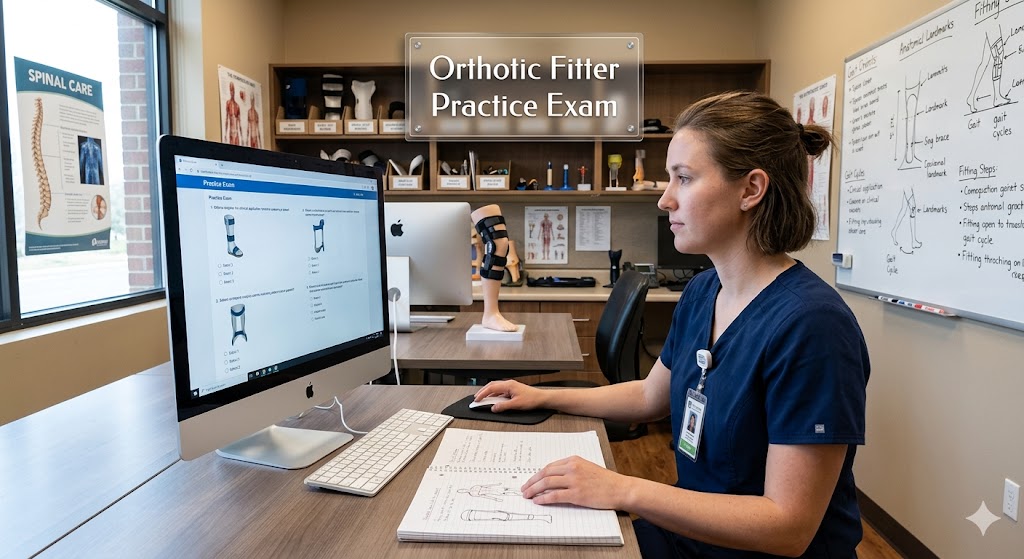
Additional Information
What the Course Entails and Exam Details
This examination is not just a test of memorization; it's an evaluation of your competency in the full spectrum of orthotic fitting care. The core curriculum, reflected in the exam content domains, typically covers the following key areas:
Patient Evaluation: Mastering the art of reviewing prescriptions, taking comprehensive patient histories (including previous device use and medical history), conducting clinical assessments, and communicating effectively with patients and other healthcare professionals to recommend the optimal treatment plan.
Formulation of the Treatment Plan: Learning how to select the appropriate prefabricated device based on the assessment, designing the custom fit strategy, and ensuring the device will meet the specific functional goals and biomechanical needs of the patient.
Implementation of the Treatment Plan: The hands-on application, including taking precise anatomical measurements, selecting the correct device size, making necessary non-structural adjustments, performing the actual fitting, and educating the patient and caregiver on correct usage, maintenance, and safety guidelines.
Continuation of the Treatment Plan: Developing skills for long-term patient care, including follow-up assessments to monitor progress, making additional modifications as the patient's condition changes, and referring patients back to a primary orthotist or physician when custom intervention is required.
Practice Management: Understanding the professional and ethical standards of the profession, including adherence to established codes of responsibility, legal regulations, and efficient clinic operations.
What to Expect in the Final Exam
The official Orthotic Fitter Certification Exam, typically proctored by bodies like the American Board for Certification in Orthotics, Prosthetics & Pedorthics (ABC), is designed to be a comprehensive measure of your readiness for clinical practice. Here is a breakdown of what you can expect:
Format: The exam is a computer-based test (CBT) consisting entirely of multiple-choice questions. It includes 125 items, which are strategically developed to assess your understanding of the major domains of practice, with a heavy emphasis on patient care.
Time Limit: You will be allocated exactly two and a half (2.5) hours to complete the examination.
No Practical Portion: While the required pre-certification course includes critical hands-on labs and competency assessments, the final credentialing exam for the Fitter level is a written, analytical test and does not include a separate practical demonstration on exam day.
Passing Score: The exam is scored on a scaled system, and candidates will receive immediate score reports. The passing score is determined based on psychometric analysis to ensure a consistent standard of competency across different test versions.
Rules: The exam is highly proctored. You must present valid government-issued photo identification. No personal belongings, including textbooks, notes, or electronic devices, are allowed in the testing room.
How to Study and Exam Centers
Preparing for the [Orthotic Fitter Practice Exam] requires a multi-faceted approach. To ensure success on your journey to becoming a Certified Orthotic Fitter, leverage these actionable strategies:
Take Multiple Practice Exams: Treat practice exams as simulated testing days. Time yourself and replicate the proctored environment to build stamina and reduce anxiety. Use our resource repeatedly to identify weak areas and track your progress.
Utilize the ABC Fitter Candidate Guide: This is your primary reference. Pay close attention to the Test Content Outline, which breaks down the percentage of emphasis for each domain, and the Reference & Reading List, which specifies the exact textbooks used to validate the correct answers on the official exam.
Create Flashcards: Develop flashcards for key terms, anatomical structures, biomechanical principles, specific orthotic devices and their uses, and clinical conditions relevant to orthotic fitting.
Maximize Your Clinical Experience: One of the best ways to prepare is to actively engage in your mandated patient care hours. Use the ABC self-assessment checklist as a guide to ensure you are getting deep, relevant experience in all required competencies under the supervision of a certified mentor.
Form a Study Group: Collaborative learning is highly effective. Peer review, case study discussions, and teaching concepts to others can solidify your knowledge.
Where to Take the Exam: The official exam is administered year-round at hundreds of Pearson VUE professional testing centers globally. Alternatively, you may have the option to take the exam via live remote proctoring in your own secure location.
Job Opportunities from the Course
Earning your certification as an Orthotic Fitter unlocks numerous rewarding career paths in the dynamic allied health landscape. This credential is highly respected by employers and demonstrates your commitment to quality patient care. Potential job opportunities include:
Certified Orthotic Fitter (CFo/COF): The primary role, fitting prefabricated orthoses in private orthotic and prosthetic clinics, multi-specialty medical practices, and rehabilitation facilities.
Orthotic Technician: Focusing on the modification, repair, and technical support of orthotic devices within a laboratory or clinic setting.
Medical Supply Fitter: Working for DME (Durable Medical Equipment) companies to manage the inventory, selection, and fitting of supports and braces.
Hospital Orthotic Fitter: Providing acute care fitting and education to patients in orthopedic units, emergency departments, or trauma centers.
Sales Representative: Leveraging clinical knowledge to represent orthotic manufacturers and sell prefabricated devices to clinics and hospitals.
Clinic Manager: Advancing to oversee the operational and administrative functions of an orthotic and prosthetic practice.
Frequently Asked Questions
Reviews
5.0
Based on 0 reviews
Leave a Review
No reviews yet. Be the first to review!