
Orthotics Clinical Patient Management (CPM) Practice Exam
$69.00
- Buy to unlock unlimited access to all Quiz questions and Answers in this Quiz.
- After purchase you can print a PDF of the whole quiz at any point. The PDF will contain the questions and the correct answers.
About this Exam
The Orthotics Clinical Patient Management (CPM) Practice Exam is an essential tool for individuals preparing to master the critical clinical decision-making skills required in modern orthotic practice. This comprehensive exam is designed to simulate the rigorous conditions of the formal CPM certification process, which is often a final hurdle for aspiring orthotists seeking licensure or official certification (e.g., ABC, BOC, or equivalent national bodies). Its primary target audience includes recent graduates of accredited orthotic and prosthetic programs, experienced clinicians aiming to demonstrate high-level competency for specific specializations, or those looking to re-enter the field. It assesses your ability to apply knowledge of biomechanics, pathology, and material science in a realistic clinical setting, ensuring you are prepared to manage a wide range of patients effectively and ethically.
Ready to test your knowledge?
Buy Now to Access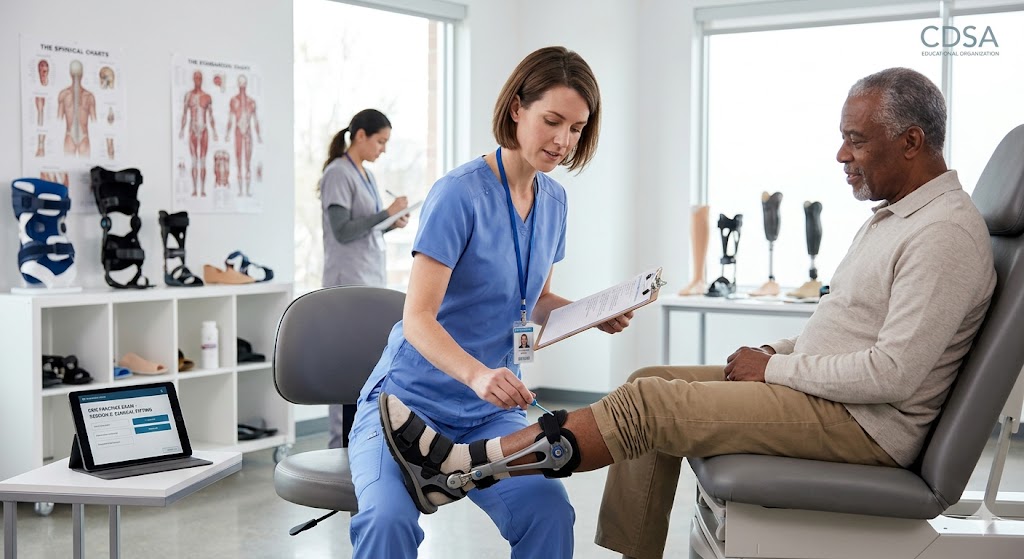
Additional Information
What the Course Entails and Exam Details
This comprehensive assessment evaluates a candidate across the full continuum of patient care. The course curriculum and practice exam content are aligned with standard competencies established by leading professional bodies. Core areas covered include:
Patient Evaluation: Conducting exhaustive physical examinations, dynamic gait analysis, neuro-musculoskeletal testing, and interpreting medical histories and prescriptions.
Clinical Reasoning & Prescription Formulation: Synthesizing assessment data to design optimal orthotic solutions for specific pathologies across the full body, including lower limb, spinal, upper limb, and dynamic devices.
Measurement and Fitting: Utilizing precise measurement techniques, selecting appropriate materials and components, and executing meticulous fitting procedures to ensure device function, comfort, and safety.
Adjustments and Trouble-Shooting: Identifying potential issues during fitting or follow-up, and implementing precise physical adjustments to maximize therapeutic outcomes and patient compliance.
Patient Education and Compliance: Communicating complex medical and biomechanical information clearly to patients and their families, ensuring understanding of use, maintenance, and realistic expectations.
Documentation and Professional Ethics: Maintaining meticulous patient records and demonstrating unwavering commitment to ethical practice and evidence-based clinical guidelines.
What to Expect in the Final Exam
You can expect a challenging and multi-faceted examination process designed to test your actual performance, not just your knowledge. The official Orthotics CPM Exam usually consists of a mixture of written, oral, and practical components, often administered over a multi-day period.
Practical Clinical Stations: The cornerstone of the exam. You will be presented with several scenarios involving standardized patients or simulation technology. You must perform key clinical tasks—such as a specific measurement, a full-body dynamic assessment, or a critical fitting adjustment—under observation by a panel of expert proctors.
Oral Examinations: Candidates often need to discuss complex case studies, defend their treatment rationales, or explain the mechanical principles of their orthotic design choices to a panel of experienced practitioners.
Written Exam: In addition to practical skills, a rigorous multiple-choice written component (testing foundational science, material science, and regulatory knowledge) is often integrated into the certification process.
Passing Score: The passing score methodology varies but typically follows a criterion-referenced standard, requiring a high level of proficiency across all domains. You must demonstrate competence in every essential clinical skill area to pass.
Strict Time Limits: Each station and written section is tightly timed. For practical components, you might have only 15-30 minutes for a standard interaction. Precision and efficiency are key factors in your final score.
How to Study and Exam Centers
Preparation must be both comprehensive and highly practical. Leverage the official candidate handbook provided by your certifying body as your ultimate study blueprint. Create a detailed study schedule that breaks down each competence domain. Study groups with peers are invaluable for practicing the simulation stations. Role-playing patient scenarios is perhaps the single most effective way to refine your communication and assessment skills. Regularly self-test under timed conditions for both written and practical parts. Review major clinical textbooks, anatomy atlases, and industry guidelines. Online forums and review courses can offer additional insights, but nothing replaces hands-on practice.
Regarding exam locations, the Orthotics CPM Exam is not typically administered online or through general computer-based testing centers like Pearson VUE. It is a specialized, in-person clinical exam. Candidates must travel to designated Authorized Regional Testing Centers or National Examination Facilities specifically set up by the certifying board (e.g., the ABC headquarters or large clinical sites in major cities). These facilities are equipped with standardized patients, observation rooms, and the necessary orthotic devices to conduct a fair and valid practical assessment. Be prepared to register early, as exam dates and spaces are often limited and fill quickly.
Job Opportunities from the Course
Successfully passing this exam and achieving your certification unlocks a world of opportunities in a vital healthcare sector. Possible job titles include:
Certified Orthotist (C.O.): Working directly with patients in private practices, large hospital systems, or specialized clinics.
Orthotics Clinical Manager: Supervising a team of practitioners, handling operational efficiencies, and managing difficult clinical cases.
Clinical Educator: Teaching the next generation of orthotic and prosthetic students in accredited academic programs or clinical residency sites.
Product Development Specialist: Designing and testing new orthotic devices, often for medical device manufacturers.
Research Orthotist: Leading clinical trials and conducting evidence-based research to advance the science of orthotic treatment.
Medical Policy and Advocacy Specialist: Working with government agencies or non-profits to develop healthcare guidelines and improve access to orthotic care.
Frequently Asked Questions
Reviews
5.0
Based on 0 reviews
Leave a Review
No reviews yet. Be the first to review!