
Outside Lineman Year 1 Practice Exam
$69.00
- Buy to unlock unlimited access to all Quiz questions and Answers in this Quiz.
- After purchase you can print a PDF of the whole quiz at any point. The PDF will contain the questions and the correct answers.
About this Exam
The Outside Lineman Year 1 certification, often structured as part of an apprenticeship program, is the foundational gateway for individuals aspiring to build a career in the electrical utility industry. This exam is meticulously designed for entry-level apprentices who have completed their initial year of training and are ready to validate their comprehension of fundamental concepts, safety protocols, and essential skills required to work competently and safely on outside power lines. The certification ensures that all candidates possess the standard of knowledge and safety awareness required to progress further in their specialized training.
Ready to test your knowledge?
Buy Now to Access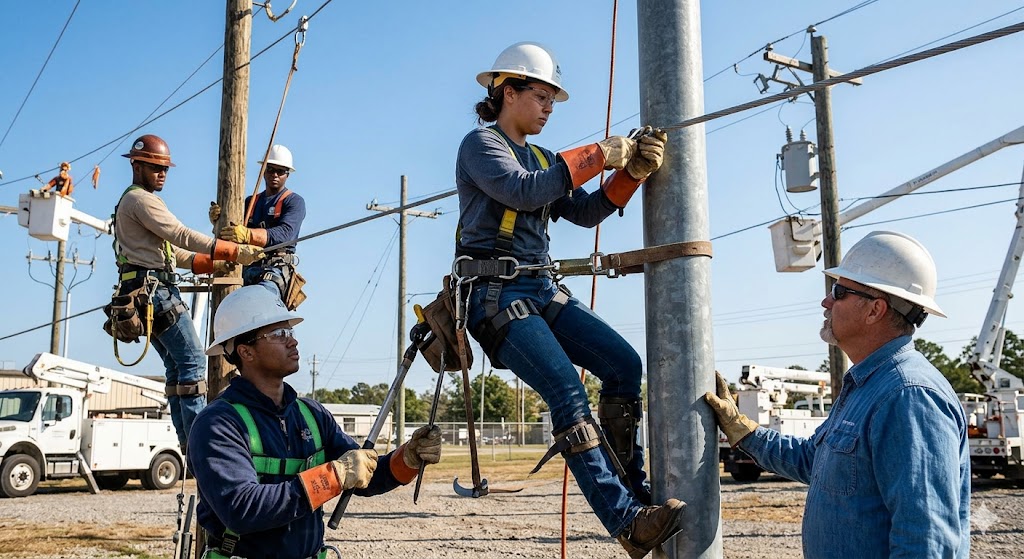
Additional Information
What the Course Entails and Exam Details
The content covered in a typical first-year lineman curriculum is robust and fundamental. It generally includes a strong emphasis on Safety as the topmost priority, covering aspects like OSHA regulations, personal protective equipment (PPE) usage, pole top rescue procedures, and general job site safety. Pole Climbing Techniques are a primary practical component, involving rigorous training on proper gear utilization, gaff sharpening, and efficient, safe climbing skills on wooden utility poles. Basic Electrical Theory is introduced, encompassing fundamental concepts of electricity, voltage, current, resistance, Ohm's law, and basic circuitry. Tool Identification and Use are essential, ensuring proficiency with various hand tools, climbing gear, rigging equipment, and safety devices specific to the trade. Students also learn about Materials and Equipment, including recognizing and properly handling conductors, insulators, crossarms, and other key components. Basic Rigging and Knot Tying skills are taught to prepare apprentices for safely lifting materials and securing equipment. The final Year 1 assessment typically includes both a Written (Theory) Examination—which may feature multiple-choice, true/false, or short-answer questions based on the coursework—and a Practical Skills Evaluation where candidates must demonstrate proficiency in activities like climbing a pole, performing basic rigging, or correctly utilizing tools and PPE. The exact curriculum and test details are determined by individual joint apprenticeship and training committees (JATCs) or utility companies.
What to Expect in the Final Exam
You should expect a rigorous evaluation that demands both conceptual understanding and physical proficiency. The written portion will often consist of a timed, proctored exam containing multiple-choice questions designed to test your grasp of basic electrical principles, safety rules, and material identification, typically adhering to a strict timeframe and high minimum passing score (often around 75-80%). The practical skills component is a vital assessment where you will be required to demonstrate, in real-time, your ability to perform tasks like climbing a specific height on a utility pole, executing a simple rigging operation, correctly putting on and checking safety gear, or demonstrating pole top rescue. These practical evaluations are often observed and scored by qualified Journeyman Linemen or instructors, looking for not only completion of the task but also adherence to all safety procedures and appropriate technique. Consistency, attention to detail, and a calm, competent execution of skills are paramount. While the specific format (e.g., number of questions, duration) varies by program, you can generally expect a comprehensive test that leaves no critical aspect of first-year training unassessed, with a clear focus on demonstrating that you are ready for the greater responsibilities and complexity of subsequent years.
How to Study and Exam Centers
Effective preparation is key to success on the Year 1 Lineman Exam. Begin by thoroughly Reviewing All Textbooks, Manuals, and Study Materials provided by your apprenticeship program, paying close attention to highlights, definitions, and diagrams. Utilize Practice Exams and Sample Questions like this one to familiarize yourself with the question formats and time constraints, and use your results to identify weak areas for focused study. Engage in Consistent Practical Practice at your training facility, especially focusing on pole climbing, rigging, and tool handling; repetitions will build muscle memory and confidence. Consider Group Study Sessions with fellow apprentices to discuss challenging topics and practice practical skills together. For the specific location of your exam and registration details, you must contact your Local Joint Apprenticeship and Training Committee (JATC), specific Union Hall (e.g., IBEW), or Utility Company Training Department. These institutions manage the entire process, including scheduling written exams (which may sometimes use testing platforms but are often held at dedicated training centers) and coordinating practical evaluations at designated training yards. Your program coordinators are the official source for precise information on test dates, venues, registration procedures, and any specific rules or equipment requirements.
Job Opportunities from the Course
Successful completion of the first year of an Outside Lineman apprenticeship is a significant achievement and a major step forward, primarily leading to immediate progression within the apprenticeship structure towards becoming a fully qualified Journeyman Lineman. Typical career progression looks like this:
Apprentice Lineman (Year 2, 3, etc.) – Upon successfully passing the Year 1 benchmark, you will advance to the subsequent years of your apprenticeship, taking on more complex tasks, more significant responsibility on the job site, and receiving further advanced training.
Journeyman Outside Lineman – This is the ultimate goal, achieved after successfully completing all years of the apprenticeship and passing the comprehensive final assessment and relevant state or national licensing requirements, enabling you to work independently as a skilled, recognized, and highly valued professional.
Possible early-stage roles, depending on program structure, could also include: Pre-Apprentice/Groundman roles, which are often stepping stones into the official first year. While the "Year 1 Course" itself is specifically geared towards the apprentice path, the knowledge and skills gained are highly applicable and often a prerequisite for continued employment in these essential positions within power and utility companies. Completion of this crucial first year proves commitment and provides the essential grounding for a long and prosperous career in the electrical trade.
Frequently Asked Questions
Reviews
5.0
Based on 0 reviews
Leave a Review
No reviews yet. Be the first to review!