
PADI Rescue Diver Practice Exam
$69.00
- Buy to unlock unlimited access to all Quiz questions and Answers in this Quiz.
- After purchase you can print a PDF of the whole quiz at any point. The PDF will contain the questions and the correct answers.
About this Exam
The PADI Rescue Diver certification is widely regarded as one of the most challenging, yet immensely rewarding, courses a recreational diver can take. It marks a significant shift in a diver’s mindset, moving your focus from purely watching out for yourself to anticipating, preventing, and managing the safety of others. This course is designed for any Advanced Open Water Diver, aged 12 or older, who wants to build confidence, learn crucial accident management skills, and become a better, more prepared dive buddy. Many divers describe this training as the moment they truly learned to dive, as it prepares you to handle emergencies that, while rare, require immediate and decisive action.
Ready to test your knowledge?
Buy Now to Access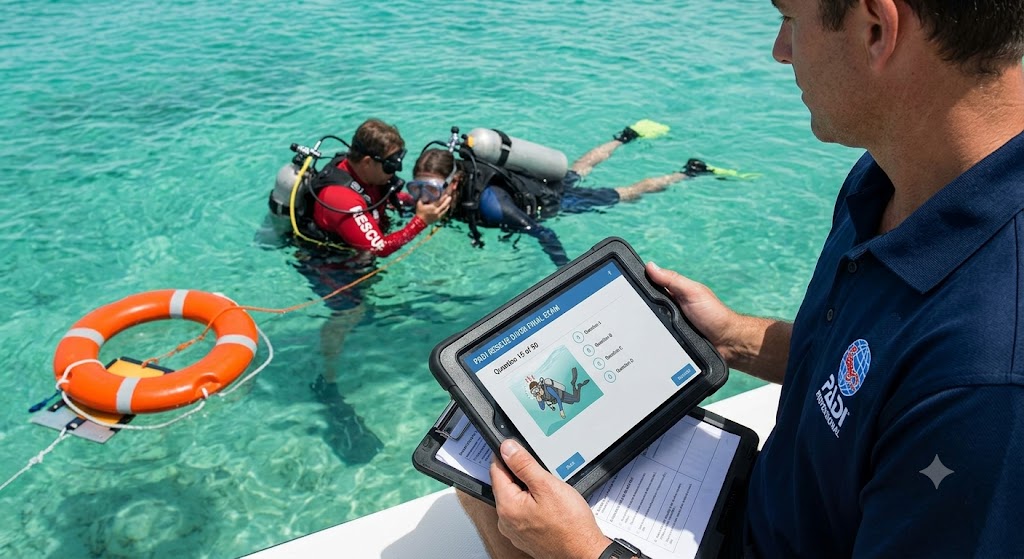
Additional Information
What the Course Entails and Exam Details
The PADI Rescue Diver course provides a comprehensive combination of theoretical knowledge and practical skill mastery. The core focus is learning to prevent problems from escalating and knowing exactly what to do if they occur. The knowledge development phase covers topics such as diver stress management, identifying equipment problems, recognizing signs of panic, oxygen provider systems, and the psychologies of rescue. The final exam details confirm your understanding of this crucial theory. Parallel to your studies, you will master ten distinct skills in confined or open water, ranging from assisting a tired diver at the surface to managing unresponsive divers both underwater and at the surface. The course culminates in realistic open water scenarios where you must synthesize all theory and skills to manage simulated emergencies effectively.
What to Expect in the Final Exam
The PADI Rescue Diver Final Exam is a metric designed to verify that you have understood the vital safety principles covered in your Rescue Diver Manual or eLearning. The exam typically consists of multiple-choice questions—usually around 50—that test your retention of knowledge reviews from each section of the manual. You will need to demonstrate your understanding of emergency management procedures, first aid for diving injuries, and equipment troubleshooting. While some students worry about the "written" component, the content is all directly applicable to the practical scenarios you will perform. To successfully pass this theoretical component of the course, you are generally required to achieve a score of 75% or higher. Your instructor will review any incorrect answers with you to ensure complete understanding before certification.
How to Study and Exam Centers
The most effective study method is to fully engage with the PADI learning materials provided to you, whether you use the physical manual or the online PADI eLearning platform. Complete every Knowledge Review at the end of each section, as these are the best indicators of the types of questions you will see on the final exam. Redo these reviews several times until you can answer them quickly and understand why the correct answer is right. You should also utilize authorized PADI Rescue Diver practice exams available online to familiarize yourself with the question formats and test-taking atmosphere.
The Final Exam is taken through authorized PADI locations. If you are completing your theory online via PADI eLearning, you will likely take the exam within that digital portal itself. If you are learning through a physical dive shop, you will take the exam at their testing facility. You do not need to visit specialized testing centers like Pearson VUE for this certification. PADI authorized schools, dive centers, and resorts worldwide are the exclusive venues for both the theoretical testing and the essential practical components of this qualification.
Job Opportunities from the Course
Earning your PADI Rescue Diver certification is the critical prerequisite for entering the professional ranks of recreational scuba diving. Without this cornerstone of safety training, you cannot advance to leadership roles. This certification is mandatory if you want to pursue professional opportunities. It unlocks the first step of the professional ladder and enhances your value in related fields. The following are the specific career paths and job titles this certification enables you to pursue:
PADI Divemaster (The prerequisite is PADI Rescue Diver)
PADI Assistant Instructor
PADI Open Water Scuba Instructor
Scientific Diver (Usually requires Rescue level proficiency)
Public Safety Diver (Requires specialized further training, but Rescue is the foundation)
Diving First Aid/Oxygen Provider Instructor
Dive Boat Crew (Safety Officer capacity)
Frequently Asked Questions
Reviews
5.0
Based on 0 reviews
Leave a Review
No reviews yet. Be the first to review!