
Paramedic – Special Populations Practice Test
$69.00
- Buy to unlock unlimited access to all Quiz questions and Answers in this Quiz.
- After purchase you can print a PDF of the whole quiz at any point. The PDF will contain the questions and the correct answers.
About this Exam
The [Paramedic – Special Populations Practice Test] is a vital resource designed for aspiring and current paramedics.
It targets the nuanced skills and knowledge required to treat patients who fall outside the typical adult demographic.
This includes pediatric, geriatric, obstetric, and bariatric patients, as well as those with distinct cognitive or physical disabilities.
Mastering this area ensures that emergency medical providers can deliver high-quality, tailored care in critical situations, significantly improving patient outcomes for these vulnerable groups.
Ready to test your knowledge?
Buy Now to Access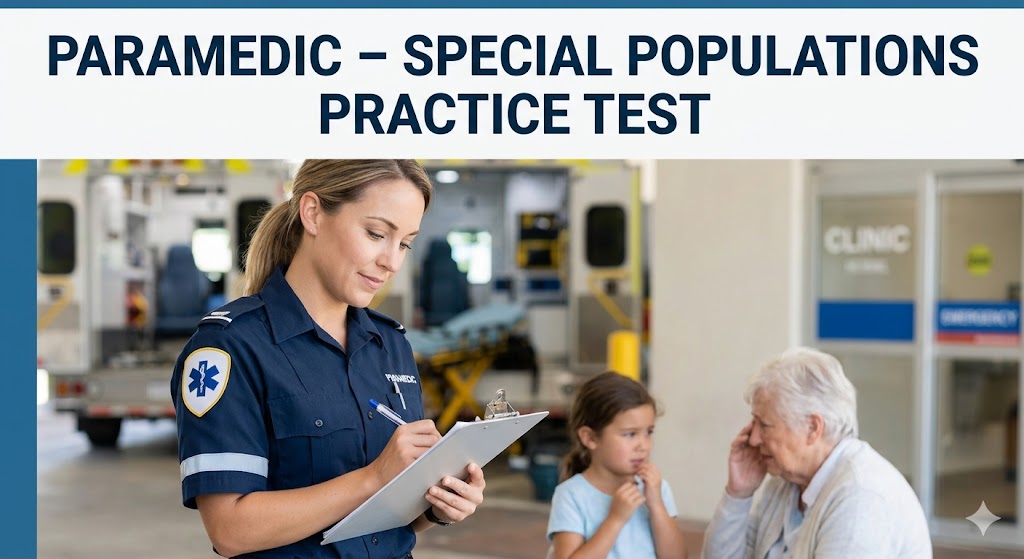
Additional Information
What the Course Entails and Exam Details
This specialization builds upon core paramedic training, diving deep into the unique physiological and anatomical differences of special populations.
The course syllabus typically covers the pharmacological challenges in pediatric and geriatric patients, the dynamics of childbirth and neonatal care, and the specialized communication and lifting techniques required for patients with disabilities.
You will also explore the complexities of managing chronic conditions that are common in specific demographics, as well as the unique psychological needs that can complicate emergency assessments.
A robust course will include scenario-based learning, simulations, and case studies to sharpen critical thinking.
The knowledge gained is critical for any paramedic looking to provide comprehensive care.
What to Expect in the Final Exam
The final exam for a Special Populations module or certification is designed to be rigorous and comprehensive.
You can expect a format similar to other high-stakes EMS exams, which often rely heavily on complex multiple-choice questions that require synthesis of information rather than simple recall.
Many exams also include a practical component, where you must demonstrate hands-on skills such as neonatal resuscitation, difficult obstetric maneuvers, or geriatric assessment in a simulated high-stress environment.
Passing scores vary by certifying body, but they are generally high, often requiring 70-80% on the cognitive portion and a 'pass' on all practical scenarios.
You must be prepared to think critically, adapt quickly, and manage complex cases under pressure.
Strict time limits are typical, mimicking the urgency of real-world emergencies.
How to Study and Exam Centers
Preparation for this exam requires a multifaceted approach that goes beyond reading a textbook.
A comprehensive study strategy should always begin with high-quality practice exams, like this [Paramedic – Special Populations Practice Test], which allow you to identify gaps in your knowledge and get accustomed to the question format.
Create physical or digital flashcards for key drug dosages, physiological constants, and critical assessment algorithms for each special demographic.
Engage in group study sessions to work through complex clinical scenarios with peers.
To take the actual certification exam, you will likely register through an official paramedic program, a specific state EMS office, or a recognized testing vendor like Pearson VUE.
Most national-level exams are delivered at authorized computer-based testing (CBT) centers globally.
Ensure you check the requirements of your specific region or certifying agency (like the NREMT, if applicable to your career path).
Job Opportunities from the Course
Earning a specialization in Paramedic – Special Populations significantly enhances your career prospects.
This targeted expertise makes you a highly valued asset to any EMS agency, hospital, or healthcare provider.
The roles this knowledge prepares you for include:
Specialized Transport Paramedic (e.g., Neonatal or Pediatric Transport Team)
High-Risk OB/GYN Paramedic Transport
Mobile Integrated Healthcare (MIH) Paramedic
Community Paramedic focusing on Geriatric Care
Flight Paramedic in specialized pediatric or obstetric retrieval teams
EMS Educator or Field Training Officer (FTO) with a focus on special populations
Frequently Asked Questions
Reviews
5.0
Based on 0 reviews
Leave a Review
No reviews yet. Be the first to review!