
Pass the Next Gen NCLEX B Practice Exam
$69.00
- Buy to unlock unlimited access to all Quiz questions and Answers in this Quiz.
- After purchase you can print a PDF of the whole quiz at any point. The PDF will contain the questions and the correct answers.
About this Exam
The Next Generation NCLEX (NGN) is a revolutionized nursing licensure exam designed to better assess a candidate's clinical judgment. While the 'B' designation might refer to a specific, internal practice version created by various institutions or test preparation companies, the core exam—the NGN—is the standard required to become a licensed Registered Nurse (RN) or Licensed Practical/Vocational Nurse (LPN/LVN) in the United States and Canada. This practice exam is designed for nursing graduates who have completed their coursework and are ready to test their readiness for the real NCLEX, ensuring they are prepared for the more complex scenario-based questions.
Ready to test your knowledge?
Buy Now to Access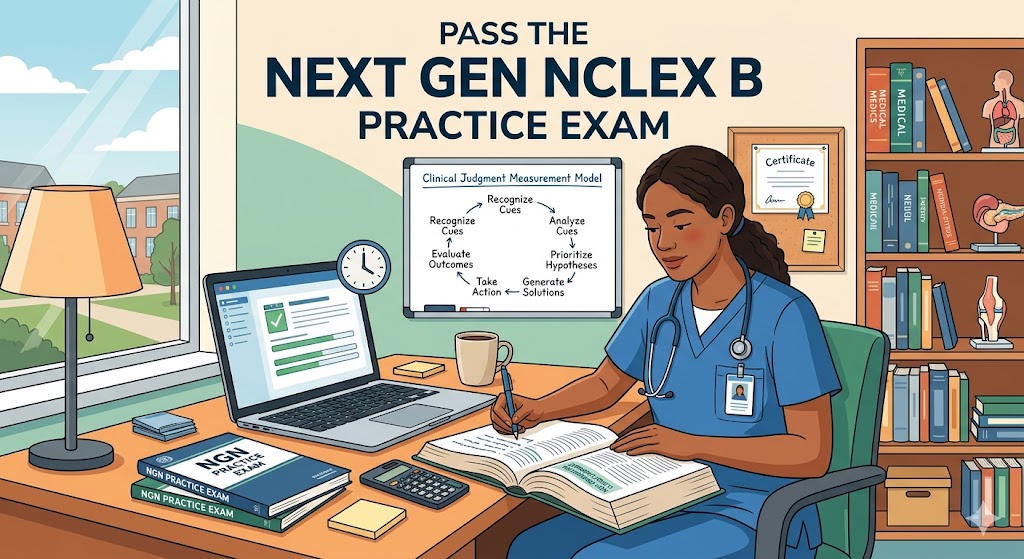
Additional Information
What the Course Entails and Exam Details
This practice exam simulates the clinical judgment-focused structure of the actual NGN. While it isn't a comprehensive "course," its contents reflect the core curriculum of modern nursing programs.
Core NGN Practice Focus: The primary goal is to practice utilizing the NCSBN Clinical Judgment Measurement Model. This means you will encounter questions that require you to go beyond simple recall.
Simulation Topics: It covers all major nursing client needs categories, but requires you to apply that knowledge in a way that shows you can identify relevant client data, prioritize hypotheses, generate solutions, and take action.
Detailed Rationales: A crucial element of this practice test is the included feedback. For every question—both standard and Next Gen—you will receive detailed rationales for correct and incorrect answers. Understanding why an answer is correct is vital.
What to Expect in the Final Exam
While the exact structure of this "B Practice Exam" will vary depending on the provider (e.g., your nursing school, a commercial test prep company), it is built to mirror the final NGN licensing exam.
Format: The practice exam will feature a mix of question types. You will see traditional multiple-choice and select-all-that-apply (SATA) questions, but crucially, it will heavily emphasize the new NGN question formats. These include intricate Case Studies (six linked questions based on one client scenario), Standalone questions (which can include trend questions), Bowtie items, and Drag-and-Drop or Matrix questions.
Passing Score Requirements: This is a diagnostic practice exam, so there isn't a single passing score set by the NCLEX licensing body. However, the software providing the practice exam will usually give you a personalized score report and an "Estimated Probability of Passing" the actual NCLEX. This data is the most valuable output.
Time Limits: The actual NGN has a 5-hour time limit. This practice exam will either be timed strictly to simulate that pressure or offer an un-timed study mode.
How to Study and Exam Centers
Effective preparation for this practice exam directly mirrors preparation for the real licensure test.
Study Content, But Focus on Scenarios: Continue reviewing core nursing concepts, but don't just memorize facts. Spend significant time reviewing high-fidelity clinical case studies.
Master the NGN Formats: Utilize the specific, updated questions provided in this practice set. Get comfortable navigating the interface of Case Studies and complex item types like the Bowtie or Matrix questions, which require selecting appropriate diagnoses, actions, and expected responses.
Review Rationales Diligently: This is the most critical step. Do not simply move past a question you missed. Read the detailed rationales provided by your practice software. This process teaches you the specific type of critical thinking and prioritization required to achieve licensure.
Exam Setting (Practice vs. Real):
Practice Exam (This B Test): This practice test is taken online, typically through a university's learning portal (like Canvas or Blackboard) or a professional test prep company's website. You can take it from any computer with a stable internet connection.
Real NGN Licensure Exam: The actual NGN licensing exam must be taken in person at an official, secure testing center operated by Pearson VUE.
Job Opportunities from the Course
Passing this practice exam is a key step toward achieving your actual nursing licensure, which is the qualification required for all standard nursing job titles.
Registered Nurse (RN)
Medical-Surgical Nurse
Pediatric Nurse
Critical Care/ICU Nurse
Operating Room/Perioperative Nurse
Labor and Delivery Nurse
Psychiatric-Mental Health Nurse
Community Health Nurse
Long-Term Care Nurse
Home Health Nurse
Public Health Nurse
Frequently Asked Questions
Reviews
5.0
Based on 0 reviews
Leave a Review
No reviews yet. Be the first to review!