
Patient Care Technician National Practice Test
$69.00
- Buy to unlock unlimited access to all Quiz questions and Answers in this Quiz.
- After purchase you can print a PDF of the whole quiz at any point. The PDF will contain the questions and the correct answers.
About this Exam
A Patient Care Technician (PCT) is a fundamental member of the modern healthcare team, serving as a critical bridge between patients and licensed medical staff.
This national certification exam is designed to rigorously validate the essential skills and knowledge required to provide high-quality, direct patient care in various clinical settings.
The credential is primarily intended for aspiring healthcare professionals who wish to work closely with patients in hospitals, nursing homes, long-term care facilities, or rehabilitation centers.
Aspiring Certified Nursing Assistants (CNAs), medical assistants, or those looking for a dynamic entry point into the nursing field will find this certification to be a crucial stepping stone.
Ready to test your knowledge?
Buy Now to Access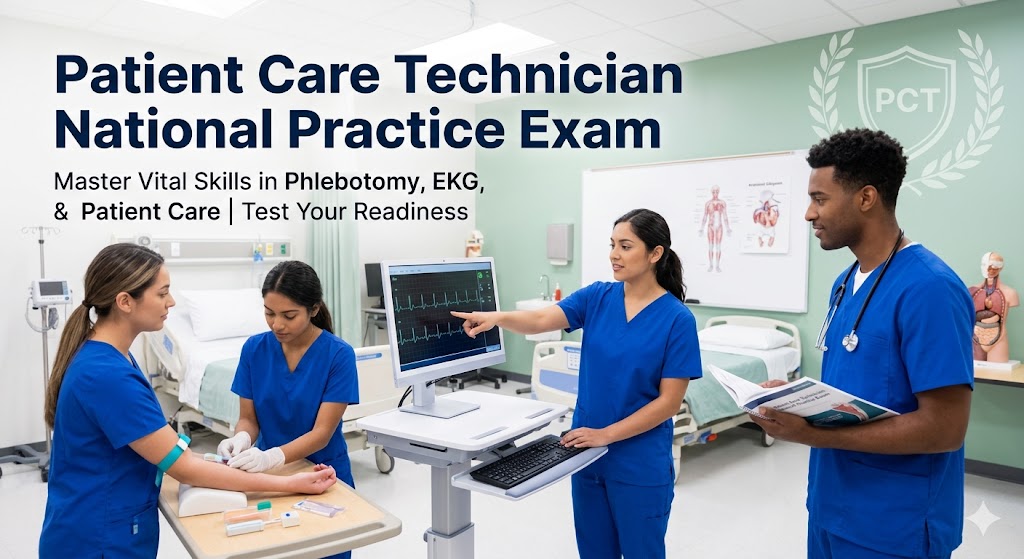
Additional Information
What the Course Entails and Exam Details
The preparation course and subsequent national exam cover a diverse and vital curriculum to ensure that every certified PCT possesses the diverse competencies needed on day one.
Central to this knowledge base is providing safe, dignified, personal care, including bathing, dressing, feeding, and assisting with mobility or transfers for patients with varying needs.
Furthermore, a significant portion of the course and exam focuses on clinical skills that exceed standard nursing assistant duties, such as performing electrocardiograms (EKGs) and collecting vital signs.
Crucial areas also include training in safe and correct phlebotomy procedures, which covers blood draw techniques, specimen labeling, equipment handling, and adhering to strict infection control protocols.
Students are further educated on patient safety, recognizing and reporting changes in patient condition, basic first aid, and the maintenance of a sanitary clinical environment.
Finally, the course reinforces ethical responsibilities, ensuring candidates understand fundamental patient rights, HIPAA compliance, and proper legal documentation.
What to Expect in the Final Exam
While the specific national accrediting body, such as the NHA, NCPT, or others, dictates the exact parameters, all final exams are rigorous assessments of competency.
Typically, the test will consist of multiple-choice questions designed to evaluate both theoretical knowledge and practical decision-making scenarios.
You must be prepared to answer comprehensive questions about patient physiology, standard safety procedures, clinical laboratory tests, and effective communication skills.
Passing scores are generally set at approximately 70% to 75%, and you will usually be given between 2 and 3 hours to complete the examination.
The majority of these national exams are now computer-based, which often provides candidates with their score reports immediately upon completion.
For those requiring accommodation, specific requests must be made in advance, and you should ensure you understand the required forms of government ID to bring to the testing day.
How to Study and Exam Centers
Successfully passing the PCT national exam requires a dedicated, multi-faceted study approach that goes beyond simply reviewing a single textbook.
Begin by purchasing or accessing a comprehensive study guide specifically tailored to the national certification body whose exam you will be taking.
Establish a structured study schedule that covers each core topic thoroughly, allowing sufficient time for review and focused learning on your weakest areas.
The most effective strategy is the repeated use of practice exams; this not only reinforces your knowledge but also builds confidence and improves your time management.
You can register for and take the exam at authorized physical testing centers, such as those operated by Pearson VUE, or frequently at accredited hospitals and schools that sponsor the training programs.
Many national organizations also offer secure online live-remote proctoring options, providing you with the convenience of taking the exam from a quiet, dedicated space in your own home.
Job Opportunities from the Course
A Patient Care Technician national certification unlocks numerous diverse job opportunities across the spectrum of healthcare organizations.
Certified Patient Care Technicians are often heavily recruited by acute care hospitals to work in various units, including medical-surgical, emergency rooms, and intensive care.
Additionally, positions are widely available in long-term care, assisted living, and skilled nursing facilities, focusing on resident health and quality of life.
The advanced skills included in the certification open doors to specialized careers such as a dedicated EKG Technician or a clinical Phlebotomist.
PCTs are also employed in rehabilitation hospitals, dialysis clinics, hospice care settings, and even major outpatient surgery centers.
This certification is widely recognized by employers as a clear signal of professional dedication and competency, and it provides a strong foundation for those planning to advance to licensed nursing roles.
Frequently Asked Questions
Reviews
5.0
Based on 0 reviews
Leave a Review
No reviews yet. Be the first to review!