
Patrolling Operations Practice Test
$69.00
- Buy to unlock unlimited access to all Quiz questions and Answers in this Quiz.
- After purchase you can print a PDF of the whole quiz at any point. The PDF will contain the questions and the correct answers.
About this Exam
The Patrolling Operations certification is designed for security professionals, private investigators, law enforcement personnel, and individuals aspiring to work in public safety and premise protection. This comprehensive certification validates an individual's fundamental knowledge and practical skills required for effectively managing and executing patrolling duties across various environments. It focuses on observation techniques, legal principles, emergency response protocols, and the maintenance of a visible, proactive presence to deter incidents and ensure safety.
Ready to test your knowledge?
Buy Now to Access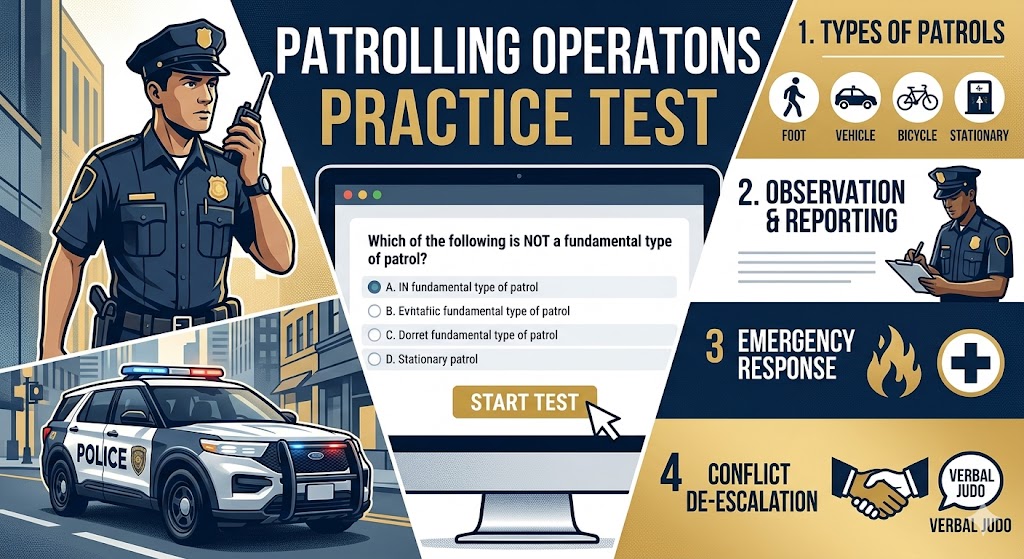
Additional Information
What the Course Entails and Exam Details
The Patrolling Operations course covers critical areas essential for effective patrolling. Students will study techniques for preparing for a patrol, including understanding specific assignments, routes, and required equipment. Key concepts include dynamic and static patrol methodologies, high-risk patrol considerations, observing and reporting skills, and recognizing unusual conditions or hazards. The curriculum integrates topics on effective communication, including radio protocols, interpersonal skills, and conflict resolution. Modules also address safety procedures, use of force continuum principles, and detailed report writing. Furthermore, students learn the relevant legal considerations, including powers of arrest, search and seizure principles (appropriate to their jurisdiction and role), and the importance of ethical conduct and professionalism.
What to Expect in the Final Exam
The final examination for the Patrolling Operations certification typically uses a standardized, closed-book format. Candidates can expect a series of multiple-choice questions designed to assess their understanding of the core concepts, practical scenarios, and operational protocols covered in the course. The exam may present situations requiring practical decision-making based on learned procedures and ethical guidelines. While specific question counts vary, the test often comprises 50-100 questions. A passing score of 70-80% is common. The exam is usually timed, with candidates often allocated between 60 and 120 minutes to complete all sections. Specific rules regarding photo identification and prohibited items apply in testing environments.
How to Study and Exam Centers
Success on the Patrolling Operations Practice Test requires a focused study plan. Candidates are encouraged to thoroughly review the official course material, textbooks, and any provided study guides. Utilizing this practice exam to identify weak areas and reinforce correct answers is crucial for building confidence and improving recall. Taking notes, summarizing key concepts, and using flashcards for critical terms and procedures helps retain information. Simulating timed conditions during practice attempts improves speed and accuracy. The official certification exam is commonly administered through various channels. Candidates may register to take the test online through authorized proctoring portals, allowing flexibility. Alternatively, exams may be scheduled at approved testing centers, including authorized security training academies, community colleges, or specific third-party test delivery services (like Pearson VUE, depending on the specific certification body and jurisdiction).
Job Opportunities from the Course
Earning a Patrolling Operations certification opens diverse career paths in both the private and public sectors. Some of the specific job opportunities this certification can unlock include:
Security Guard
Patrol Officer (Private Security)
Site Security Specialist
Campus Safety Officer
Hospital Security Professional
Loss Prevention Specialist
Mobile Security Patrol Driver
Security Supervisor
Event Security Coordinator
Residential Patrol Agent
Corporate Security Associate
Port Security Officer
Museum Security Officer
Transport Security Officer (TSA)
Frequently Asked Questions
Reviews
5.0
Based on 0 reviews
Leave a Review
No reviews yet. Be the first to review!