
Peanut Inspector Certification Practice Exam
$69.00
- Buy to unlock unlimited access to all Quiz questions and Answers in this Quiz.
- After purchase you can print a PDF of the whole quiz at any point. The PDF will contain the questions and the correct answers.
About this Exam
The Peanut Inspector Certification is a vital credential for professionals in the agricultural and food processing sectors, validating the expertise required to ensure the quality, safety, and grade of one of the world's most popular commodities. Designed for current and aspiring quality control technicians, state agricultural employees, and industry workers, this certification confirms your ability to apply official standards. By passing this exam, you demonstrate mastery in identifying defects, calculating moisture content, and determining the commercial value of peanut lots based on rigorous guidelines, such as those from the USDA Agricultural Marketing Service.
Ready to test your knowledge?
Buy Now to Access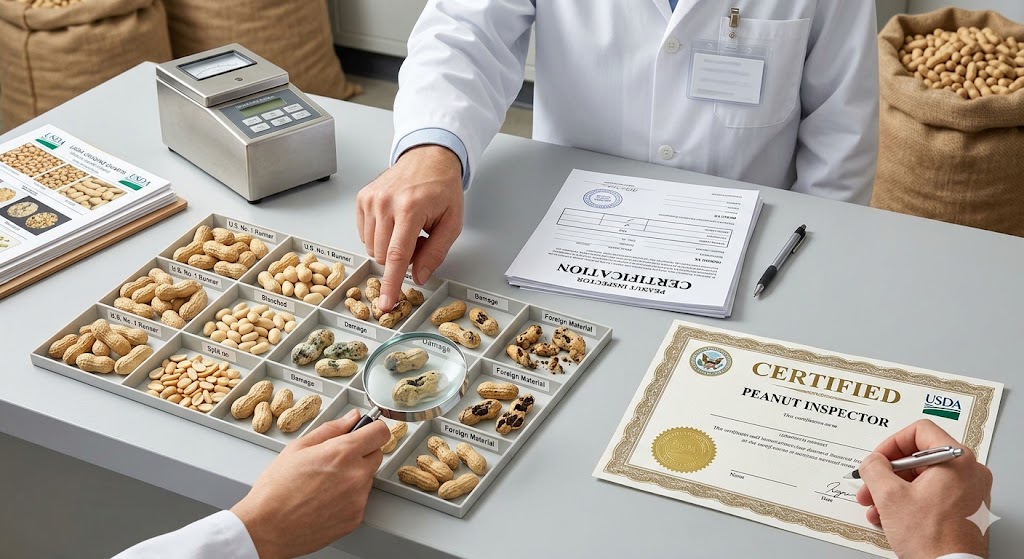
Additional Information
What the Course Entails and Exam Details
This practice exam covers the comprehensive range of topics encountered in the official Peanut Inspector Certification. The underlying course of study typically provides depth into several key areas. You will master the interpretation and application of official peanut grade standards for both farmers' stock and shelled peanuts. This includes a thorough understanding of the visual aids and official terminology.
A significant focus is placed on sampling procedures, learning how to obtain a representative specimen from a large lot using a pneumatic sampler or other authorized methods. You will gain practical skills in evaluating critical quality factors, such as determining moisture content, identifying and quantifying foreign material, and sorting for damaged kernels, including specific issues like mold and aflatoxin-related damage. The curriculum also delves into proper documentation, report writing, and the ethical responsibilities of a certified inspector, ensuring you are prepared for every facet of the role.
What to Expect in the Final Exam
The actual final exam for Peanut Inspector Certification is a comprehensive assessment that often combines a written test with a critical practical component. The format is designed to evaluate both your theoretical knowledge and hands-on proficiency.
Written Examination: You can expect a series of multiple-choice questions that cover all the key topics from your study material. These will include regulatory requirements, grading formulas, tolerance levels, and safety protocols. You must demonstrate a clear grasp of the facts and the ability to solve scenarios.
Practical Skills Assessment: This is the heart of the exam, where you will directly apply your knowledge. You will be given peanut samples and asked to grade them. This involves using various tools to determine size, quality, and condition, such as sieves, moisture meters, and visual aids. You will need to calculate the official grade and document your findings accurately, showing you can replicate the process in a high-stakes, real-world setting.
To pass, you typically need to achieve a score of at least 80% on both the written and practical portions, with some certifications having even higher requirements. The time limits vary by location and state agency but are designed to be challenging yet achievable for a well-prepared candidate.
How to Study and Exam Centers
Preparation is key to success on the Peanut Inspector Certification exam. The best place to start is by utilizing a comprehensive resource like this Peanut Inspector Certification Practice Exam, which is specifically designed to simulate the final testing experience. Use it repeatedly to build familiarity with the question style and identify gaps in your knowledge.
Study the official standards. Download and memorize the inspection instructions and grade standards relevant to your region, typically found on the USDA Agricultural Marketing Service website or your state's department of agriculture. Use official visual aids, if available, to sharpen your defect identification skills.
Exam delivery is managed differently than many certifications. The written and practical exams are usually administered directly by state agricultural departments or through licensed third-party testing organizations in cooperation with federal entities. You will typically find authorized exam centers at:
State-specific agricultural grading laboratories.
Cooperative extension offices.
Regional agricultural hubs and designated shelling facilities during peak seasons.
Contact your state's department of agriculture, specifically the division of commodity services or fruit and vegetable inspection, to find details on upcoming training, apprenticeship programs, and the formal exam application process.
Job Opportunities from the Course
A Peanut Inspector Certification opens doors to a variety of specialized roles in agriculture and food safety, including:
USDA Licensed Peanut Inspector
State-Contracted Agricultural Inspector
Quality Control Manager (Shelling Plant)
Food Safety and Quality Assurance Technician
Buying Station Manager
Agricultural Commodity Grader
Processing Line Supervisor (Quality Focus)
Export Quality Certification Specialist
Inventory and Quality Analyst for Peanut Commodities
Frequently Asked Questions
Reviews
5.0
Based on 0 reviews
Leave a Review
No reviews yet. Be the first to review!