
Pediatric Advanced Life Support (PALS) Practice Test
$69.00
- Buy to unlock unlimited access to all Quiz questions and Answers in this Quiz.
- After purchase you can print a PDF of the whole quiz at any point. The PDF will contain the questions and the correct answers.
About this Exam
The Pediatric Advanced Life Support (PALS) certification is designed for healthcare professionals who respond to emergencies in infants and children. This critical credential validates your ability to recognize, assess, and manage pediatric patients facing respiratory failure, shock, or cardiac arrest. Developed by the American Heart Association (AHA), the PALS course emphasizes a systematic approach to pediatric assessment, the implementation of PALS algorithms, and effective team dynamics. Doctors, nurses, paramedics, respiratory therapists, and others who care for children in emergency and critical care settings benefit from this advanced training, which equips them to improve outcomes for their youngest patients.
Ready to test your knowledge?
Buy Now to Access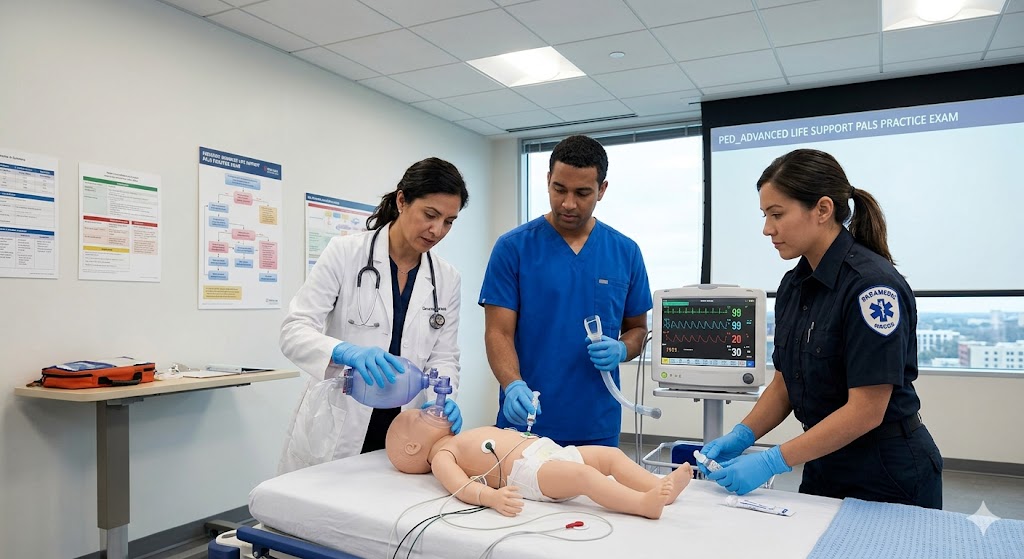
Additional Information
What the Course Entails and Exam Details
A comprehensive PALS course covers both theoretical knowledge and practical, hands-on skills through simulations and discussions. The core topics included in the curriculum are:
Recognizing and Managing Pediatric Respiratory Distress and Failure
Recognizing and Managing Pediatric Shock, including Hypovolemic, Distributive, and Cardiogenic states
Pediatric Basic Life Support (BLS) and AED Use
AHA PALS Treatment Algorithms for Bradycardia, Tachycardia, and Cardiac Arrest
Post-Cardiac Arrest Care for Children and Infants
Effective Communication and Team Dynamics during a Resuscitation Event
The 2-Minute Cycle for High-Quality CPR
The course is structured to provide deep insights into these concepts, ensuring that candidates can make rapid, informed decisions in high-stress situations.
What to Expect in the Final Exam
The final PALS evaluation typically consists of two distinct components that must be passed to earn certification:
A Written Examination: This is a multiple-choice test designed to evaluate your understanding of the core concepts, treatment algorithms, and clinical protocols covered in the PALS guidelines. It includes scenarios that require you to identify the appropriate treatment for specific pediatric emergencies. While passing scores can vary slightly by AHA training center, a common requirement is 84% or higher. The exam is often time-limited, though the duration can vary.
Practical Skills Testing: You will also be evaluated through simulated cases, where you must demonstrate your ability to act as both a team member and a team leader. This practical assessment, often called "Megacode Testing," assesses your competence in applying PALS algorithms in real-time, managing airways, and performing cardiac resuscitation on pediatric mannequins. Proctors will observe your decision-making and manual skills.
How to Study and Exam Centers
Preparation for the PALS exam requires a diligent review of the material. Your primary study resource will be the AHA PALS Provider Manual. This textbook is the basis for the entire course and should be studied thoroughly.
Here are some actionable strategies:
Practice with Mock Exams: Taking PALS practice tests is essential. They help you get familiar with the types of multiple-choice questions you'll encounter and identify your knowledge gaps. Focus on rationales for both correct and incorrect answers.
Study the Algorithms: The PALS treatment algorithms are key. Memorize them to the point where you can recall the correct steps automatically during pressure situations.
Practice Practical Skills: Find opportunities to rehearse skills like bag-valve-mask ventilation, advanced airway placement, and drug dosing calculations.
To register for the course and take the final exam, you will need to locate an authorized AHA Training Center. AHA-approved centers are widespread across the globe and can be found on the American Heart Association's official website. Courses are offered in various formats, including instructor-led classroom sessions and blended learning options (online modules combined with in-person skills practice and testing). The physical location for the testing will be a specialized medical training facility or an authorized educational center.
Job Opportunities from the Course
A current PALS certification is often a mandatory requirement for many healthcare positions. Holding this credential signals to employers that you possess the advanced skills necessary to save young lives. Career paths and specific job titles that require or heavily prioritize PALS certification include:
Pediatric Nurse (in acute care settings)
Emergency Room Nurse
Critical Care Nurse (PICU)
Pediatrician
Emergency Medicine Physician
Paramedic
Respiratory Therapist (especially those working in pediatrics or critical care)
Pediatric Anesthesiologist
Flight Paramedic / Flight Nurse
Frequently Asked Questions
Reviews
5.0
Based on 0 reviews
Leave a Review
No reviews yet. Be the first to review!