
Pediatric ATI Practice Exam
$69.00
- Buy to unlock unlimited access to all Quiz questions and Answers in this Quiz.
- After purchase you can print a PDF of the whole quiz at any point. The PDF will contain the questions and the correct answers.
About this Exam
Prepare to excel in your pediatric nursing proctored exam with our comprehensive Pediatric Nursing ATI Practice Exam guide. This resource is designed specifically for nursing students aiming to master the unique aspects of caring for the pediatric population, from neonates through adolescents. Whether you are in a dedicated pediatric rotation or preparing for the broad content of the NCLEX-RN, this practice exam serves as a critical checkpoint to assess your knowledge, identify areas for improvement, and build the confidence necessary to provide safe and effective family-centered care.
Ready to test your knowledge?
Buy Now to Access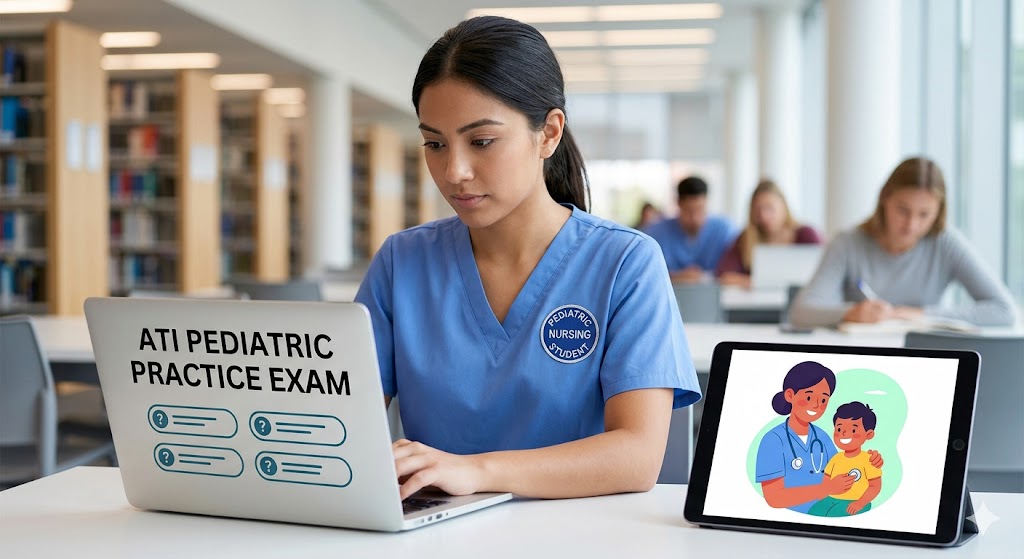
Additional Information
What the Course Entails and Exam Details
The Pediatric Nursing ATI content covers a wide spectrum of essential topics for caring for young patients. It focuses on integrating knowledge from growth and development, pathophysiology, pharmacology, and nursing fundamentals. Key areas include identifying milestones from infancy to adolescence, managing acute and chronic pediatric illnesses, prioritizing patient safety, administering medications to children, and fostering therapeutic communication with both the child and their family. This content is vital not only for your course grades but also as a building block for the integrated questions on the NCLEX-RN.
What to Expect in the Final Exam
Your proctored ATI Pediatric Nursing exam is a computerized, multiple-choice assessment that typically lasts between 60 to 70 minutes, depending on the specific form. The questions are designed to test your ability to apply, analyze, and evaluate your knowledge in a clinical context, reflecting real-world nursing scenarios. Instead of a traditional passing score, ATI uses "proficiency levels." Achieving Level 2 or Level 3 indicates that you are well-prepared for NCLEX-RN success in this specific content area. You can expect questions to be structured as standalone scenarios, with a strong emphasis on critical thinking and prioritizing client care.
How to Study and Exam Centers
Effective preparation requires a multi-faceted approach. First, leverage all ATI-provided resources, including their detailed review modules, practice tests, and question banks. A critical strategy is to review the rationales for both correct and incorrect answers; this deepens your understanding and hones your test-taking skills. Focus your study on high-yield areas like growth milestones, immunization schedules, and signs of common pediatric emergencies. Collaborate with peers in study groups to discuss complex scenarios. The proctored exam is typically taken through an online portal provided by your nursing program and is administered in a secure, supervised environment determined by your school, often in an on-campus computer lab.
Job Opportunities from the Course
Mastering pediatric nursing through this exam opens the door to numerous rewarding career paths dedicated to the well-being of children. This foundational knowledge is directly applicable to an array of settings where you can make a meaningful difference. Common job titles and areas you can pursue upon licensure include:
Pediatric Registered Nurse (RN): Providing direct care in children’s hospitals on medical-surgical units.
Neonatal Intensive Care Unit (NICU) Nurse: Specializing in the care of critically ill or premature newborns.
Pediatric Intensive Care Unit (PICU) Nurse: Offering specialized, high-acuity care to critically ill infants and children.
School Nurse: Managing student health and wellness in educational settings.
Clinic Nurse: Working in pediatric private practices and outpatient specialty clinics.
Home Health Nurse: Providing care to pediatric patients with complex medical needs in their homes.
Pediatric Nurse Educator: Training the next generation of nurses in the field (after advanced study).
Pediatric Nurse Practitioner (PNP): Diagnosing and managing common and acute illnesses (requires graduate-level education).
Frequently Asked Questions
Reviews
5.0
Based on 0 reviews
Leave a Review
No reviews yet. Be the first to review!