
Peer Counselor Certification Practice Exam
$69.00
- Buy to unlock unlimited access to all Quiz questions and Answers in this Quiz.
- After purchase you can print a PDF of the whole quiz at any point. The PDF will contain the questions and the correct answers.
About this Exam
The Peer Counselor Certification, often referred to as the Certified Peer Support Specialist (CPSS) credential, validates the knowledge and skills of individuals who use their personal lived experience with mental health, substance use, or trauma recovery to support others on their journey to wellness.
This exam is designed for resilient individuals who want to work professionally in behavioral health settings, providing mentorship, advocacy, and a unique form of empathetic understanding that only lived experience can offer.
Earning this certification demonstrates competency and a commitment to ethical, evidence-based peer support.
Ready to test your knowledge?
Buy Now to Access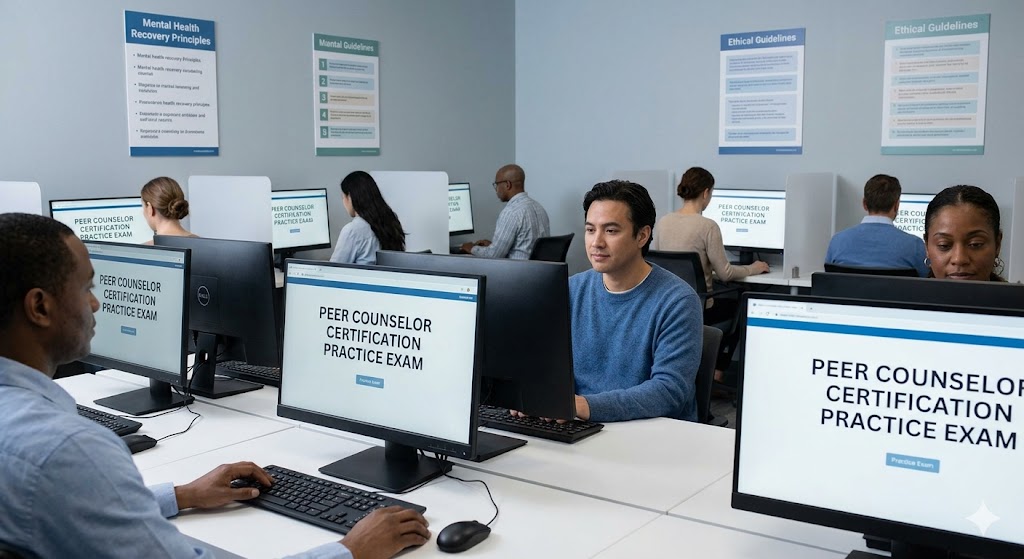
Additional Information
What the Course Entails and Exam Details
This certification process requires completing a state-approved or nationally-recognized training program before challenging the exam.
The core domains and topics usually covered in these courses (and subsequently tested on the exam) include: the foundational philosophy of the recovery model; effective communication techniques like motivational interviewing and active listening; the crucial importance of ethics, confidentiality, and establishing professional boundaries; crisis prevention and response strategies; wellness planning tools such as WRAP; promoting self-determination and self-advocacy; and cultural humility when working with diverse populations.
The exam focuses on assessing a candidate's ability to apply these theoretical concepts to real-world peer support scenarios.
What to Expect in the Final Exam
The final certification exam is a formal, proctored assessment.
It generally consists of multiple-choice questions that require both knowledge recall and critical application of peer support principles to hypothetical scenarios.
Candidates can typically expect between 60 to 120 questions.
A passing score is usually set between 70% and 80%, depending on the specific state or certifying body's standards.
Time limits are strictly enforced, often ranging from 90 minutes to three hours.
The exam environment, whether physical or digital, maintains rigorous standards to ensure the integrity of the credential.
How to Study and Exam Centers
Effective preparation for this exam combines reviewing coursework with active practice.
Utilize practice exams to get familiar with the types of questions and the time constraints.
Thoroughly study the specific code of ethics provided by your state’s certification board, as ethics scenarios are a prominent feature of the test.
Create flashcards for key recovery terms and communication models, and form study groups with peers to discuss complex ethical dilemmas or practice scenario-based questions.
The exam is typically administered through secure online testing portals authorized by the state certification board, or at official physical testing centers like Pearson VUE, which are located globally.
Check your specific state’s behavioral health board website for exact locations and registration processes.
Job Opportunities from the Course
Obtaining your Peer Counselor Certification opens doors to numerous rewarding career paths within the behavioral health and social service sectors.
This credential is often mandatory for reimbursement by Medicaid and is highly valued by employers.
Some of the direct job titles you can pursue include:
Certified Peer Support Specialist
Peer Recovery Coach
Mental Health Peer Specialist
Substance Use Peer Counselor
Family Support Partner
Forensics Peer Specialist (working in the legal system)
Peer Bridge Specialist (assisting transitions from hospitals or facilities)
Outreach Coordinator for recovery organizations
Wellness Center Facilitator
Frequently Asked Questions
Reviews
5.0
Based on 0 reviews
Leave a Review
No reviews yet. Be the first to review!