
Penn Foster Anatomy and Physiology for Vet Technicians Practice Test
$69.00
- Buy to unlock unlimited access to all Quiz questions and Answers in this Quiz.
- After purchase you can print a PDF of the whole quiz at any point. The PDF will contain the questions and the correct answers.
About this Exam
The Penn Foster Anatomy and Physiology course is a foundational component of their AVMA-CVTEA accredited Veterinary Technician Associate Degree program. This comprehensive course is designed specifically for aspiring veterinary technicians to provide the essential knowledge of animal anatomy and body systems. Understanding these concepts is critical for providing proper medical care, assisting in surgeries, and performing diagnostic tests on various animal species. This practice test is an invaluable tool for students looking to reinforce their learning and prepare effectively for their graded examinations within the program.
Ready to test your knowledge?
Buy Now to Access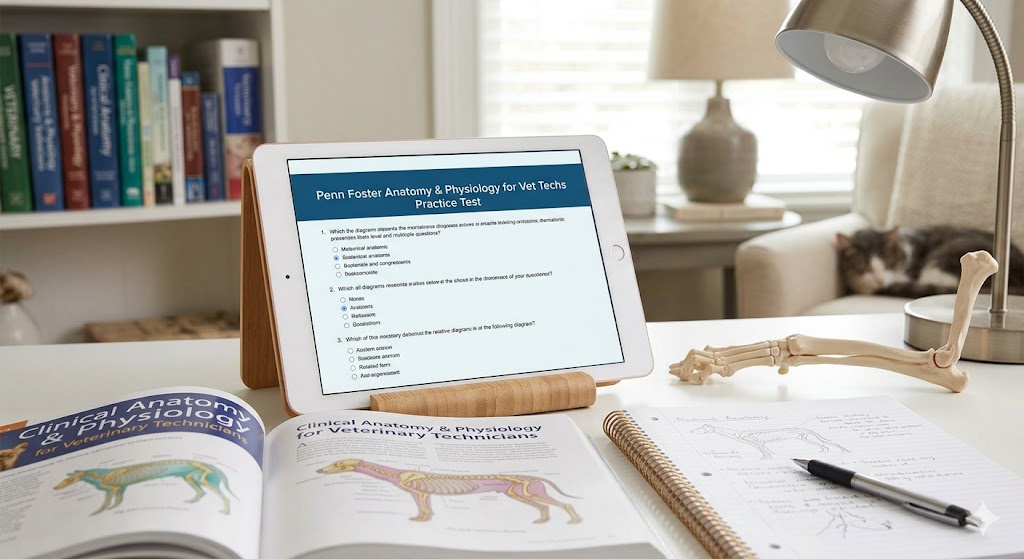
Additional Information
What the Course Entails and Exam Details
This course covers the structure and function of the animal body, detailing major systems and how they work together to maintain health. Students study detailed terminology and physiological processes across common species, including canines, felines, equines, and bovines. Key areas of focus include the musculoskeletal system, cardiovascular system, respiratory system, digestive system, nervous system, and endocrine system. The course also explores terminology crucial for veterinary documentation and communication.
What to Expect in the Final Exam
The Penn Foster Anatomy and Physiology final examination is typically delivered online through the student portal. Students can expect a comprehensive exam primarily composed of multiple-choice questions designed to assess their understanding of anatomical terms, physiological functions, and system interactions. The exam often utilizes visual aids, requiring students to identify structures on diagrams or recognize clinical terminology in context. A passing score is required to successfully complete the course module and progress in the Veterinary Technician program. Students should refer to their specific program materials for exact time limits and the required passing percentage.
How to Study and Exam Centers
Effective preparation involves dynamic study methods beyond just reading. Utilize flashcards for memorizing medical terminology and anatomical structures. Engage heavily with visual learning by labeling diagrams of animal skeletons, organs, and muscular systems. Form study groups with fellow Penn Foster students to review complex physiological concepts. Additionally, taking practice exams multiple times helps familiarize yourself with the question format and identify areas needing further review. As this is a component of an online program, the exams are conveniently taken directly through Penn Foster's secure online learning platform; there is usually no need to visit external testing centers like Pearson VUE for this specific course exam.
Job Opportunities from the Course
Completing the Vet Tech program, starting with fundamental courses like Anatomy and Physiology, opens doors to various rewarding career paths in animal healthcare.
Registered Veterinary Technician (RVT) / Licensed Veterinary Technician (LVT)
Veterinary Assistant
Veterinary Office Manager
Animal Shelter Manager
Laboratory Animal Technician
Zoo Veterinary Technician
Veterinary Pharmaceutical Sales Representative
Frequently Asked Questions
Reviews
5.0
Based on 0 reviews
Leave a Review
No reviews yet. Be the first to review!