
Pennsylvania Barber Licensure Practice Exam
$69.00
- Buy to unlock unlimited access to all Quiz questions and Answers in this Quiz.
- After purchase you can print a PDF of the whole quiz at any point. The PDF will contain the questions and the correct answers.
About this Exam
The Pennsylvania Barber Licensure Practice Exam is your essential tool for preparing for the official state licensing test. This comprehensive resource is designed specifically for students who have completed their required barber training hours and are now aiming to become a licensed barber in the Commonwealth of Pennsylvania. Achieving this licensure is the critical final step towards launching a professional career in barbering. Our practice materials mirror the content and structure of the actual exam, providing the confidence and knowledge needed for success. We aim to support future barbers through this final stage, ensuring they are well-equipped for a thriving career.
Ready to test your knowledge?
Buy Now to Access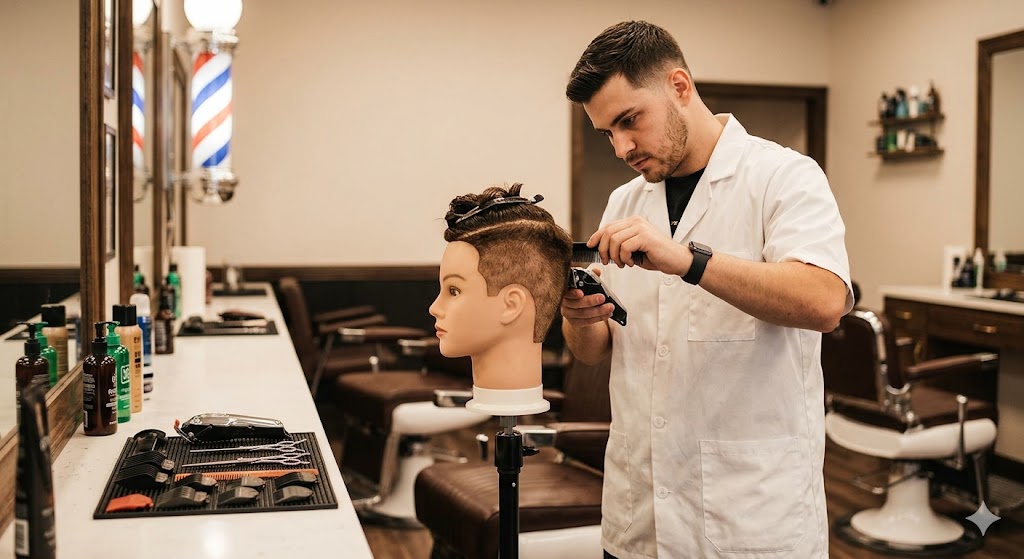
Additional Information
What the Course Entails and Exam Details
The official Pennsylvania Barber Licensure Exam covers a broad range of topics critical for professional practice. While individual preparation courses may vary, they all focus on ensuring candidates possess the comprehensive knowledge base and required hands-on skills necessary for state licensure. The overall structure of the official examination typically involves two distinct parts: a theory (written) portion and a practical (hands-on) demonstration.
The written exam delves into the theoretical foundations of barbering, including:
Microbiology and Infection Control: Understanding sterilization, sanitation, and state regulations for a safe environment.
Safety Protocols and First Aid: Emergency procedures and general safety practices.
Anatomy and Physiology: Basic knowledge related to the skin, hair, and scalp.
Chemistry of Products: Understanding the composition and safe use of shampoos, conditioners, and styling aids.
Pennsylvania State Barber Laws and Rules: Specific regulations governing the profession within the state.
Electricity and Light Therapy: Principles and safe application in a barbering context.
Barber Shop Management and Ethics: Professional conduct and basic business practices.
Customer Service and Consulting: Effective communication and client assessment.
The practical exam requires candidates to demonstrate their technical proficiency in a real-world scenario. While the specific tasks can vary, they often include:
Preparation and Setup: Demonstrating proper sanitation and organization of the work station.
Haircutting Techniques: Executing specific cuts using various tools like clippers, shears, and razors (e.g., clipper-over-comb, shear-over-comb).
Shaving: Demonstrating safe and effective use of a straight razor.
Thermal Styling: Showcasing skills in hair drying and styling.
Chemical Services: (Often evaluated through demonstration or specific tasks) Safe application and processing (e.g., permanent waving, hair coloring).
Beard Trimming and Design: Shaping and styling facial hair.
Post-Service Procedures and Cleanup: Proper sanitation after completing services.
What to Expect in the Final Exam
The official Pennsylvania Barber Licensure Exam consists of two primary components, each designed to thoroughly assess a candidate's readiness for professional practice.
Theory (Written) Examination
Format: The theory exam is typically a standardized test comprised of multiple-choice questions. It is usually administered on a computer at a designated testing center.
Content: It covers a wide array of topics, including sanitation, safety, state laws, tool use, anatomy, and chemistry (as detailed in the section above).
Time Limit: Candidates are given a specific amount of time to complete this portion, often ranging from 90 to 120 minutes.
Passing Score: A minimum passing score (e.g., 75% or higher) is required to successfully complete this section. Candidates should refer to the official candidate handbook for precise, up-to-date requirements.
Registration: This portion must be scheduled in advance through the official state-contracted testing service.
Practical Examination
Format: The practical exam involves a hands-on demonstration of barbering skills in front of a live examiner.
Skills Evaluation: Points are awarded for technical proficiency, adherence to safety and sanitation protocols, client preparation, and post-service procedures.
Standard Services: Candidates must perform a sequence of standard barbering services within a strict time limit. This may include a haircut, shave, thermal styling, and potentially a demonstration of chemical application, often on a mannequin or model depending on current rules.
Strict Adherence to Rules: Maintaining a sterile environment and properly handling tools are as crucial as the final look. Failure to follow sanitation rules can lead to significant point deductions or automatic failure.
Supplies: A detailed list of required tools, supplies, and a properly equipped station is necessary for this portion of the exam. Candidates are responsible for bringing their own complete kit.
How to Study and Exam Centers
Comprehensive preparation is essential for succeeding on the Pennsylvania Barber Licensure Exam. We recommend a multi-faceted study approach:
Effective Study Strategies
Utilize Your School's Curriculum: Review textbooks, handouts, and any study guides provided during your barber training program.
Focus on State-Board Material: Prioritize studying resources that are explicitly designed for State Board preparation, as they directly address the types of questions and criteria used in the exam.
Take Practice Exams: Consistent practice with sample exams is invaluable. This helps you get comfortable with the question format, identify areas of weakness, and build speed and confidence for the written section.
Simulate the Practical Exam: Time yourself performing each required service from start to finish on a mannequin head. Ask an instructor or licensed barber to critique your performance and sanitation habits.
Form Study Groups: Collaborating with fellow students can provide different perspectives, motivation, and a platform for peer-to-peer testing.
Review Official Candidate Handbook: The Pennsylvania State Board of Barber Examiners provides a candidate handbook containing the most current information regarding exam content, registration, fees, and testing policies. Always refer to this official source.
Exam Centers and Registration
In Pennsylvania, the Barber Licensure Examination is typically administered by a third-party testing service contracted by the State Board. Candidates must register and schedule their exam directly through the administrator's online portal or official contact information.
Theory (Written) Centers: The written exam is usually offered at numerous testing centers located throughout Pennsylvania and occasionally in neighboring states. This provides candidates with flexible options for selecting a convenient date and location.
Practical Exam Sites: The practical portion is held at specific authorized locations, which may be different from the theory centers. These are often located in larger cities or designated regional test sites. Check the current candidate handbook for precise locations and availability.
Job Opportunities from the Course
Obtaining a Pennsylvania Barber License opens doors to a wide array of career opportunities within the men's grooming and beauty industry. With a license in hand, you are legally permitted to work in various settings and roles:
Licensed Barber (Employee in a traditional or modern barbershop)
Shop Manager
Barber Shop Owner (following further experience and compliance with state regulations)
Mobile Barber (subject to state regulations and local permits)
Brand Ambassador or Educator for grooming product companies
Barbering Instructor (requires additional training and state certification)
Platform Artist or Educator for industry shows and events
Barber for Film, TV, or Editorial shoots
State Board Examiner or Inspector (typically after years of experience)
Specialist in specific areas (e.g., beard design, advanced coloring techniques, or hair replacement services)
Frequently Asked Questions
Reviews
5.0
Based on 0 reviews
Leave a Review
No reviews yet. Be the first to review!