
Pennsylvania Enhanced Emissions Practice Test
$69.00
- Buy to unlock unlimited access to all Quiz questions and Answers in this Quiz.
- After purchase you can print a PDF of the whole quiz at any point. The PDF will contain the questions and the correct answers.
About this Exam
The Pennsylvania Enhanced Emissions Inspector Certification is a mandatory license for automotive professionals who wish to perform state-mandated emissions inspections on non-exempt vehicles within the Commonwealth of Pennsylvania. This certification is essential for mechanics and technicians working in shops authorized to conduct these inspections. It ensures that inspectors are qualified to use advanced diagnostic equipment and properly assess a vehicle's emissions control systems. By successfully obtaining this certification, you demonstrate your commitment to environmental standards and public safety.
Ready to test your knowledge?
Buy Now to Access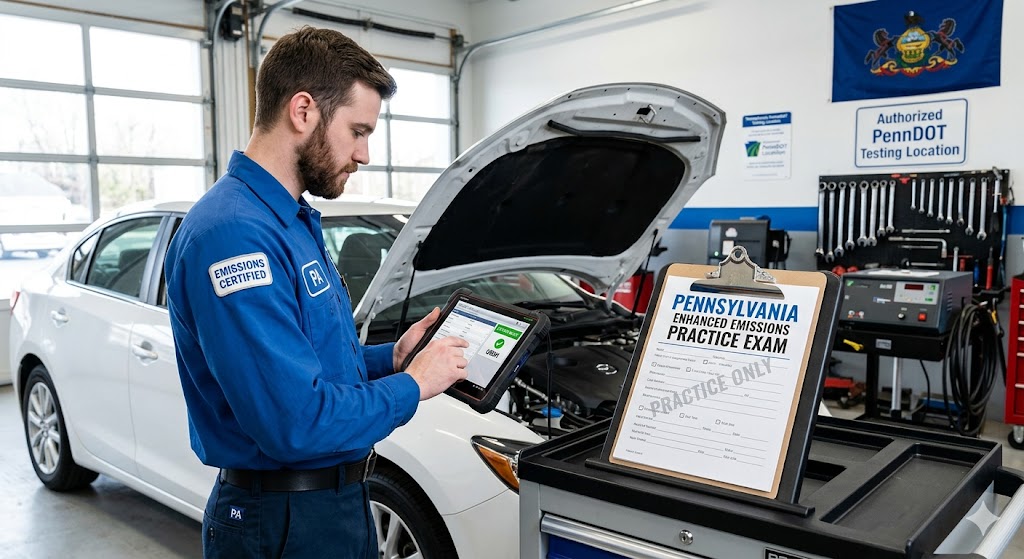
Additional Information
What the Course Entails and Exam Details
This comprehensive course provides the technical knowledge and hands-on skills required to master the Pennsylvania Enhanced Emissions Inspection. The syllabus covers:
Understanding Vehicle Emissions: A deep dive into modern vehicle emission control systems, their components (catalytic converters, EGR valves, oxygen sensors), and common causes of failures.
Enhanced Inspection Procedures: Detailed instruction on the two primary enhanced test types: On-Board Diagnostics II (OBDII) and the visual anti-tampering check. You will also learn about the obsolete, but still relevant, Two-Speed Idle (TSI) test and the mandatory Gas Cap Pressure test.
Equipment Operation and Calibration: Practical training on using PennDOT-approved emissions testing equipment, including diagnostic tools, OBDII interfaces, and gas analyzers. This includes proper calibration and maintenance protocols.
Regulations and Quality Control: In-depth knowledge of Pennsylvania's I/M (Inspection and Maintenance) regulations, vehicle identification, record-keeping requirements, and quality control procedures.
What to Expect in the Final Exam
The final exam is a multi-part assessment designed to verify both theoretical understanding and practical competence. You can expect:
Format: The exam typically includes a multiple-choice written component (often computer-based) and a mandatory, hands-on, proctored tactile (practical) exam. You must pass both sections to receive certification.
Written Exam: The written portion often consists of two separate computer-based tests, such as one on general theory and another focused specifically on OBDII.
Question Count and Time Limit: The exact number of questions can vary by training provider, but it is typically around 50 questions for each written section. A common time limit is approximately 75 minutes per section.
Passing Score: The passing score is determined by PennDOT, but students are generally expected to achieve a score of 70% to 80% or higher on each component of the exam.
Practical Exam: During the tactile test, you will be required to demonstrate your ability to properly use emissions equipment, perform calibrations, and correctly execute an inspection on a real vehicle, all under the direct observation of a certified instructor or proctor.
How to Study and Exam Centers
Preparation is key to succeeding on your first attempt. Utilize these strategies to build your knowledge and confidence:
Official PennDOT Manual: The definitive study resource is the official PennDOT emissions inspection training manual, which is often available for download from the PennDOT training portal at www.patrainingportal.com. Study it thoroughly.
Practice Exams: The use of comprehensive practice exams, like the one this guide supports, is highly effective. They allow you to familiarize yourself with the type of questions asked, understand the exam's format, and identify weak points in your knowledge.
Hands-on Training: Many students choose to take a PennDOT-authorized training course. These courses, available at local community colleges, vocational-technical schools, and private training institutions, provide essential classroom instruction and vital hands-on experience with the actual testing equipment.
Flashcards and Group Study: Create flashcards for key terms, regulatory requirements, and component functions. Studying with peers can also help you understand complex concepts from different perspectives.
Exam Centers: It is important to note that the Pennsylvania Enhanced Emissions Inspector exam is not typically administered at general proctoring centers like Pearson VUE. Instead, the final exam is part of the certified training program and is given at the completion of your classroom and hands-on instruction. This will be at the PennDOT-approved public or private facility where you took your course.
Job Opportunities from the Course
Obtaining your Pennsylvania Enhanced Emissions Inspector Certification opens doors to several rewarding career paths in the automotive service industry. Possible job titles include:
Certified Emissions Inspector
Certified Safety and Emissions Inspection Mechanic
Automotive Service Technician
Shop Foreman
Service Advisor
Shop Manager
Fleet Maintenance Supervisor
State Vehicle Inspector for corporate fleets
Quality Control Specialist in an automotive facility
Frequently Asked Questions
Reviews
5.0
Based on 0 reviews
Leave a Review
No reviews yet. Be the first to review!