
Pennsylvania State Board of Cosmetology Rules and Regulations Practice Test
$69.00
- Buy to unlock unlimited access to all Quiz questions and Answers in this Quiz.
- After purchase you can print a PDF of the whole quiz at any point. The PDF will contain the questions and the correct answers.
About this Exam
The Pennsylvania State Board of Cosmetology Rules and Regulations constitute a foundational pillar of professionalism, safety, and law within the beauty industry of the Commonwealth. This crucial body of knowledge is a primary component of the official licensing process administered by the Pennsylvania Bureau of Professional and Occupational Affairs. A specific practice test dedicated to this topic is designed for aspiring cosmetologists, estheticians, nail technicians, natural hair braiders, and instructors. It is a vital tool for students who have completed their required training hours and are preparing to pass the written theory exam to launch their careers. Mastering these regulations ensures you not only understand the legal framework of your profession but also possess the knowledge to protect public health and maintain a compliant, successful salon environment.
Ready to test your knowledge?
Buy Now to Access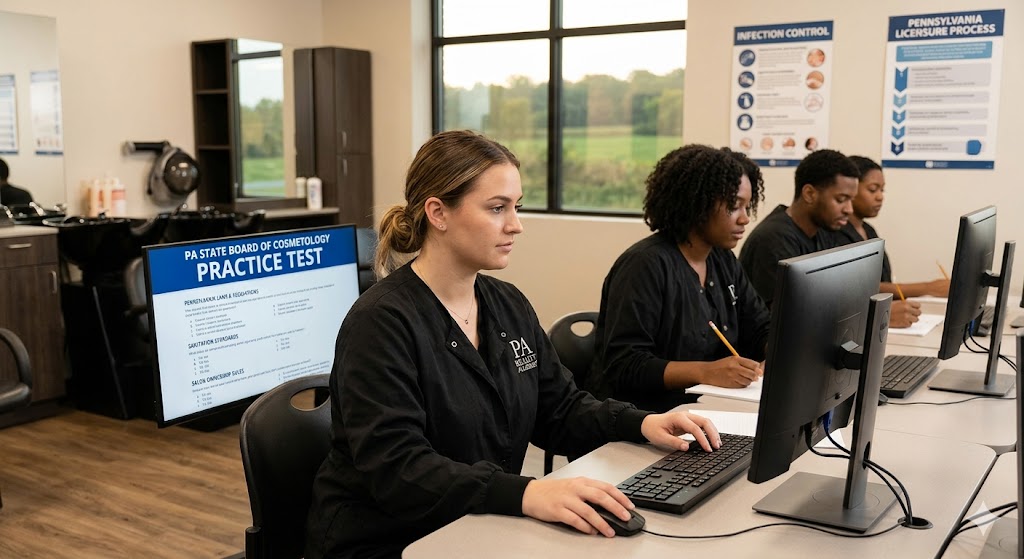
Additional Information
What the Course Entails and Exam Details
This practice test is designed to mirror the actual "Rules, Regulations, and Safety" content area of the Pennsylvania Cosmetology Written Theory Examination, which can account for 27% to 32% of your final score.
The core syllabus covered in a comprehensive practice test includes:
Pennsylvania Cosmetology Law (Act 86 of 1933): Understanding the foundation of regulatory authority in the state.
The State Board of Cosmetology: Its composition, powers, and duties, including licensure issuance, suspension, and revocation.
Licensure Requirements: Age, education (10th grade), and specific training hours for all license types (e.g., 1,250 hours for Cosmetologist).
Examination Procedures and Eligibility: How to apply for and what to expect from the licensure exam process.
Salon Regulations and Management: Requirements for salon minimum floor space, temporary licenses, booth rentals (which are not permitted in Pennsylvania), and the proper display of all licenses and permits.
Sanitation and Safety Standards: Rigorous state-mandated protocols for disinfecting tools, equipment, and linens; maintaining a well-lit and ventilated salon; and preventing the spread of contagious diseases.
Scope of Practice: Clearly defining what services are authorized under a full Cosmetology license versus limited licenses like Esthetics, Nail Technology, and Natural Hair Braiding.
License Renewal: Knowing the biennial renewal dates (January 31 of odd-numbered years) and associated fees.
Civil Penalties (Act 48 of 1993): An understanding of the schedule of penalties for violations of the Beauty Culture Law.
What to Expect in the Final Exam
While individual practice tests may vary, the actual Pennsylvania Cosmetology Licensure Examination is a comprehensive, computer-based, multiple-choice test administered by a third-party testing service.
Exam Format: The written theory exam is composed entirely of multiple-choice questions. It includes both scored questions and unscored "pretest" items that do not count towards your final result.
Total Questions: You can expect approximately 135 total questions (including roughly 110 scored items).
Time Limit: Candidates are given a total of 2 hours and 15 minutes to complete the entire examination.
Passing Score: The required passing score for licensure in Pennsylvania is a scaled score of 75%.
Practical Exam: Note that, unlike many other states, Pennsylvania does not require a separate hands-on practical exam for cosmetology licensure. Your competence is assessed entirely through the comprehensive written theory exam.
Specific Rules: All testing centers enforce strict security protocols, prohibiting outside materials, electronics, or collaboration during the session.
How to Study and Exam Centers
Effective preparation for this section combines a thorough review of the original legal texts with targeted practice methods.
Primary Source Review: The most critical step is studying the actual texts of the Pennsylvania Cosmetology Regulations (Title 49, Chapter 7), Act 86 of 1933, and Act 48 of 1993. These are available on the official Pennsylvania State Board of Cosmetology website.
State Board-Approved Textbooks: Consult the specific editions of textbooks (such as Milady Standard Cosmetology or Pivot Point Fundamentals) that are listed as official references for the examination. These books include sections on infection control and state-specific law.
Take Multiple Practice Tests: Utilize high-quality practice exams specifically designed for Pennsylvania, like this one, to simulate the timed test environment and identify your weak areas.
Create Flashcards: Flashcards are highly effective for memorizing specific numbers (hours, square footage), dates (license renewal), and key definitions from the regulations.
Schedule with Pearson VUE: Once your school has certified your hours and you have applied for licensure through the Pennsylvania Licensing System (PALS), you will be able to schedule your examination. The exam is administered at specialized Pearson VUE testing centers located throughout Pennsylvania and in surrounding states. You can select your preferred center and time slot online through the Pearson VUE portal.
Job Opportunities from the Course
Passing the official Pennsylvania written theory exam and obtaining your licensure unlocks a diverse range of career paths in the thriving beauty and wellness industry within the Commonwealth.
Your licensure, backed by a strong understanding of state rules, enables you to pursue the following roles:
Licensed Cosmetologist
Hair Stylist and Designer
Master Hair Colorist
Salon Manager
Salon Owner or Entrepreneur
Texture Specialist
Bridal and Special Occasion Stylist
State-Licensed Cosmetology Instructor (with additional training)
Makeup Artist
Nail Technician
Esthetician
Waxing Specialist
Manufacturer Educator or Sales Representative
Beauty School Administrator
State Board Inspector or Administrator
Frequently Asked Questions
Reviews
5.0
Based on 0 reviews
Leave a Review
No reviews yet. Be the first to review!