
Pennsylvania State Inspection Practice Test
$69.00
- Buy to unlock unlimited access to all Quiz questions and Answers in this Quiz.
- After purchase you can print a PDF of the whole quiz at any point. The PDF will contain the questions and the correct answers.
About this Exam
The Pennsylvania State Inspection Mechanic Certification is a mandatory license for automotive professionals wishing to legally perform safety and/or emissions inspections on vehicles within the Commonwealth. Administered by the Pennsylvania Department of Transportation (PennDOT), this program ensures that mechanics have a thorough understanding of vehicle safety standards and state regulations. It is specifically designed for technicians, mechanics, and other individuals who intend to work at PennDOT-appointed inspection stations. Holding this certification is a crucial career step, demonstrating your commitment to road safety and regulatory compliance.
Ready to test your knowledge?
Buy Now to Access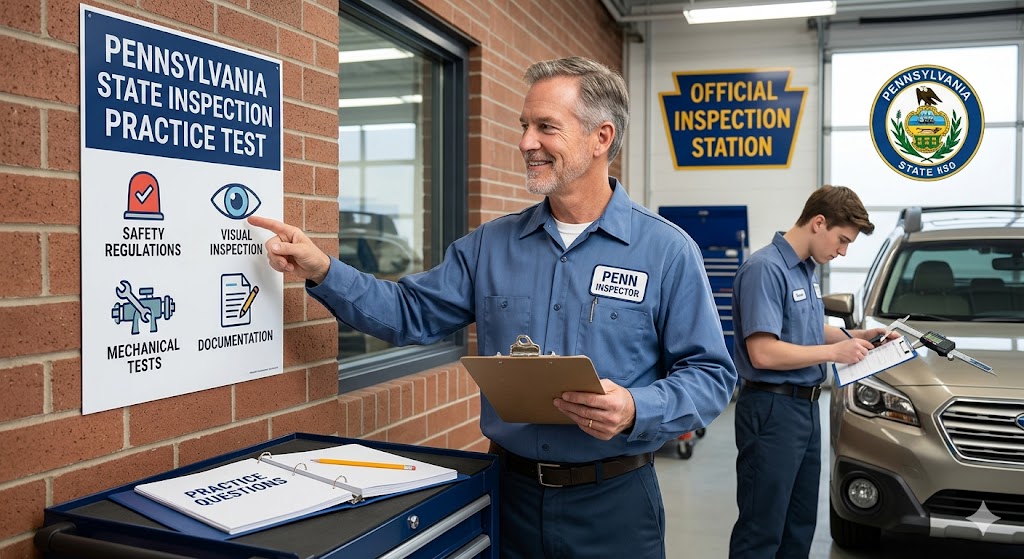
Additional Information
What the Course Entails and Exam Details
The certification process involves both classroom instruction and a practical hands-on component. The training typically focuses on a detailed review of Pennsylvania’s vehicle equipment and inspection regulations, known as Title 67, Chapter 175. This includes understanding what components must be inspected, the specific criteria for a vehicle to pass or fail, and the correct procedures for documenting the inspection and applying official stickers.
Key areas covered include:
Safety Inspection: In-depth study of braking systems, steering, suspension, tires, wheels, lighting, and electrical systems.
Emissions Inspection: Procedures for different vehicle types, including visual, gas cap, and tailpipe testing. (Requires separate training and certification)
Documentation and Record-Keeping: Master the use of key forms like MV-431 (for cars, trucks, and buses) and MV-480 (for motorcycles and trailers).
Ethics and Legal Responsibility: Understand the serious nature of the certification and the consequences of improper inspections.
The overall exam details require candidates to pass a standardized written examination, followed by a "tactile" or practical hands-on inspection under the observation of a certified instructor.
What to Expect in the Final Exam
The final evaluation for the Pennsylvania State Inspection Mechanic Certification is divided into two distinct parts:
Part 1: The Written Exam
Format: This is a multiple-choice test.
Topics: It covers all areas listed in the course curriculum, with a heavy emphasis on your knowledge of the official inspection manual and regulations.
Passing Score: You must achieve a minimum score of 80% to pass this section.
Specific Rules: All answers are final.
Part 2: The Tactile (Practical) Test
Format: This is a hands-on demonstration.
Tasks: You will be required to perform a complete inspection on a vehicle while a certified instructor observes your process. You must show mastery of using all necessary inspection tools (like brake gauges, tread depth gauges, and headlight aimers) and correctly completing the paperwork.
Passing Criteria: Satisfactory completion of the standard procedural checklist and correct pass/fail determinations.
Failure to pass either the written or tactile portion will prevent you from obtaining your license. Both parts must be successfully completed within a required timeframe, usually 180 days of training completion.
How to Study and Exam Centers
A well-structured study plan is your key to success. Here are actionable strategies:
Utilize the PA Inspection Manual: This is your definitive resource. Don't just read it; master it. Focus on specific measurement thresholds and pass/fail criteria.
Take Multiple Practice Tests: Simulate exam conditions. Our interactive Pennsylvania State Inspection Practice Test can help you identify your weak points. Repetition builds confidence.
Hands-on Practice: Spend as much time as possible performing dummy inspections on actual vehicles under the guidance of an experienced, certified mechanic.
Create Flashcards: Memorize specific key metrics for braking distance, tire tread depth, and required light function.
Where and How to Take the Exam:
Unlike many national certifications, the PA State Inspection exam is not taken online or at third-party test centers like Pearson VUE. It must be taken through a PennDOT-approved training program. You will need to locate a certified safety or emissions inspection training school in Pennsylvania. For a complete list of approved training facilities, you should contact the PennDOT Vehicle Inspection Division. After completing the required course, the school itself will schedule you for the final written and tactile examinations.
Job Opportunities from the Course
Obtaining your Pennsylvania State Inspection Mechanic Certification directly qualifies you for critical roles within the automotive industry. A certified mechanic can perform a variety of roles:
State Inspection Mechanic (Safety or Emissions)
Service Technician
Shop Foreman
Service Advisor
Fleet Maintenance Mechanic (e.g., for state agencies, municipalities, or private companies)
Service Manager (Progression path)
Frequently Asked Questions
Reviews
5.0
Based on 0 reviews
Leave a Review
No reviews yet. Be the first to review!